
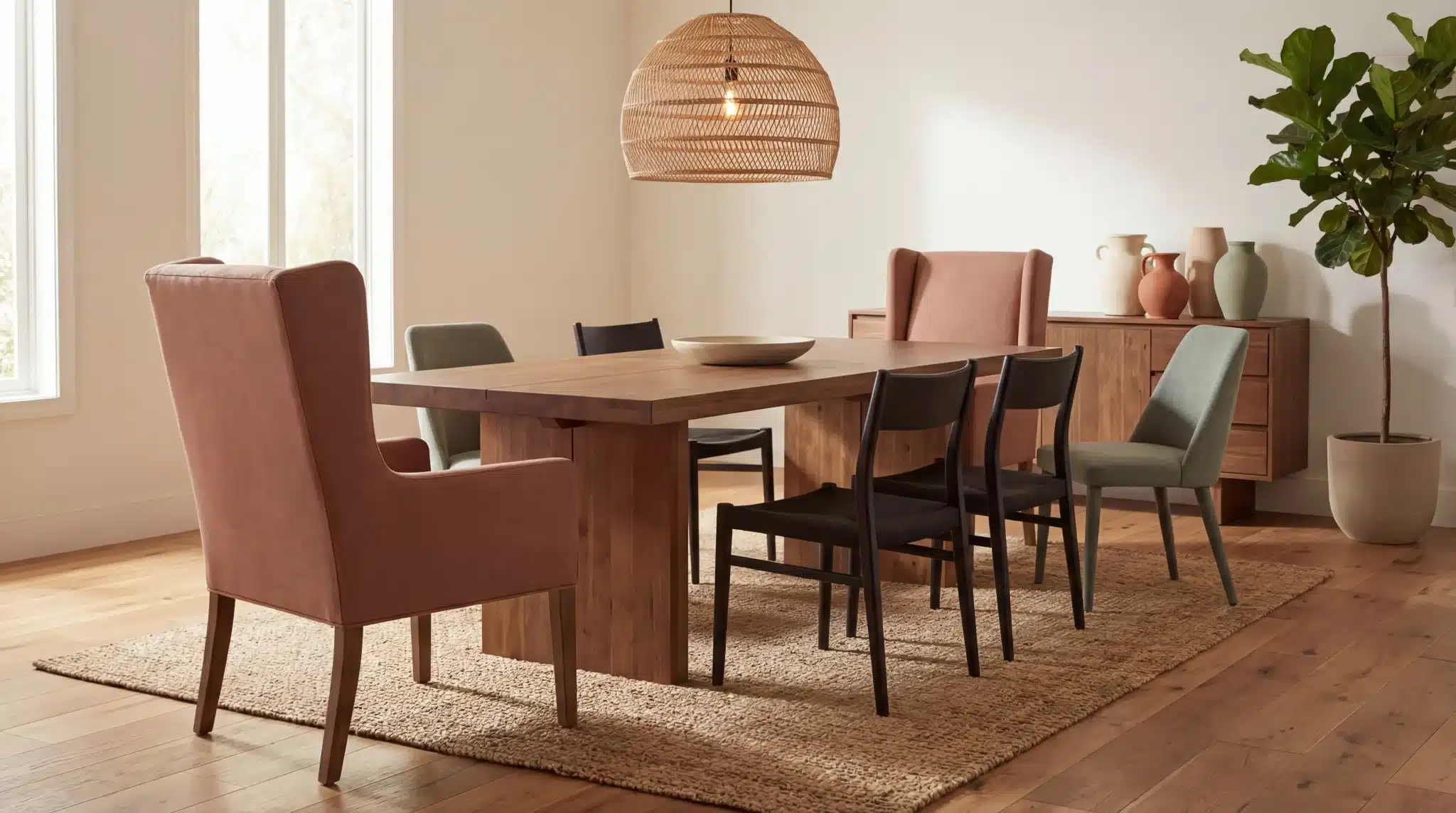
Dining chairs are much more than just somewhere to sit. When styled with purpose and paired with items that work, they can really tie a dining room together.
Often, the most beautiful dining rooms aren’t built around matching sets, either, but around carefully chosen combinations throughout the room. So, understanding how to mix and match dining chairs with things like lighting, textiles, and storage allows you to create a space that feels both personal and intentional.
Read on for ten practical ways to mix and match dining chairs with other items in your dining room, while keeping the overall aesthetic cohesive.
Start With an Anchor Piece
When designing your dining room, it’s important to establish a focal point, or anchor, that gives you a base for the rest of your design choices. This is usually the dining table because of its size, and whether it’s solid wood, painted, or something more minimalist, it sets the tone for everything else in the room.
Work out from your anchor and introduce complementary pieces such as pendant lighting above or a rug beneath to ground the space. Of course, chairs are fundamental to building out your dining room ideas, but make sure the dining table and chairs work together rather than competing for attention.
Pair Dining Chairs With Complementary Furniture
Dining chairs should always be considered alongside the furniture around them. Sideboards, console tables, and shelving units, for example, can all play an important role in reinforcing your style and personality.
You can choose to mirror the tones of your chairs with all of these options, or pick up on accent colours with bespoke paint jobs. Styling chairs and other furniture with ceramics, lamps, and books can also bring everything together nicely, creating a layered aesthetic where nothing feels out of place.
Mix Chair Materials for Depth and Texture
Combining dining chair materials is a great way to create depth, but the real impact comes when those materials are echoed around the room.
For example, if you’re mixing wooden and upholstered chairs, consider similar fabric curtains, seat cushions, or a textured rug to complement them. And if you opt for metal-framed chairs, you can reflect the vibe in lighting fixtures, curtain poles, and other metallic accessories.
Mixing materials like this creates a sense of continuity and intention in your dining area because your chairs feel connected to the wider room.
Use Colour Creatively
Colour is one of the most effective ways to mix and match dining chairs with other items in your dining room. So, think about how the tones of your chairs relate to wall colours, artwork, curtains, and table styling.
Soft neutral chairs can be paired with similar tones in linen table runners or wall art. Or if you prefer a bolder approach, accent colours you’ve used for your chairs can be utilised with vases or artwork on the walls.
As a rule of thumb, try to repeat one colour at least three times in a dining room to make it feel intentional, using the chairs as a base.
Use Different Chair Styles
Mixing chair styles adds personality to your dining area, and this becomes far more effective when supported by other design elements in the room.
For example, if you introduce upholstered head chairs at either end of the table, you might echo that softness through fabric curtains or padded bench seating. Similarly, if your side chairs are more traditional in style, consider pairing them with classic wall panelling to reinforce that aesthetic.
Doing this can create a real sense of balance, where the variation in chairs is supported by the surrounding design ideas.
Think About Proportion and Spacing
Proportion isn’t just about how dining chairs fit around the table, although that is very important. It’s also about how they sit within the wider room in terms of design and functionality.
For those blessed with high ceilings, tall chairs and high-back designs can help fill the vertical space perfectly. They can then be complemented by floor-length curtains or larger wall art to maintain balance. Alternatively, in smaller rooms, pair smaller furniture with lightly coloured chairs and fewer accessories to make the space feel less overcrowded.
Whatever space you’re working with and accessories you’re adding, getting proportion and spacing right keeps everything harmonious and much easier to use.
Introduce Contrast Without Clutter
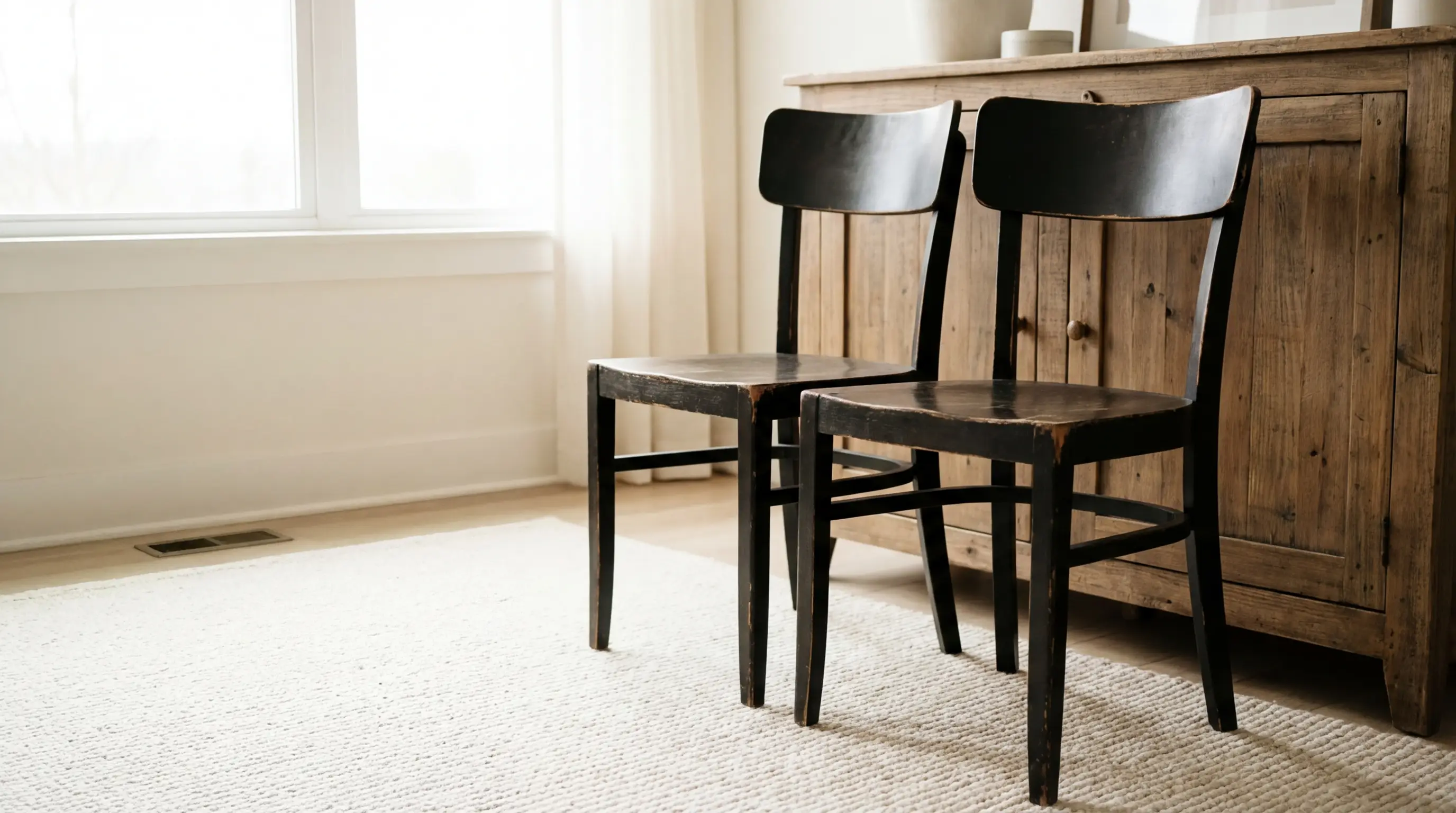
Contrast is key to creating visual interest, but it needs to be controlled.
So, when you’re mixing dining chairs with other items, choose one or two areas to make the most of contrast. This could be pairing dark chairs with a lighter rug, for example, or combining slimline, modern chairs with more traditional cabinets or units.
Soft furnishings such as cushions or curtains can also help bridge these contrasts by blending colours or textures from both elements. This prevents the room from feeling disjointed while still allowing each feature to stand out.
Create Cohesion in Open Spaces
In open-plan homes, dining chairs should connect visually with adjoining areas such as living rooms and kitchens. One brilliant way to achieve this is by repeating materials or finishes throughout the dining room area. For example, if your chairs feature natural wood, you might carry that through to coffee tables, shelving, or even kitchen stools elsewhere.
Textiles can also help unify spaces in a similar way. A well-chosen rug beneath the dining table and chairs can echo colours used in sofas or cushions from other rooms, which creates a subtle link between areas. This helps the entire space feel connected rather than divided.
Comfort Still Comes First
While styling is obviously important, comfort should always be a priority for your dining area. This is particularly true if you regularly host dinner parties or enjoy shared meals with the family throughout the week.
As such, dining chairs can almost always be improved with practical additions such as seat cushions, throws, or upholstered finishes. What’s more, these kinds of options can also add extra texture and bursts of colour to the room.
They can also tie in with curtains, rugs, or table linens so you can connect different parts of the space and improve usability simultaneously.
Don’t Be Afraid of Getting Creative
Some of the most memorable dining spaces come from creative combinations. This can mean anything from wall art to statement lighting, patterned curtains, and wallpaper. All of these, and more, can be used to improve the aesthetic of your dining chairs and bring personality into the entire room.
For example, a gallery wall behind your dining table can act as a backdrop that highlights the shapes and colours of your chairs. Similarly, a bold pendant light fitting above the table can draw attention to the entire dining setup in a memorable way.
These elements often work seamlessly together to create a layered and expressive space that feels unique to your home and personality. And this is what interior design should be all about.
Make the Most of Your Dining Room Space
Your chairs are a fundamental aspect of your dining room, but don’t overlook how they interact with everything around them, from lighting and textiles to furniture and décor. By taking a broader view and considering the entire space, you can create a space that feels stylish and personal to you and your home aesthetic.
