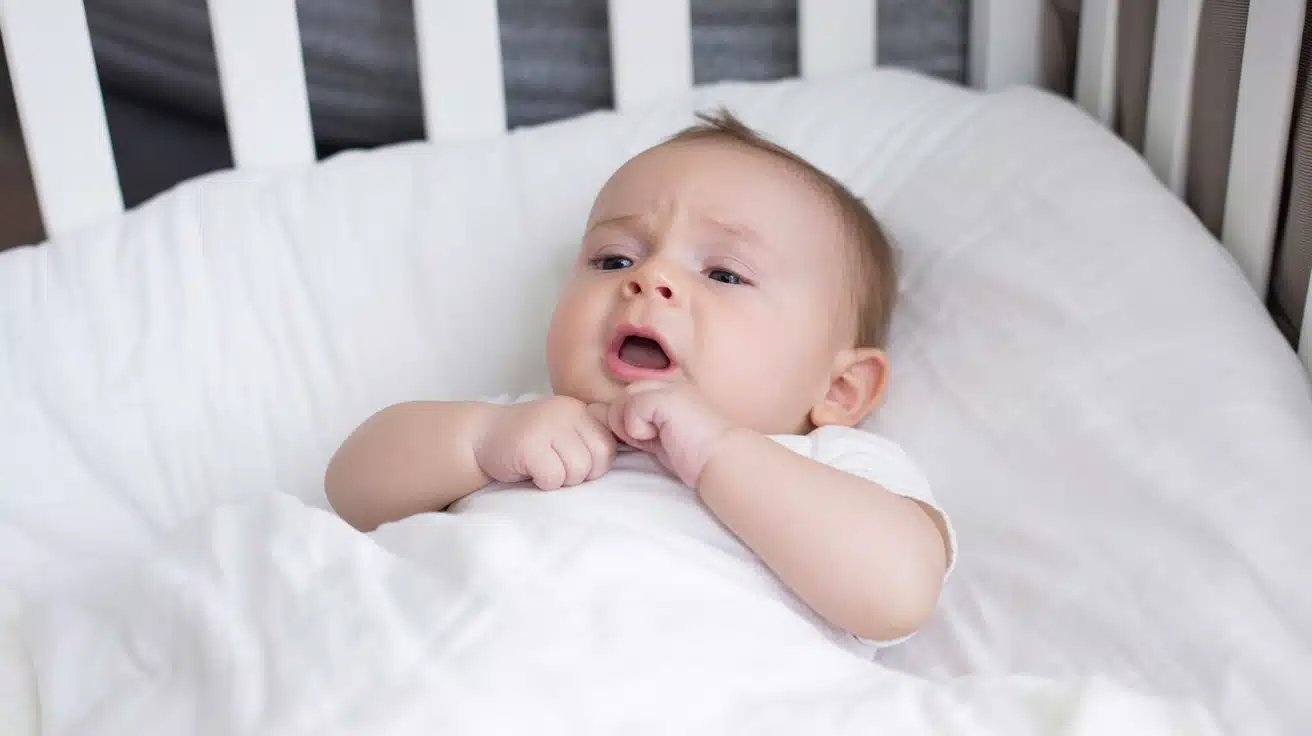
Hearing your baby cough through the monitor at 2 AM? That sound can instantly trigger parent panic mode! But take a deep breath, most nighttime coughing in babies is perfectly normal.
Baby coughs work differently from adult coughs. Sleep coughing usually has simple causes like dry air or natural reflexes clearing the tiny airways.
Still, knowing which coughs need attention versus which ones don’t can save you sleepless nights of worry.
Babies can’t blow their noses until age 4, making coughing their primary airway-clearing method!
You’ll learn to distinguish between normal nighttime coughs and warning signs that require pediatric care, so both you and your baby can rest easier.
Ready to become a baby cough detective and finally get some sleep?
Is It Normal for a Baby to Cough in Their Sleep?
Yes, newborn coughing in sleep is normal and happens sometimes. Their small airways and horizontal sleeping position make them more likely to cough than adults.
Babies also have less developed cough reflexes, so they may cough more often to clear their throats.
Occasional nighttime coughing doesn’t always mean your baby is sick. It can happen when mucus drains down their throat or when dry air irritates their airways.
Babies breathe through their noses more than adults, and lying flat can cause normal drainage to trigger coughing. Light sleep phases also make babies more sensitive to throat irritation that might not bother them while awake.
Why Babies Cough in Their Sleep?

Newborn coughing in sleep happens for several common reasons that parents can easily identify and address. Understanding these causes helps you know when to worry and when simple home remedies can help.
1. Post-Nasal Drip and Mucus Buildup
When babies lie flat, mucus drains down their throats. This drainage irritates the throat and triggers coughing fits during sleep. The horizontal position makes it harder for babies to clear mucus naturally. This type of cough often sounds wet or rattling.
2. Dry Air in The Bedroom
Low humidity dries out a baby’s throat and airways, causing irritation and nighttime coughing. Winter heating and air conditioning remove moisture, and babies breathe through their mouths more often, which speeds up throat drying during sleep.
3. Acid Reflux (GERD)
Stomach acid moves up into the throat when babies lie down. This acid irritates the throat and causes coughing episodes at night. Babies have weaker stomach muscles that allow acid to escape easily. The cough from reflux often happens 1-2 hours after feeding.
4. Allergies and Irritants
Dust, pet hair, smoke, or strong smells in the bedroom can trigger allergic reactions. These reactions often cause babies to cough while sleeping. Common triggers include laundry detergent, air fresheners, and cleaning products. Even small amounts can affect the sensitive airways of babies.
5. Croup Infection
This viral infection causes swelling in the airways. It creates a distinct barking cough that gets worse at night. The swelling happens around the voice box and windpipe. Parents describe this cough as sounding like a seal barking.
6. Leftover Cough from Illness
After a cold or virus clears up, babies may still cough for weeks. This lingering cough often happens more at night when lying down. The airways remain sensitive even after other symptoms fade. This dry cough may last 2-8 weeks after recovery.
NOTE: Contact your pediatrician if the cough persists, worsens, or includes fever or breathing problems. Most nighttime coughs can be effectively treated once properly diagnosed.
Types of Nighttime Coughs in Babies
Different cough sounds can help parents identify what might be causing their baby’s nighttime discomfort. Learning to recognize these cough patterns makes it easier to provide the right comfort measures and know when medical attention is needed.
| COUGH TYPE | SOUND DESCRIPTION | COMMON CAUSES | KEY FEATURES |
|---|---|---|---|
| Dry, hacking cough | Sharp, harsh sound without mucus | Allergies, acid reflux, and dry air | Wakes babies frequently, sounds irritating |
| Wet or phlegmy cough | Rattling, bubbly sound with mucus | Cold aftermath, viral infections | Mucus buildup, babies struggle to clear their airways |
| Barking cough | Harsh sounds like a seal barking | Croup infection | Gets worse at night, a distinctive, unusual noise |
| Gagging cough | Sounds like trying not to vomit | Acid reflux, pooled saliva | Happens when stomach contents move up the throat |
Each type of cough provides clues about the underlying cause and helps parents know when to call their doctor for guidance.
Safe Home Remedies and Solutions

When your baby’s nighttime cough disrupts sleep, simple home remedies can provide safe relief. These gentle approaches focus on creating comfort naturally without harsh medications or invasive treatments.
Gentle Ways to Soothe Your Baby’s Nighttime Cough:
When your baby’s nighttime cough disrupts sleep, simple home remedies can provide safe relief. These gentle approaches focus on creating comfort naturally.
Environmental Modifications:
Use a cool-mist humidifier placed three feet from the crib, maintaining 30-50% humidity. Safely elevate the crib head by placing a towel under the mattress. Keep room temperature at 68-70°F for optimal comfort.
Natural Comfort Measures:
Apply 1-2 saline drops in each nostril before bedtime for babies over one month. Gentle petroleum jelly chest rubs work for babies over three months. Ensure adequate hydration through frequent nursing or formula feeding.
With patience and consistency, these safe remedies help most babies find relief within days for peaceful sleep. Always consult your pediatrician if symptoms persist or worsen despite home care efforts.
When to Contact a Doctor?

Not every baby coughing in sleep needs a doctor visit, but some signs require immediate attention. Call your pediatrician right away if your baby has a fever over 100.4°F, especially in babies under three months old.
Watch for breathing problems like wheezing, fast breathing, or difficulty catching breath between coughs. If your baby refuses to eat, appears fussy, or behaves differently than usual, these are warning signs.
A cough lasting more than two weeks needs medical review. Also, contact your doctor if the coughing gets worse instead of better, or if you notice thick, colored mucus.
Trust your instincts as a parent. If something feels wrong about your baby’s cough, don’t hesitate to call for professional guidance and peace of mind.
Wrapping It Up
Does your baby’s nighttime coughing make you jump out of bed? That familiar sound through the monitor sends most parents into worry mode instantly! Here’s reassuring news: nighttime coughing is usually completely normal.
Baby coughs differ from adult ones. Sleep coughing typically stems from simple causes like dry air or natural reflexes clearing their airways. Knowing which coughs signal trouble versus harmless ones saves anxious nights.
Babies can’t blow their noses until age 4, so coughing is their primary airway-clearing tool!
Learn to identify normal nighttime coughs versus warning signs needing medical attention, helping everyone sleep peacefully.
Ready to master nighttime cough mysteries and finally rest easy? What cough sounds worry you most? Share below! Click here for more parenting solutions!