Here’s what every parent needs to know: your baby’s venture with shoes is all about timing and purpose! Those precious little feet are designed to explore, learn, and grow without restrictions.
Think of bare feet as your baby’s natural learning tools; they’re constantly gathering information about the world around them.
The magic happens when you follow your baby’s lead. Watch for those confident steps, observe their outdoor ventures, and trust the process. Every baby develops at their own pace, so there’s no need to rush into the shoe game.
Baby feet have over 200,000 nerve endings, which is more than their hands! No wonder they love being barefoot.
Your little explorer knows what they need, and now you do too!
Buckle up for some toe-tally amazing insights!
Why Babies Don’t Need Shoes Immediately
Ever wonder why your baby keeps kicking off those adorable, tiny shoes? They’re doing themselves a favor! Here’s the thing, baby feet are like little learning machines that need direct contact with the world.
When babies go barefoot, their feet can feel different textures, temperatures, and surfaces.
This sensory feedback is like a GPS system for their developing brain, helping them learn balance and coordination. Think of it as their feet “talking” to their brain about where they are and how to move.
Those tiny foot muscles also become stronger when they’re not confined in shoes. It’s like going to a mini gym every time they wiggle their toes!
Pediatricians and child development experts agree: bare feet are best until your little one is confidently walking around independently.
Pretty amazing what those tiny toes can do, right?
Key Developmental Stages in a Baby’s Feet
Every baby’s shoe experience follows a predictable pattern tied to their walking milestones. Here’s your handy roadmap showing exactly what footwear (if any!) your little one needs at each stage.
| DEVELOPMENTAL STAGE | AGE RANGE | FOOTWEAR RECOMMENDATION | WHY THIS WORKS |
|---|---|---|---|
| Pre-walking (crawling, cruising) | 0-12 months | Barefoot or soft booties/non-slip socks indoors | Allows natural foot development and sensory feedback |
| First independent steps | 9-15 months | Flexible, lightweight shoes for outdoor protection | Provides safety while maintaining foot flexibility |
| Confident walking | 12-18 months | Proper-fitting shoes for regular outdoor use | Supports established walking patterns and protects feet |
NOTE: These are general guidelines; your baby might be ready earlier or later than these ranges. The key is watching your child’s individual development rather than sticking rigidly to age numbers!
Signs Your Baby Is Ready for Shoes
Wondering if it’s finally time to shop for those adorable first shoes? Your baby will give you some pretty clear signals when they’re ready to leap barefoot into footwear!
1. Walking Stability
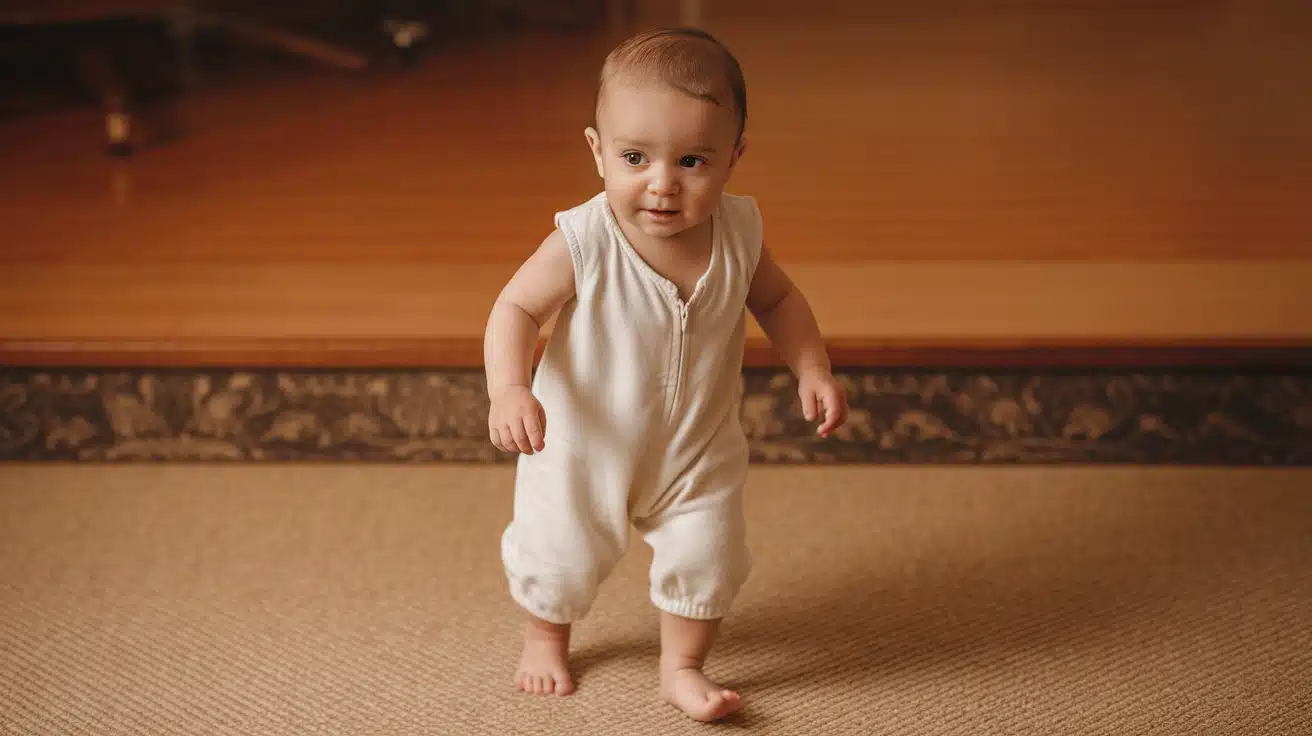
The baby walks without falling frequently indoors. They can take several steps in a row without losing balance. Their walking appears steady and confident on various indoor surfaces, including hardwood, carpet, and tile.
When babies reach this level of stability, they have developed the muscle strength and coordination needed to handle shoes without interference.
2. Outdoor Interest
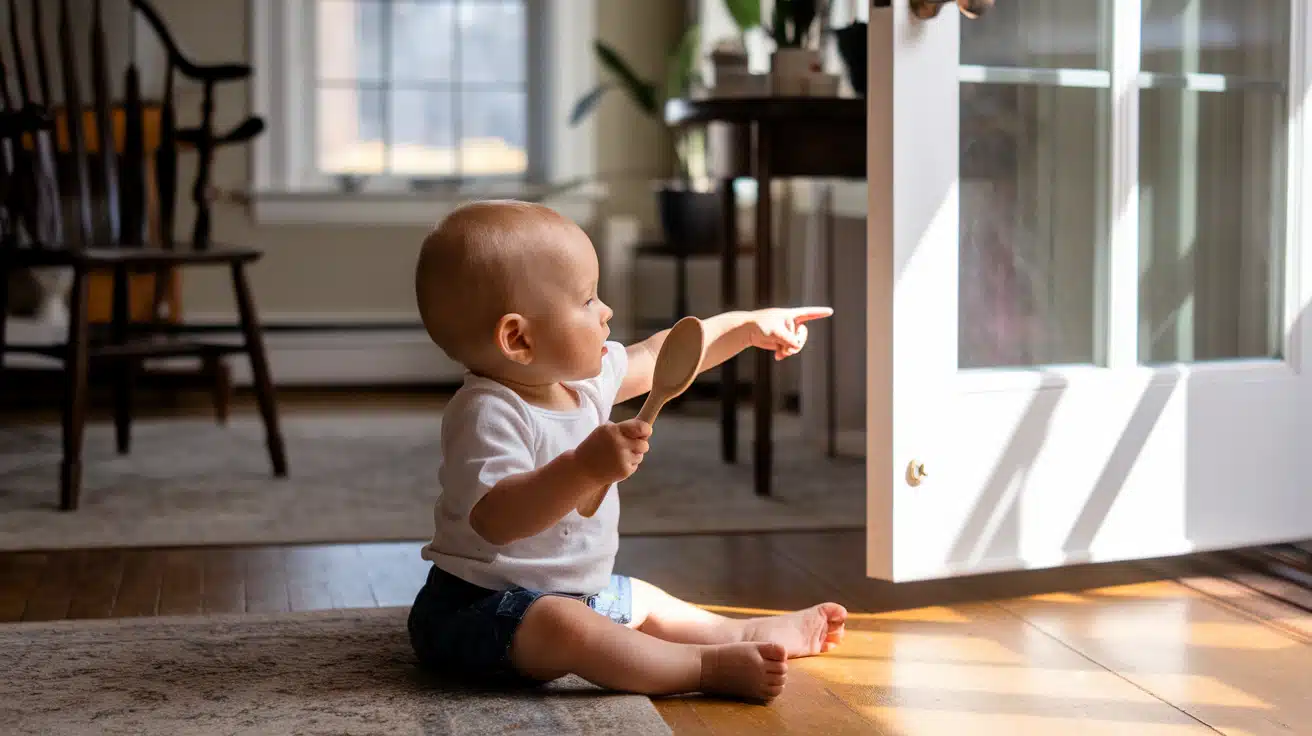
The baby wants to walk on outdoor surfaces, such as grass, pavement, or playground areas. They show interest in exploring different textures outside the home.
Parents often notice their babies pointing toward doors or trying to walk outside barefoot. This natural curiosity about outdoor environments signals readiness for protective footwear.
3. Foot Sensitivity

The baby shows discomfort when walking on rough or cold surfaces. They may lift their feet quickly or refuse to walk on certain outdoor textures.
This sensitivity indicates they need protection from harsh surfaces. Babies might cry or sit down when their bare feet touch uncomfortable ground, showing they understand the need for security.
4. Independent Movement

The baby walks independently without holding onto furniture or hands. They can start and stop walking independently without support.
Independent walkers have mastered the basic mechanics of walking and can handle the slight changes that shoes bring to their movement patterns.
REMEMBER: Every baby hits these milestones at their own pace; some reach them by 12 months, while others do so closer to 18 months. Trust your little one’s development and enjoy watching them take confident steps into their shoe wearing venture!
How to Choose the First Baby’s Shoes
Ready to shop for those milestone first shoes? The perfect pair should feel like a natural extension of your baby’s bare feet while providing just enough protection for outdoor adventures.
Key Features to Look For:
- Flexible and lightweight design: Look for shoes that bend easily in your hands and feel almost weightless, allowing natural foot movement just like going barefoot.
- Breathable materials with non-slip soles: Choose soft fabrics or leather uppers with flexible rubber soles that provide traction without being stiff or clunky.
- A perfect fit matters most: Ensure a snug heel and midfoot, with about a thumb’s width of space at the toes, allowing little feet room to grow and wiggle.
- Easy-on fasteners for busy parents: Opt for Velcro straps or elastic openings rather than laces, making shoe changes quick and stress-free.
- Skip the fancy stuff for now: Avoid flip-flops, Crocs, or hard-soled dress shoes that can interfere with natural walking development.
Remember, the best first shoes are the ones your baby can barely feel they’re wearing! When in doubt, choose flexibility and comfort over style, there’s plenty of time for fashion later.
Pre-walker Shoes vs. Walking Shoes
Not all baby shoes are created equal! Understanding the difference between pre-walker and walking shoes helps you choose the perfect footwear for your little one’s current mobility level.
| FEATURE | PRE-WALKER SHOES | WALKING SHOES |
|---|---|---|
| Purpose | Protection during crawling and cruising | Support for independent walking |
| Sole Flexibility | Ultra-flexible, bends completely | Flexible but with a slight structure |
| Grip Pattern | Minimal traction for indoor use | Better grip patterns for various surfaces |
| Heel Support | Soft, no structure needed | Light structure around the heel for stability |
| Best For | Babies pulling up, cruising furniture | Confident independent walkers |
| Feel | Like protective socks with a barrier | Supportive yet flexible footwear |
The key difference is subtle but important: pre-walkers prioritize natural foot development, while walking shoes add protection and stability. Both should feel almost weightless on your baby’s feet!
Transition Tips: Helping Your Baby Adjust
Making the switch to shoes requires patience and a gradual introduction to ensure comfort and confidence. These tips will help your baby adapt to wearing shoes without stress or discomfort.
1. Start Indoors: Begin shoe wearing inside the house for short periods on familiar surfaces. Let babies walk around rooms they know well while getting used to the feel of shoes.
2. Short Wear Time: Limit initial wearing to 15-20 minutes, gradually increasing duration as babies adapt. This prevents foot fatigue and allows gradual adjustment to the different sensations.
3. Monitor for Discomfort: Watch for red marks, fussiness, or attempts to remove shoes during wearing sessions. Check feet after each session for pressure points or rubbing.
4. Watch for Trips: Stay close and provide support as new walkers may stumble more with shoes initially. Shoes change how feet feel the ground, temporarily affecting balance.
5. Gradual Introduction: Increase wearing time by 10-15 minutes daily once babies show comfort and confidence. Move from short indoor sessions to longer periods as adaptation occurs.
6. Increase Outdoor Use: Expand to outdoor activities, starting with smooth surfaces before moving to varied terrains. Begin with sidewalks or driveways, then progress to grass and playground surfaces.
Remember that every baby adjusts at their own pace, so don’t rush the process if your little one needs extra time. With patience and consistency, the baby will soon be walking confidently in their new shoes.
Wrapping It Up
Here’s the scoop: babies don’t need shoes until they’re walking outdoors regularly! For the first 15-18 months, bare feet or socks with grips are your best bet.
Why? Baby feet need to feel different textures, temperatures, and surfaces to develop properly. This helps with balance, coordination, and building strong foot muscles.
Think of it this way: would you learn to play the piano while wearing thick gloves? Baby feet work the same way!
Once your little one is confidently walking outside, real shoes become essential for protection and comfort. Look for flexible, lightweight options that bend easily. Avoid hand-me-down shoes since every foot is different.
Remember: happy feet make happy babies, and happy parents too!
At what age did your baby take their first outdoor steps? Share your story below!
Curious about other baby milestones and must-haves? Unlock more parenting secrets here!