Are you watching your little one every day?
Wondering what activities will help them grow and learn best?
You’re not alone in asking these questions.
Every parent wants to give their baby the best start in life.
Your baby learns through every giggle, every reach, and every curious look.
From birth to age two, your child’s brain grows faster than ever.
Each activity you do together builds important skills.
These activities help with moving, thinking, talking, and feeling safe.
This guide gives you easy activities.
We have sorted them by age so you know what works best.
No fancy toys needed, just your love and attention.
Why Play Time Matters for Your Baby?
Playtime is more than fun.
It’s how babies learn.
Each playful moment builds brain connections for walking, talking, and thinking.
Reaching and moving strengthen muscles, while new experiences boost problem-solving skills.
Hearing your voice during play supports language growth.
Experts say the first two years shape future learning, making early play essential.
The best part?
Your baby doesn’t need fancy toys or classes.
They need you, your attention, and simple activities at home.
With love and interaction, everyday play becomes the foundation for your child’s healthy development and success.
Understanding Your Baby’s Growth Stages
Every baby grows at their own pace.
But most babies reach similar milestones around the same time.
Here’s a simple guide to help you understand what happens when:
| AGE | WHAT THEY CAN DO | BEST ACTIVITIES |
|---|---|---|
| 0-6 months | Hold head up, follow with eyes | Tummy time, music, gentle touch |
| 6-12 months | Sit up, crawl, grab things | Peek-a-boo, stacking cups, finger foods |
| 12-24 months | Walk, say words, pretend play | Dancing, sorting games, and make-believe |
Remember, these are just guidelines.
Some babies do things earlier or later than others.
Both are perfectly normal and okay.
The most important thing is watching your baby.
Follow their lead and have fun together.
Activities for 0-6 Months (Sensory Exploration & Early Motor Skills)
Your tiny baby is just starting to see the world.
Their eyes are learning to focus properly.
Their little muscles are getting stronger each day.
At this age, simple activities are most effective.
Your baby loves looking at your face most of all.
They also enjoy gentle sounds and soft touches.
1. Tummy Time Fun

Place your baby on their tummy for short periods.
Start with just two or three minutes after diaper changes.
This helps build the muscles in the neck and back.
Put a colorful toy just in front of them.
This gives them something exciting to look at.
Lie down face-to-face and talk to them.
Your voice makes tummy time more enjoyable for everyone.
2. Black and White Picture Cards

Newborn babies see bold patterns better than soft colors.
Show them simple black-and-white cards or pictures.
Move the cards slowly from side to side.
Watch how their eyes try to follow the movement.
This helps their vision develop properly.
You can make cards at home with paper.
Draw simple shapes like circles, stripes, or dots.
3. Mirror Magic Time

Hold your baby in front of a safe, unbreakable mirror.
They will be amazed by the baby looking back at them.
This helps them learn about faces and expressions.
Talk to them while looking in the mirror together.
Point to their nose, eyes, and mouth. Say the names of body parts.
This is their first step toward knowing themselves.
4. Gentle Music and Songs

Play soft music or sing lullabies to your baby.
Your voice is their favorite sound in the world.
Classical music and simple nursery rhymes work wonderfully.
Rock gently while singing or playing music.
This combines hearing with gentle movement.
Both help their brain development.
5. Following Toy Games

Hold a bright, colorful toy about 12 inches from their face.
Move it slowly left and right.
Watch as their eyes learn to track the movement.
This simple game builds important eye muscles.
It also teaches them to focus attention.
Use toys with different colors and shapes.
6. Baby Massage Time

Gently massage your baby’s arms, legs, and back with warm hands.
Use slow, gentle strokes.
This helps them relax, feel loved, and secure.
Baby massage improves blood flow and helps them sleep better.
It also creates special bonding time together.
Talk softly or sing while you massage.
7. Rattle and Shake

Give your baby a soft, lightweight rattle. Help them hold it if needed.
When they shake it, sounds happen. This teaches cause-and-effect thinking.
Choose rattles that make gentle, pleasant sounds. Loud noises can scare tiny babies.
Let them see different rattles with various sounds.
This helps their hearing development grow stronger.
8. Diaper Change Conversations

Talk to your baby during every diaper change.
Tell them what you’re doing step by step.
This helps them learn language patterns and sounds.
Sing simple songs or make funny faces.
These everyday moments become learning opportunities.
Your baby learns that communication is a fun and enjoyable experience.
9. Soft Toy Grasping

Offer lightweight, soft toys for your baby to grab.
Their grip is still developing slowly.
Choose toys that fit easily in tiny hands.
When they grab something, celebrate with smiles and happy words.
This encourages them to keep trying new things.
Soft fabric toys are more effective than hard plastic ones at the moment.
10. Texture Exploration Blankets

Place your baby on different textured fabrics and blankets.
Let them feel the softness of cotton, the bumpy texture of corduroy, or the smoothness of satin.
This develops their sense of touch.
Watch their reactions to different textures. Some babies love soft materials.
Others prefer slightly rougher textures. This helps you learn what your baby enjoys most.
Activities for 6-12 Months (Exploration, Crawling & Social Skills)
Your baby is becoming more active and curious now.
They can sit up and maybe crawl around.
Everything goes straight into their mouth for exploring.
This is an exciting time for new discoveries.
Your baby loves to drop things and watch what happens.
11. Sensory Bags with Safe Items

Fill a sealed plastic bag with hair gel and small, colorful toys.
Tape it shut very securely.
Your baby can squish and push safely without making messes.
Place the bag on their high chair tray.
They will love pressing the items around inside.
This develops hand strength and curiosity.
Always supervise and ensure the bag remains sealed.
12. Peek-a-Boo with Scarves

Hide behind a colorful scarf and pop out saying peek-a-boo!
Your baby will giggle and want you to do it again.
This teaches that things exist even when hidden.
Let them hold the scarf and try hiding themselves.
This builds problem-solving skills.
Use different colored scarves or small blankets.
13. Stacking Cup Tower Fun

Give your baby plastic stacking cups in different sizes.
Show them how to put one inside another.
Let them figure out their own ways to play.
They might stack them, nest them, or just bang them together.
All of these actions build hand-eye coordination skills.
Stacking cups are perfect for bath time play, too.
14. Push and Pull Toy Games

Offer safe push toys or attach strings to small boxes.
Your crawling baby will love making things move.
This encourages them to crawl and chase after toys.
Confirm that Strings are kept short to prevent safety issues.
Empty boxes work just as well as store-bought toys.
Fill them with rice or beans for interesting rattling sounds.
15. Finger Food Fun Times

Offer soft finger foods, such as banana pieces or cooked carrots, to help your child transition smoothly.
Let your baby feed themselves, even if it’s messy.
This builds independence and fine motor skills.
Put a few pieces on their high chair tray.
They will practice picking up small items.
This prepares their fingers for writing later.
Always supervise eating and choose safe food sizes.
16. Clapping and Copy Games

Clap your hands and encourage your baby to copy you.
Try different rhythms, such as slow claps or fast claps.
This builds rhythm awareness and copying skills.
Add simple words like “clap” while you play.
Your baby will start connecting actions with words.
These games build the foundation for future learning.
17. Water Splash Bath Play

Let your baby splash safely in shallow bath water.
Give them cups to fill and pour.
Water play is soothing and teaches about cause and effect.
Add floating toys or washcloths to make it more interesting.
Always stay within arm’s reach when playing in the water.
Never leave them alone, even for one second.
18. Drop and Find Container Games

Give your baby a large container and safe objects to drop inside.
They will love hearing the sounds different items make.
This teaches cause-and-effect thinking.
Use items like blocks, balls, or even measuring spoons.
Each makes a different sound when dropped.
Your baby is learning about sound, gravity, and their own power.
19. Touch and Feel Book Reading

Share board books with different textures on each page.
Let your baby touch fuzzy animals or smooth cars.
This combines early reading with sensory exploration.
Point to pictures and say the words clearly.
Even if they can’t talk yet, they’re learning language.
Choose books with simple, clear pictures and interesting textures to explore.
20. Safe Obstacle Crawling Course

Use pillows and cushions to create a simple crawling path.
Make it safe and low to the ground.
Your baby will love the challenge of crawling over obstacles.
Place a favorite toy at the end as a motivator.
This builds confidence and gross motor skills.
Change the course regularly to keep it interesting and challenging.
Activities for 12-24 Months (Language, Coordination & Creativity)
Your toddler is walking, talking, and getting into everything!
They love to copy what you do.
They’re also starting to use their imagination during play.
This age is all about exploration and independence.
Your toddler wants to do things on their own.
Please provide them with safe opportunities to practice new skills every day.
21. Color Sorting Muffin Tin Game

Use a muffin tin and colorful pom-poms or toys.
Show your toddler how to sort by color.
Place red items in one cup and blue items in another.
Start with just two colors to keep it simple.
Add more colors as they get better.
This teaches early math concepts, such as sorting and grouping.
Praise their efforts, even if sorting isn’t perfect.
22. Play-Doh Rolling and Squeezing

Give your toddler soft play-dough to squish and roll.
Show them how to make balls or snakes.
This strengthens the little hand muscles needed for writing later.
Let them explore freely without worrying about making specific shapes.
The squeezing and rolling motion is what builds strength.
Add cookie cutters or plastic tools for more fun.
23. Pretend Cooking Kitchen Time
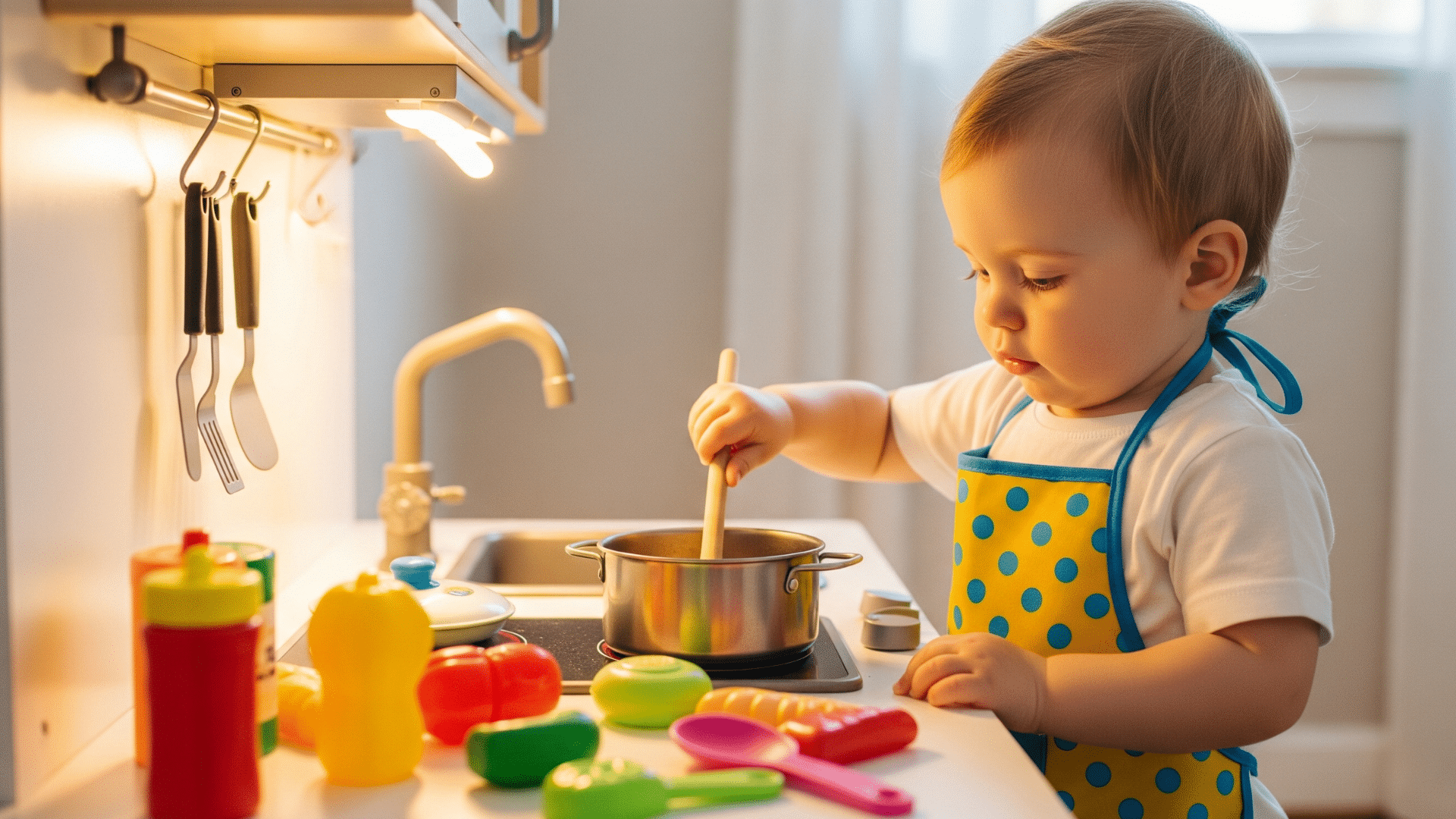
Set up a pretend kitchen with safe pots, spoons, and plastic food.
Your toddler will love copying your cooking actions. This builds imagination and vocabulary skills.
Use real (safe) kitchen items like wooden spoons and measuring cups.
They feel more grown-up using real things. Talk about what you’re cooking together to build language skills.
24. Sticker Peel and Stick Art

Give your toddler large stickers to peel and stick.
This is harder than it looks!
Peeling stickers builds fine motor skills and finger strength.
Use big stickers that are easier to grab.
Let them stick stickers on paper or cardboard.
Don’t worry about making perfect pictures; the practice of peeling is most important.
25. Outdoor Bubble Chasing Fun

Blow bubbles outside and let your toddler chase them.
They will run, reach, and pop bubbles everywhere.
This helps develop gross motor skills and brings a lot of joy.
Use a bubble machine or a simple bubble wand.
Bubbles help toddlers practice tracking moving objects.
The running and reaching build coordination and balance skills as well.
26. Shape Sorter Problem Solving

Offer shape sorting toys with circles, squares, and triangles.
Your toddler will figure out which shapes fit where.
This teaches problem-solving and spatial thinking skills.
Don’t rush to help right away.
Let them try different ways first.
When they get frustrated, offer gentle hints.
27. Laundry Sorting Helper Game

Ask your toddler to help sort laundry by colors.
Give them socks to match or shirts to group.
This turns chores into learning opportunities for everyone.
Start with obvious differences, such as light and dark colors.
They will feel proud helping with real grown-up work.
This teaches colors, matching, and helping family members together.
28. Animal Movement Dance Party

Act like different animals together; hop like bunnies, crawl like bears.
This combines pretend play with physical exercise.
Your toddler will giggle and learn simultaneously.
Call out different animals and move together as a group.
Add animal sounds to make it more fun.
This builds gross motor skills, imagination, and listening skills simultaneously.
29. Simple Sock Puppet Shows

Use clean socks to make simple puppets together.
Draw faces with washable markers.
Put on little shows with different puppet voices and personalities.
Keep stories short and straightforward to capture a toddler’s attention span.
Let your toddler help make the puppet talk.
This builds creativity, language skills, and storytelling abilities naturally.
30. Sandbox Treasure Hunt

Hide small toys in a sandbox for children to learn.
Your toddler will love digging and finding hidden treasures.
This builds problem-solving skills and sensory development together.
Use measuring cups and shovels for digging tools.
Hide different textured items, such as smooth stones or bumpy toys.
Always supervise sandbox play and check for safety.
31. Scarf Dancing Music Time

Play upbeat music and dance with colorful scarves. Wave them high and low, fast and slow.
This builds rhythm awareness and gross motor coordination skills.
Let your toddler choose their favorite scarf colors. Dance together and copy each other’s movements.
This combines music, movement, and bonding time all together perfectly.
Important Safety Tips to Remember
Safety should always be the top priority during playtime.
Babies explore with their mouths and move faster than you think, so be prepared.
- Supervise all play, especially near water or with small items.
- Select age-appropriate toys with no small parts that could pose a choking hazard.
- Keep play areas clean and wash toys frequently to prevent the spread of germs.
- Check toys for damage, such as sharp edges or broken pieces, regularly.
- Prevent choking hazards by avoiding tiny objects and cutting food into small, safe pieces.
- Baby-proof your space with gates, outlet covers, and secured furniture.
If something feels unsafe, skip it. Your child’s safety is more important than any activity.
Planning Your Weekly Activity Schedule
Having a simple plan helps you stay consistent with development activities.
But don’t make it too rigid or stressful. Flexibility works better with babies and toddlers.
Sample Weekly Plan:
| DAY | MORNING ACTIVITY | AFTERNOON ACTIVITY |
|---|---|---|
| Monday | Tummy time and music | Sensory bag exploration |
| Tuesday | Mirror play and talking | Stacking cup games |
| Wednesday | Book a reading together | Bubble chase outside |
| Thursday | Play-doh creativity | Dance party time |
| Friday | Color sorting games | Water play in a tub |
Remember that some days won’t go according to plan.
Follow your child’s mood and energy level.
Happy, relaxed play time works better than forced activities.
Final Thoughts
You now have fun activities to help your baby learn and grow.
Remember, your love and attention matter more than any fancy toys or complicated plans.
Every time you play together, you help your baby build important skills for the future.
Start with activities that match their age and follow their interests.
Some activities will be instant favorites, while others may work later.
Don’t compare your baby to others because every child grows at their own pace.
Celebrate small wins and enjoy these special moments.
The early years pass fast, so make the most of every giggle and smile.
Ready to begin? Pick one activity today and see the joy on your baby’s face.