

You know that feeling when you’re about to leave for vacation, and you can’t shake the thought that you’re forgetting something important?
That’s precisely how many moms feel about packing their hospital bag. The difference is, you can’t just run to a store if you forget your favorite pillow or that one specific snack you’ve been craving.
Packing for the hospital isn’t about cramming everything you own into a duffel bag.
It’s about bringing the right things that’ll keep you comfortable, prepared, and focused on meeting your baby instead of wishing you’d packed differently.
Whether you’re a first-time mom or this is baby number three, having a solid plan takes the stress out of those final weeks.
Let’s walk through exactly what you need, what you don’t, and when to have it all ready.
When Should You Pack Your Hospital Bag?
Most experts recommend packing your hospital bag around week 35 or 36 of your pregnancy. That gives you plenty of time before your due date while everything is still fresh in your mind.
Plus, you won’t feel rushed or stressed trying to remember what you need when contractions start.
That said, every pregnancy is different. If you’re having twins or multiples, your doctor might suggest packing earlier since these babies often arrive ahead of schedule.
The same goes if you have any pregnancy complications or if your healthcare provider mentions the possibility of early delivery. Better to have it ready and not need it than scramble at the last minute.
Here are some practical reasons to pack earlier than week 35:
- Babies don’t always follow the schedule. Labor can start unexpectedly, and you’ll feel so much calmer knowing your bag is ready to grab and go.
- Energy levels drop in the third trimester. You might feel more motivated to pack at 32 weeks than at 38 weeks when you’re exhausted and uncomfortable.
- It gives your partner or support person time to familiarize themselves with what’s packed and where everything is located.
- You can add or remove items as you think of them, rather than doing everything in one overwhelming session.
Keep your packed bag in an easy-to-access spot near the door. Let your partner know where it is and what’s inside.
You can also keep a small list on your phone of last-minute items to grab, like your phone charger or glasses.
And remember, hospitals have most essentials if you forget something. This isn’t a test you can fail. It’s just about making those first days a little easier.
What to Pack for Mom?
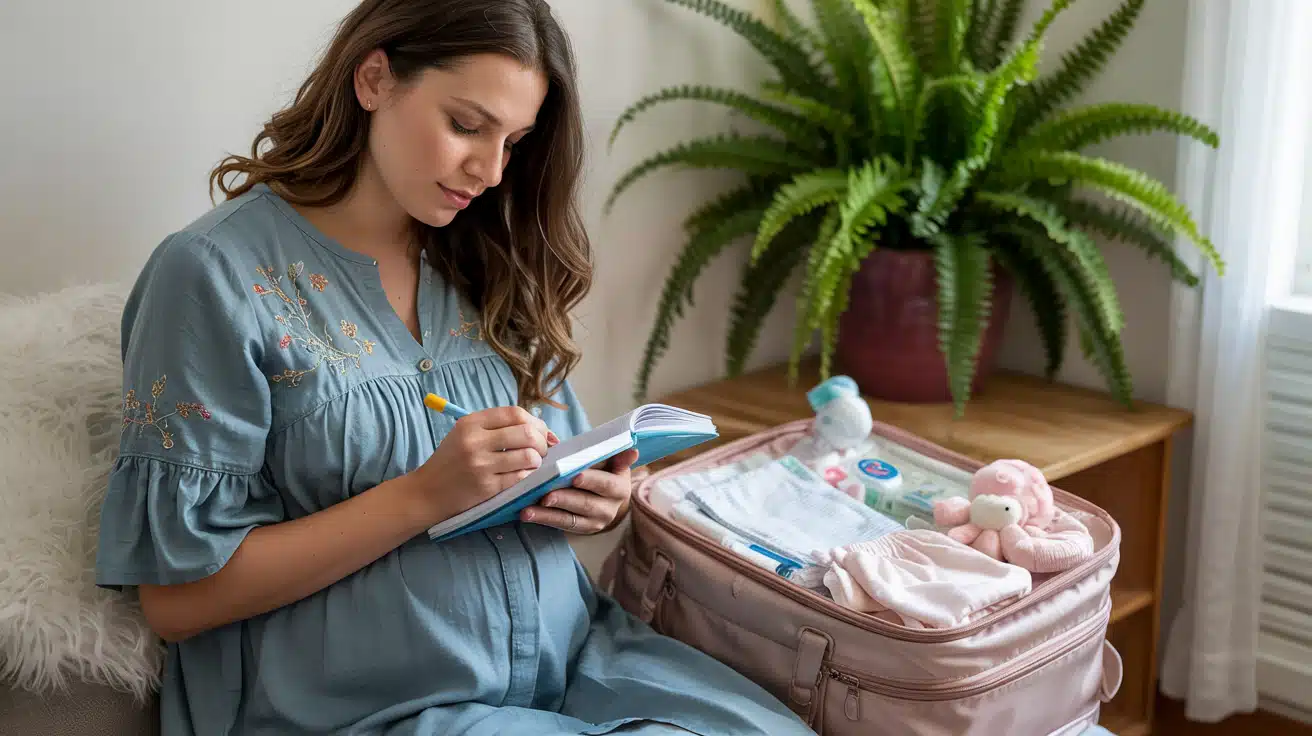
Let’s talk about you. After all, you’re the one doing all the hard work, so your comfort matters. The key is packing items that’ll make you feel like yourself during labor and those first few days of recovery.
Comfortable clothing for labor and recovery:
□ 2-3 loose nightgowns or oversized button-up shirts for easy nursing access
□ A cozy robe for walking the halls or extra warmth
□ Going-home outfit (similar size to what you wore at month six)
□ Comfortable slippers or slip-on shoes
Nursing bras, underwear, and socks:
□ 2-3 nursing bras or sleep bras (nothing with underwire)
□ High-waisted underwear you don’t mind tossing (the hospital provides mesh ones, but some moms prefer their own)
□ Several pairs of non-slip socks (hospital floors are cold, and you’ll be up and down a lot)
□ Breast pads if you’re planning to nurse
Toiletries and personal care items:
□ Travel-size shampoo, conditioner, and body wash
□ Toothbrush, toothpaste, and floss
□ Hair ties, headband, or clips
□ Face wash and moisturizer
□ Lip balm (hospitals are dry)
□ Deodorant
□ Any makeup you’d like for photos
Phone charger and everyday essentials:
□ Phone charger with a long cord
□ Insurance cards and ID
□ Cash or card for vending machines or cafeteria
□ Glasses or contacts if you wear them
□ Any medications you take regularly (check with your doctor first)
These basics will cover most of what you need. Now let’s look at items that’ll help you through labor and those first recovery days.
Labor and Postpartum Essentials for Mom
Beyond the basics, there are specific items that can make labor more manageable and recovery a bit gentler. These are the things that help you cope, heal, and adjust.
Comfort items for labor:
□ Pillow from home with a colored pillowcase (so it doesn’t get mixed up with hospital linens)
□ Portable speaker for calming music or white noise
□ Focal point photo or object for breathing exercises
□ Lip balm for dry mouth between contractions
□ Facial mist or cooling spray
□ Massage oil or lotion if your partner will help with back rubs
Post-birth recovery basics:
□ Maternity pads (the hospital provides these, but you might prefer a specific brand)
□ Peri bottle (again, hospitals give you one, but you can bring your own)
□ Witch hazel pads or spray
□ Stool softener (ask your doctor for recommendations)
□ Nipple cream if you’re planning to breastfeed
Nursing and feeding supplies:
□ Nursing pillow, if you have a favorite
□ Nipple shields if recommended by a lactation consultant
□ Breast milk storage bags
□ Nursing cover if you prefer privacy
Items that support rest and comfort:
□ Eye mask and earplugs if you’re a light sleeper
□ Cozy slippers that are easy to slip on
□ A small fan (some hospital rooms get warm)
□ Snacks like granola bars, crackers, or trail mix
□ Electrolyte drinks or your favorite beverages
The hospital will handle most medical needs, but these personal touches can make a big difference in how comfortable you feel.
Pack what matters to you and skip what doesn’t. There’s no perfect list, just what works for your situation.
What to Pack for Baby?

Your little one won’t need much at the hospital since they’ll be wearing those adorable newborn shirts and swaddles the nurses provide. But there are a few items you’ll want to have ready for when it’s time to head home.
Going-home outfit:
□ One newborn-size outfit (and one 0-3 months as backup, just in case)
□ Choose something with snaps or zippers for easy diaper changes
□ Consider the weather when selecting the outfit
Blanket or swaddle:
□ A soft receiving blanket or swaddle for the car ride home
□ An extra blanket if it’s cold outside
Baby hat and mittens:
□ A baby hat (newborns lose heat through their heads)
□ Mittens or a onesie with fold-over sleeves to prevent scratching
Car seat reminder:
□ Have the car seat installed and inspected before your due date
□ Bring it into the hospital on discharge day (you can’t leave without one)
□ Keep the instruction manual in your car
The hospital provides diapers, wipes, and basic clothing during your stay, so focus on what the baby needs for the journey home. Speaking of the journey, let’s make sure your support person is taken care of, too.
What to Pack for Your Partner or Support Person?
Your partner or support person will be by your side through it all, and they need to stay comfortable and energized. A well-prepared support person is a more helpful one.
Change of clothes:
□ 2-3 days worth of comfortable clothing
□ Extra underwear and socks
□ A hoodie or sweater (hospitals can be chilly)
□ Comfortable shoes for walking around
Snacks and drinks:
□ Non-perishable snacks like protein bars, nuts, or crackers
□ Favorite drinks or coffee (hospital cafeterias aren’t always open)
□ Gum or mints
□ Reusable water bottle
Phone charger and personal items:
□ Phone charger and backup battery pack
□ Toiletries (toothbrush, deodorant, face wash)
□ Entertainment like a book, tablet, or headphones
□ Pillow and a small blanket if they plan to sleep in the room
Your support person is your teammate during this experience. Making sure they’re comfortable means they can focus on supporting you.
And while we’re talking about what to bring, let’s cover the paperwork side of things.
Important Documents to Bring
Paperwork might not be exciting, but having everything organized makes check-in smoother and eliminates stress when you’re focused on meeting your baby.
Photo ID and insurance information:
□ Government-issued photo ID (driver’s license or passport)
□ Insurance cards for both you and your partner
□ Pre-registration paperwork from the hospital, if you completed it in advance
Birth Plan and Hospital Paperwork:
□ Copies of your birth plan to share with your care team
□ Any hospital forms you were asked to fill out ahead of time
□ Contact information for your OB-GYN or midwife
Emergency contact details:
□ List of people to notify after delivery
□ Phone numbers for your pediatrician
□ Any medical directives or special instructions
Keep all documents in a folder or large envelope so nothing gets lost. You can hand it to your partner or place it in an easy-to-reach pocket of your hospital bag.
With your paperwork sorted, you’ll have one less thing to worry about when the big day arrives.
What Not to Pack in Your Hospital Bag?
Just as important as knowing what to bring is knowing what to leave at home. Your hospital bag should be practical and light, not stuffed with things you won’t actually use.
| Unnecessary or Bulky Items | Valuables to Avoid Bringing |
|---|---|
| Your entire skincare routine (a few basics are plenty) | Expensive jewelry or watches |
| Multiple books or magazines (you’ll be busier than you think) | Large amounts of cash |
| Fancy outfits or regular jeans (comfort is everything) | Laptop or tablet (unless necessary) |
| Too many baby clothes (the hospital provides what you need) | Irreplaceable sentimental items |
| Hair styling tools like curling irons or straighteners | Designer handbags or accessories |
Hospitals are generally safe, but things can get misplaced in the shuffle of labor, delivery, and recovery.
Please stick to the essentials and leave everything else at home where it’s secure. You’ll thank yourself for packing light when it’s time to gather everything and head home with your new baby.
Quick Hospital Bag Checklist for Mom
[Download Your Free Printable Hospital Bag Checklist Here]
Please print this out, tape it to your bag, and check things off as you pack.
It takes the guesswork out of those final days before delivery and gives you one less thing to stress about. Please keep it simple, pack what matters, and trust that you’ve got this.
Conclusion
Packing your hospital bag doesn’t have to be complicated or overwhelming. Focus on comfort, practicality, and the items that’ll genuinely make those first days easier.
Remember, hospitals are equipped with most of the medical necessities, so you’re really just personalizing your experience and making sure you feel like yourself during one of life’s most significant moments.
Start packing around week 35, keep your bag accessible, and don’t stress if you forget something minor.
What matters most is that you’re prepared enough to focus on labor, recovery, and bonding with your new baby.
Ready to get organized?
Download your free printable checklist and start checking items off your list.
You’ve got everything under control, mama. Now take a deep breath and enjoy these final weeks before everything beautifully changes.
