
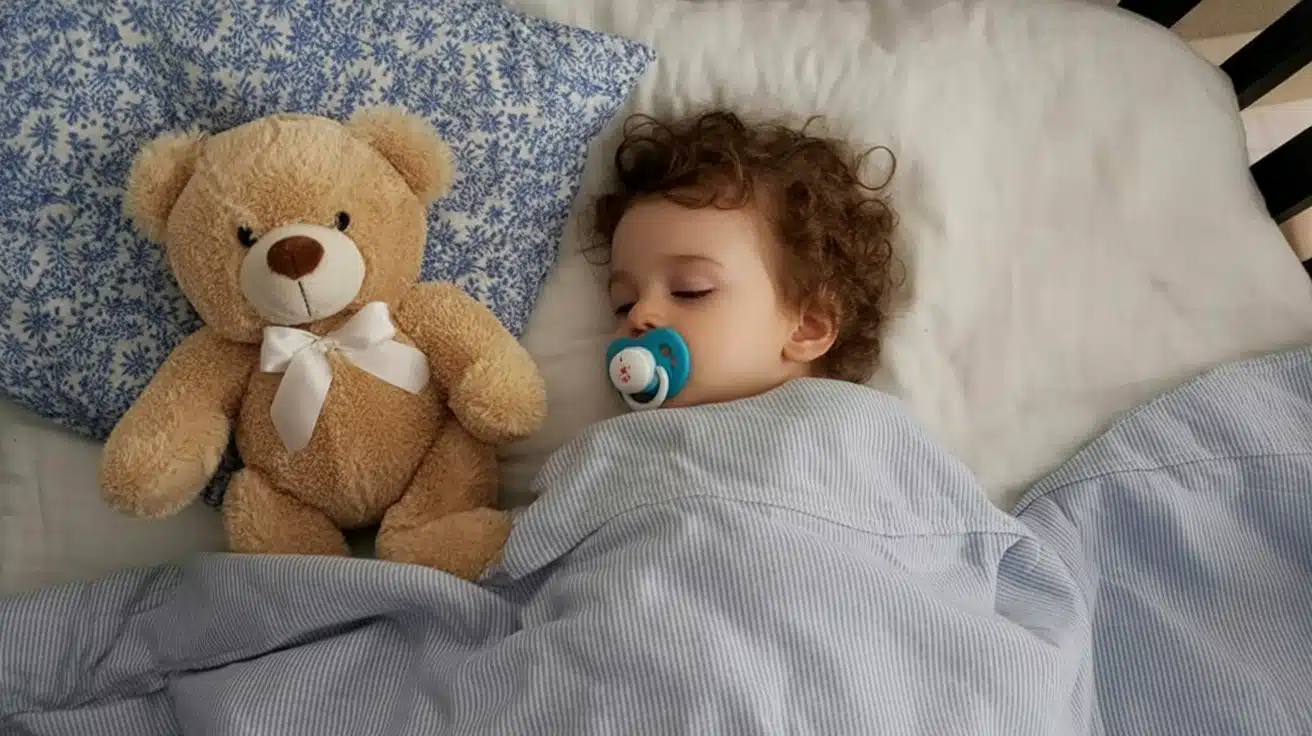
Sleep was finally getting easier. Then your 11-month-old decided naps are optional and bedtime is negotiable. Sound familiar?
This age brings a whirlwind of changes, new physical skills, growing awareness, and yes, sleep struggles.
But here’s the truth: you can turn things around. With the proper month-old sleep schedule, your baby can get back to sleeping well.
This guide covers everything from wake windows to bedtime battles.
You’ll learn how to read tired cues, adjust nap timing, and handle the challenges that come with this stage.
Let’s help your little one (and you) get better sleep starting tonight.
How Much Sleep Does an 11-Month-Old Need?
Your 11-month-old needs about 12 to 15 hours of sleep in a full day. This total includes both nighttime sleep and daytime naps.
Most babies at this age sleep longer stretches at night than they did a few months ago. Their bodies are growing fast. Their brains are processing new skills. Sleep helps them recharge and develop.
Not every baby hits the same number. Some need 12 hours total. Others might need closer to 15.
Watch your baby’s mood and energy. That tells you if they’re getting enough rest.
What Does Their Total Sleep Usually Look Like?
Most 11-month-olds sleep 10 to 12 hours at night and take 2 to 3 hours of naps during the day.
Here’s what this looks like:
- Nighttime sleep: 10 to 12 hours
- Daytime naps: 2 to 3 hours total
- Total sleep: 12 to 15 hours
Many babies sleep 6 to 8 hours straight before waking. Some sleep even longer. Others still wake once or twice for comfort or a quick feed.
Two naps are still the norm. The morning nap might last 1 to 1.5 hours. The afternoon nap often runs 1 to 2 hours.
Why Sleep Shifts Around This Age?
Your baby might be pulling up to stand or cruising along furniture. They could practice standing in the crib instead of settling down.
Language skills are also growing. This brain activity can keep them alert longer.
Babies at 11 months notice more of what’s happening around them. They see you leave the room. They hear sounds from other parts of the house. This can make it harder for them to relax.
Your baby can stay awake longer now. Wake windows usually last 3 to 4 hours at this age.
Building a Smooth Nap and Wake Window Flow
Most 11-month-olds need wake windows between 3 and 4 hours.
The first wake window is often the shortest, at around 3 hours. The last one before bedtime can stretch to 4 hours.
Watch for tired signs like:
- Rubbing eyes or ears
- Fussing or whining
- Yawning
- Losing interest in toys
Start the nap routine when you see these cues.
Two naps keep babies from getting overtired and protect nighttime sleep. Most aren’t ready to drop to one nap until closer to 12 or 13 months.
Sample 11-Month-Old Sleep Schedules

Every baby is different. But having a sample schedule can help you build a routine that works.
This schedule shows a typical pattern for 11-month-olds. You can adjust the times based on when your baby wakes up. The spacing between sleep periods matters more than the exact clock times.
Use this as a starting point. Watch your baby’s cues. Shift things earlier or later as needed.
| Time | Activity |
|---|---|
| 7:00 AM | Wake up and breakfast |
| 10:00 AM | First nap (1 to 1.5 hours) |
| 11:30 AM | Wake up and playtime |
| 12:00 PM | Lunch |
| 2:30 PM | Second nap (1 to 2 hours) |
| 4:00 PM | Wake up and afternoon activity |
| 5:30 PM | Dinner |
| 7:30 PM | Bedtime routine and sleep |
This gives your baby:
- 3-hour wake window before first nap
- 3-hour wake window before second nap
- 3.5-hour wake window before bedtime
If your baby needs longer wake windows, push the naps back by 30 minutes. If they seem overtired, move naps earlier.
Getting Bedtime Right for an 11-month-old
Bedtime sets the tone for how well your baby sleeps through the night. A reasonable bedtime isn’t just about picking a time on the clock. It’s about timing it based on when your baby last woke up from their afternoon nap.
Your baby’s bedtime should happen 3 to 4 hours after they wake from their last nap.
If your baby wakes from the afternoon nap at 4:00 PM, aim for bedtime between 7:00 and 8:00 PM. Too much time between the last nap and bedtime leads to overtiredness. Too little time means your baby won’t be ready to sleep yet.
Bedtime is too early if:
- Your baby fights sleep for 30 minutes or more
- They wake up very early in the morning (before 6:00 AM)
Bedtime is too late if:
- Your baby gets fussy or cries hard before sleep
- They have multiple night wakings or restless sleep
Adjust by 15 to 30 minutes at a time.
Simple Steps that Soothe and Settle
A calm routine helps your baby know sleep is coming. Keep it consistent every night.
Here’s a simple flow:
- Give a warm bath
- Put on pajamas and a fresh diaper
- Dim the lights
- Read one or two short books
- Sing a soft song
- Lay your baby in the crib while drowsy but awake
The key is doing the same steps in the same order every night. Your baby will learn what comes next and settle more easily.
Common Sleep Challenges at 11 Months

Sleep doesn’t always go smoothly at 11 months. Your baby is growing and changing fast.
New skills and developmental leaps can throw off even the best schedule. Here are common challenges you might face and how to handle them.
1. Nap Resistance
Your baby might suddenly fight one or both naps. They protest in the crib or stand up instead of lying down.
This often happens when wake windows are off or they’re overtired. Check your timing and stick to a short pre-nap routine.
2. Early-Morning Wakings
Waking up before 6:00 AM can be frustrating. Common causes include bedtime being too early, the room being too bright, or hunger. Try pushing bedtime later by 15 to 30 minutes and use blackout curtains.
3. The 11-Month Sleep Regression
Sleep regressions happen when your baby’s brain is working overtime, learning new skills.
You might notice more night wakings, shorter naps, or fussiness at bedtime. Stay consistent with your routine, and the regression will pass in a week or two.
4. Teething Discomfort
Molars often start coming in around 11 months and can cause pain that disrupts sleep.
Signs include drooling, chewing on toys, swollen gums, and fussiness. Offer a cold teething ring before sleep and keep your routine steady.
5. Mobility Surges (Standing, Cruising)
Your baby is mastering big physical skills like standing and cruising along furniture.
They might practice these moves in the crib during sleep times. Give plenty of practice time during the day and gently lay them back down at night without much interaction.
6. Separation-Driven Bedtime Struggles
At 11 months, your baby understands you exist even when you’re not in sight, making bedtime harder.
They don’t want you to leave and might cry or reach for you. Stay calm and consistent with your routine and leave the room calmly.
7. Gentle Ways to Handle Disruptions
When sleep challenges pop up, resist the urge to make significant changes overnight.
Stick to your usual routine, respond calmly to night wakings, and give challenges a week or two before deciding something needs fixing. Most disruptions fade as your baby adjusts to new skills.
Remember that sleep challenges at 11 months are everyday and temporary. Stay patient with your baby and yourself. Consistency is your best tool for getting through rough patches.
Tips to Improve an 11-Month-Old’s Sleep Naturally
Good sleep doesn’t require complicated tricks or expensive products. Small, simple changes can make a big difference. Here are five practical tips to help your 11-month-old sleep better.
1. Smart wake window adjustments: Most 11-month-olds need 3 to 4 hours between sleep periods. If your baby fights naps or bedtime, try adding or subtracting 15 minutes. Minor tweaks can solve big problems.
2. Keeping naps consistent: Put your baby down for naps around the same time each day. Consistent nap times help regulate their internal clock. Skipping naps or letting them happen too late can throw off nighttime sleep.
3. Creating a calming sleep space: Make the room dark, calm, and quiet. Use blackout curtains to block outside light. Keep the temperature between 68 and 72 degrees. Consider white noise to mask household sounds.
4. Handling night wakings without creating new habits: When your baby wakes at night, wait a moment before responding. If you need to go in, keep it brief and boring. Don’t turn on bright lights or start playing.
5. Sticking to a predictable routine: Do the same activities in the same order before each sleep period. Bath, pajamas, books, song, bed. Your baby learns what comes next and winds down faster.
Give each tip a few days to work before moving to the subsequent adjustment. Minor, steady improvements add up over time.
|
When to Talk to a Pediatrician? Most sleep challenges at 11 months are everyday and temporary. But contact your doctor if your baby sleeps much less than 10 hours total in a day, has loud snoring or pauses in breathing, or struggles to eat. If you’ve tried adjusting wake windows and bedtime for several weeks with no improvement, get professional advice. Trust your instincts and reach out if something feels off. |
Final Thoughts
Getting your 11-month-old’s sleep on track takes patience and consistency.
Remember that every baby is different. What works for one might not work for another. Start with the basics: watch wake windows, keep naps consistent, and stick to a calming bedtime routine.
When challenges pop up, stay steady. Most sleep issues at this age are temporary. Your baby is growing and learning so much right now.
Give them time to adjust. If sleep problems persist or you’re concerned about your baby’s health, don’t hesitate to reach out to your pediatrician.
Ready to improve your baby’s month-old sleep schedule? Pick one tip from this guide and try it tonight. Small changes lead to better sleep for everyone.
