
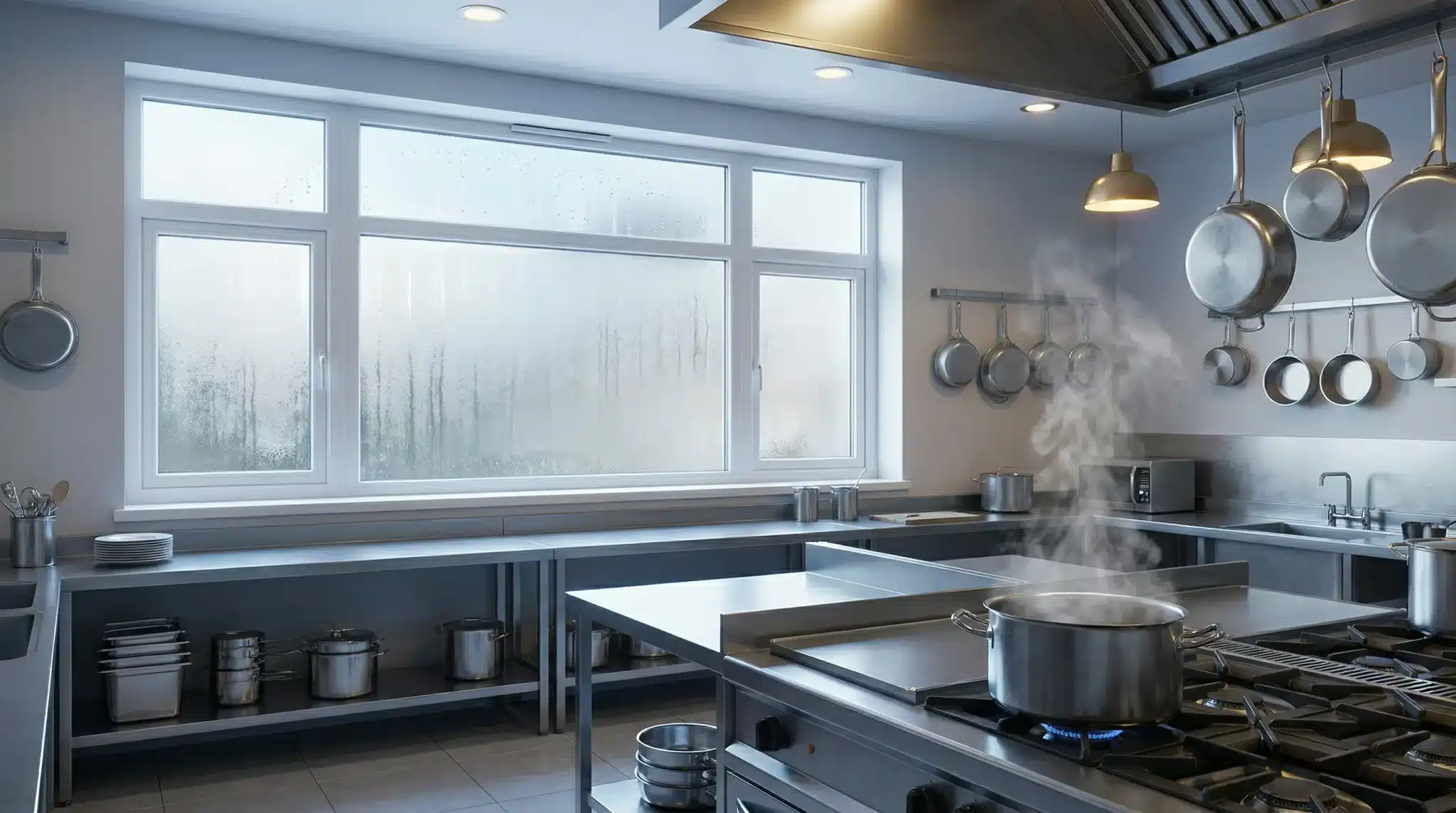
Kitchens have a reputation for fast-paced environments that involve a wide range of tasks, such as prepping ingredients, cooking meals, and cleaning cookware. With various meals being cooked and commercial appliances running around the clock, it’s unsurprising that kitchens see significant condensation buildup throughout the day. These condensation build-ups may seem harmless, causing little more than mild discomfort for staff, but excessive condensation can lead to various issues in a commercial kitchen, such as dampness, mould, and damage to appliances and utensils.
To avoid condensation causing long-term problems in a commercial kitchen, it’s a good idea to install trickle vents for uPVC windows. A trickle vent provides ongoing background ventilation in kitchens, helping reduce condensation and making moisture management easier. If you’re working in a kitchen and looking to combat condensation by installing trickle vents in windows, our handy guide is here to help. We’ve spoken with window ironmongery experts at Locks & Hardware for some professional advice on the various benefits of trickle vents for uPVC windows in kitchens.
What Causes Condensation in Kitchens?
We’ve all experienced condensation buildup in our home kitchens, which occurs when hot, humid air from cooking comes into contact with cold surfaces, such as windows and walls. Now imagine this happening in a commercial kitchen where intensive cooking takes place all day, every day. Condensation levels in commercial kitchens can quickly skyrocket in just a few hours of cooking, and the problem can be made much worse with a lack of ventilation.
Yes, opening a window can help ventilate a kitchen by removing moisture from the air, but it’s not always possible due to health and safety regulations. A simple solution is to install window trickle vents for uPVC windows. Window vents provide a discreet source of background ventilation to combat condensation while keeping windows shut in the kitchen. This ensures health and safety compliance while also avoiding the security risks that come with leaving windows wide open in a commercial property.
Practical Benefits in the Kitchen

The key benefit of having a window trickle vent in a commercial kitchen is that it can help reduce condensation by venting in fresh air from the outside and funnelling out hot and humid air. By allowing moist air from the kitchen, the window trickle vent can prevent condensation levels from building up too much. This will eliminate the risk of mould and damp developing inside the kitchen due to excessive condensation, helping maintain the highest levels of hygiene for health and safety compliance.
By reducing condensation, window vents will also prevent long-term damage to cookware, window frames, and other kitchen fixtures. If condensation is left untreated for too long, the water droplets can slowly cause materials to corrode and deteriorate. Window seals may become less effective, utensils start to rust, and expensive kitchen appliances may not work properly. Ongoing ventilation helps to keep moist air out of kitchens to prevent condensation from causing lots of costly damage!
As trickle vents for uPVC windows remove stale air from inside the kitchen, they can also help reduce unpleasant odours that may linger. By providing ample fresh air, trickle vents can eliminate unpleasant kitchen odours and create a much more enjoyable working environment for staff.
Conclusion
If you’re looking for a simple way to reduce condensation in a commercial kitchen, then window trickle vents are well worth consideration. Window vents provide effective background ventilation to remove moist air inside kitchens and replace it with fresh, drier air. This helps to stop excessive condensation build-ups that could cause mould to develop, something you want to avoid in any kitchen. Window vent covers also offer kitchens a discreet solution for combating unpleasant odours, ensuring a pleasant working environment for all staff.
