
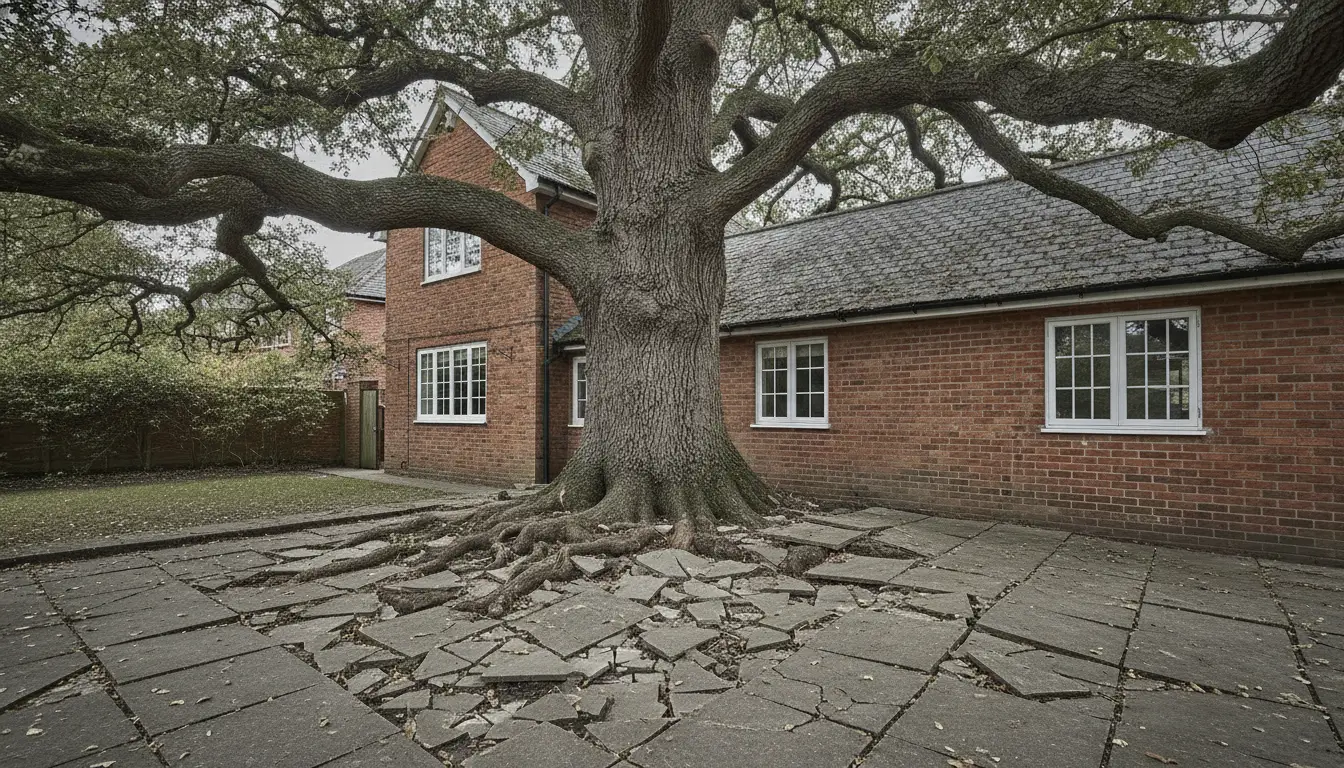
You planted that little sapling five years ago, and it was knee-high and full of promise. Fast forward to today, and it’s lifted a paving slab, cracked the neighbour’s wall, and landed you with an eye-watering bill.
Trees have one job: keep growing. However, they’re not particularly interested in whether a patio, driveway, or shed happens to be in the way.
And most of the expensive disasters people deal with can be avoided with a bit of planning. So, if you’d rather not learn these lessons the hard way, keep reading.
Planting Trees in the Wrong Place
We get it; that sapling from the garden centre looks harmless enough in its little pot. But most people drastically underestimate how large a tree will get and how far its roots will spread.
Plant one too close to your house, and you could be looking at root damage to your foundations, blocked gutters, and branches scraping the brickwork every time the wind picks up. And if you add a tree near a driveway, the roots will push through tarmac like it’s made of paper.
The fix is simple: check the expected mature height and canopy spread before you buy a sapling, and give the tree at least that much room.
Not sure where to start? The Woodland Trust has excellent species guides, and five minutes of research now can save you thousands later.
Pruning Too Much
Once you’ve got a tree in the right spot, you may be tempted to keep it tidy with heavy pruning. More cutting equals less hassle, right?
However, when you remove too many branches at once, the tree throws out a flush of weak, spindly growth to compensate. That kind of regrowth can quickly snap in a storm or invite disease.
By pruning too heavily, you also strip away the leaf cover it relies on to feed itself, leaving it stressed, hungry, and vulnerable.
A good rule of thumb is never to remove more than about 25% of the canopy in a single season. If you’re unsure how much is too much, reputable tree-cutting services and qualified arborists can assess what actually needs to come off and leave the rest alone.
Pruning at the Wrong Time of Year
Even if you prune the right amount, doing it at the wrong time can undo all your hard work.
Most deciduous trees are best pruned during late autumn or winter, when they’re dormant and less likely to bleed sap or attract disease. On the other hand, pruning in spring, just as the tree is putting energy into new growth, can set it back significantly.
But not every species follows the same schedule. For example, if you’ve got an oak, avoid pruning between April and August to minimise the risk of oak processionary moth infestations.
So, it’s not a one-size-fits-all situation. To save yourself a headache, quickly check your specific species’ pruning window.
Damaging the Root Zone
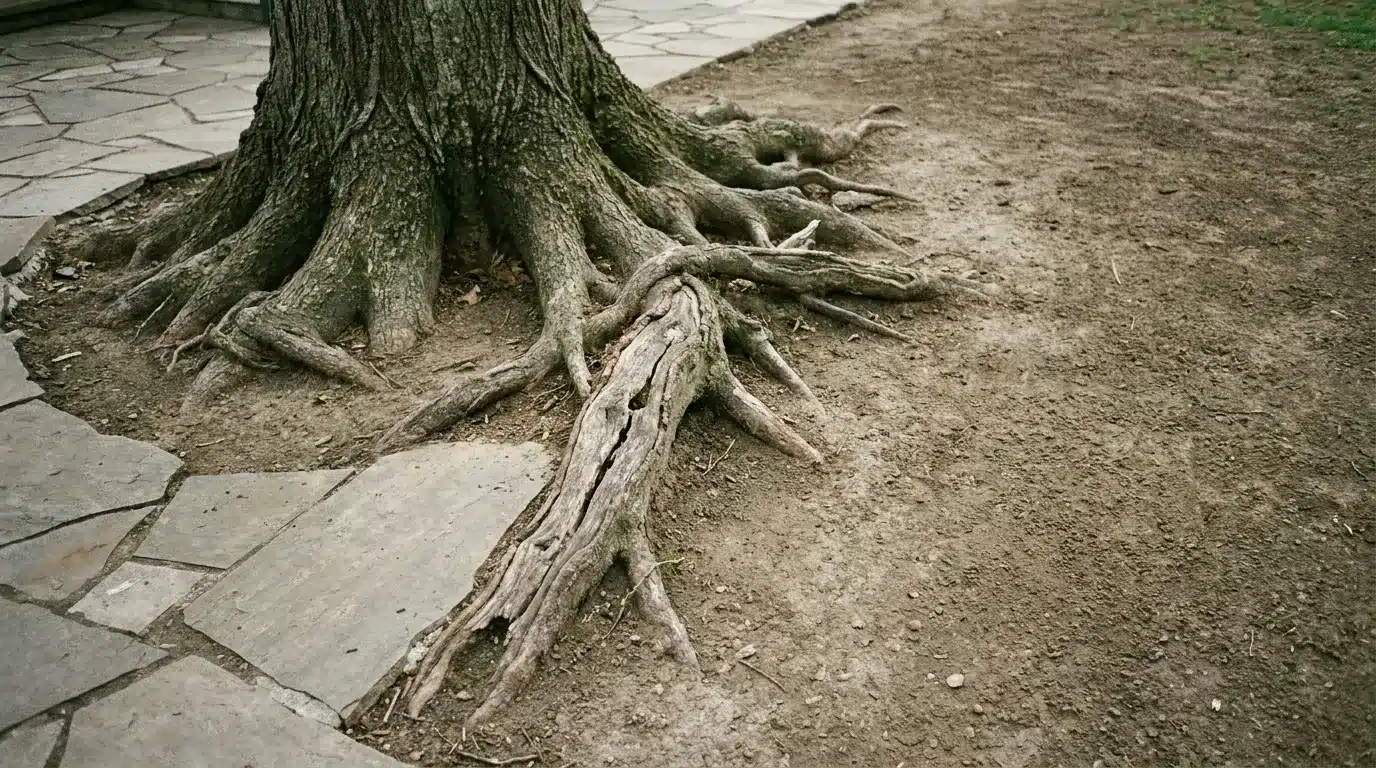
With the above-ground work sorted, it’s easy to forget what’s happening below the surface. But most of a tree’s critical infrastructure is underground, and the roots are surprisingly easy to damage.
If you dig trenches for a new fence, lay down a fancy new patio, or drive heavy machinery near your tree, you risk compacting the soil or severing vital roots.
The frustrating part is that the damage doesn’t show up immediately. A tree can look perfectly healthy for a year or two before it suddenly starts to decline. By then, you’ve probably forgotten all about that landscaping project.
If you’re planning work near a tree, stay outside the drip line—the area beneath the outer edge of the canopy. That’s where the most important feeder roots sit, and protecting this zone during building projects is standard practice for good reason.
Topping Mature Trees
When a tree gets too tall for comfort, you may think it’s a good idea to lop the top off and call it a day.
However, topping is one of the most destructive things you can do to a mature tree. If you do that, you’ll remove the main structural branches and leave behind large, open wounds that are slow to heal and prone to decay.
Even worse, the new branches that sprout from these cuts are usually weakly attached. They act like ticking time bombs and are more likely to snap in high winds.
And as if that weren’t enough, topping completely ruins the tree’s natural shape. Instead of a beautiful, majestic canopy, you get a cluster of whip-like shoots sprouting from blunt stubs.
What can you do instead, though? Selective crown reduction, where an arborist shortens branches back to suitable growth points, achieves the same height reduction without the damage or the eyesore.
Waiting Until Storm Damage Happens
The British weather has a knack for exposing every weakness a tree’s been developing behind the scenes. And yet, most people only think about their trees after a branch has come through the shed roof.
To reduce storm damage, remove deadwood, thin out overcrowded canopies, and deal with branches that rub together.
Don’t forget about seasonal checks, too. Walk around your trees in autumn, look for cracks or fungal growth at the base, and get anything suspicious inspected before winter arrives.
Trust us, the difference between a planned visit from a tree surgeon and an emergency one on a Saturday night in November is usually several hundred pounds.
Treating Every Tree the Same
You wouldn’t treat a desert cactus the exact way you treat a rainforest fern, and the same logic applies to your trees.
- English oak. You can prune this resilient giant heavily, and it’ll happily thrive in thick clay soil.
- Silver birch. Ground that drains well is an absolute must for this elegant species. Also, avoid cutting it back too aggressively.
- Japanese maple. Life for this delicate beauty is a constant search for shelter from drying winds and the harsh afternoon sun.
- Scots pine. You can plant this rugged evergreen on freezing, exposed hillsides.
If you’re not sure what species you’ve got, take a photo of the leaves and bark and use a free identification app or ask at your local garden centre. Once you know what you’re working with, you can prune at the right time and spot problems before they snowball.
Conclusion
Trees are some of the most forgiving features in your garden. They’ll put up with neglect, questionable soil, and the occasional rogue football without holding a grudge. But push your luck with the mistakes above, and even the most patient oak will reach its limit.
So, give our tips a try this season. A bit of research and the occasional check-up will keep your trees healthy for decades.
