
For many parents, it’s devastating to find out their child has dyslexia, but it’s important to point out that dyslexia is merely a symptom of incredible creativity. It has nothing to do with intelligence quotients, and people with this diagnosis are likely to have extraordinary visualization skills.
With the right support and assistance, such kids can learn reading and writing. Many families looking for dyslexia tutoring des moines have reported that the assistance they received made their kids’ problems disappear.
Take a look at seven essential things that all parents need to know to help their child with dyslexia.
1. Dyslexia Is a Language Processing Difference, Not a Vision Issue
A commonly held misconception about dyslexia in children is that they can see letters reversed. However, dyslexia is a type of brain disorder that impacts the individual’s phonological abilities, or the capability to process the sounds that comprise words.
Children struggle with linking letters on paper to their appropriate sounds. Being aware of the fact that dyslexia concerns the ability to process sounds allows parents to think about techniques that promote phoneme awareness instead of eye-coordination activities.
2. Early Intervention Changes Brain Pathways
The brain is pliable until the age of about 5 or 6, which requires making sure that the child receives the intervention in time to avoid the occurrence of reading problems and have no negative impact on their confidence.
- Phonological Skills: Regular practice of blending sounds.
- Phonics Teaching: Teaching children connections between letters and sounds.
- Multisensory Activities: Tracing letters in soft substances such as sand or clay.
3. Traditional Reading Methods Do Not Work
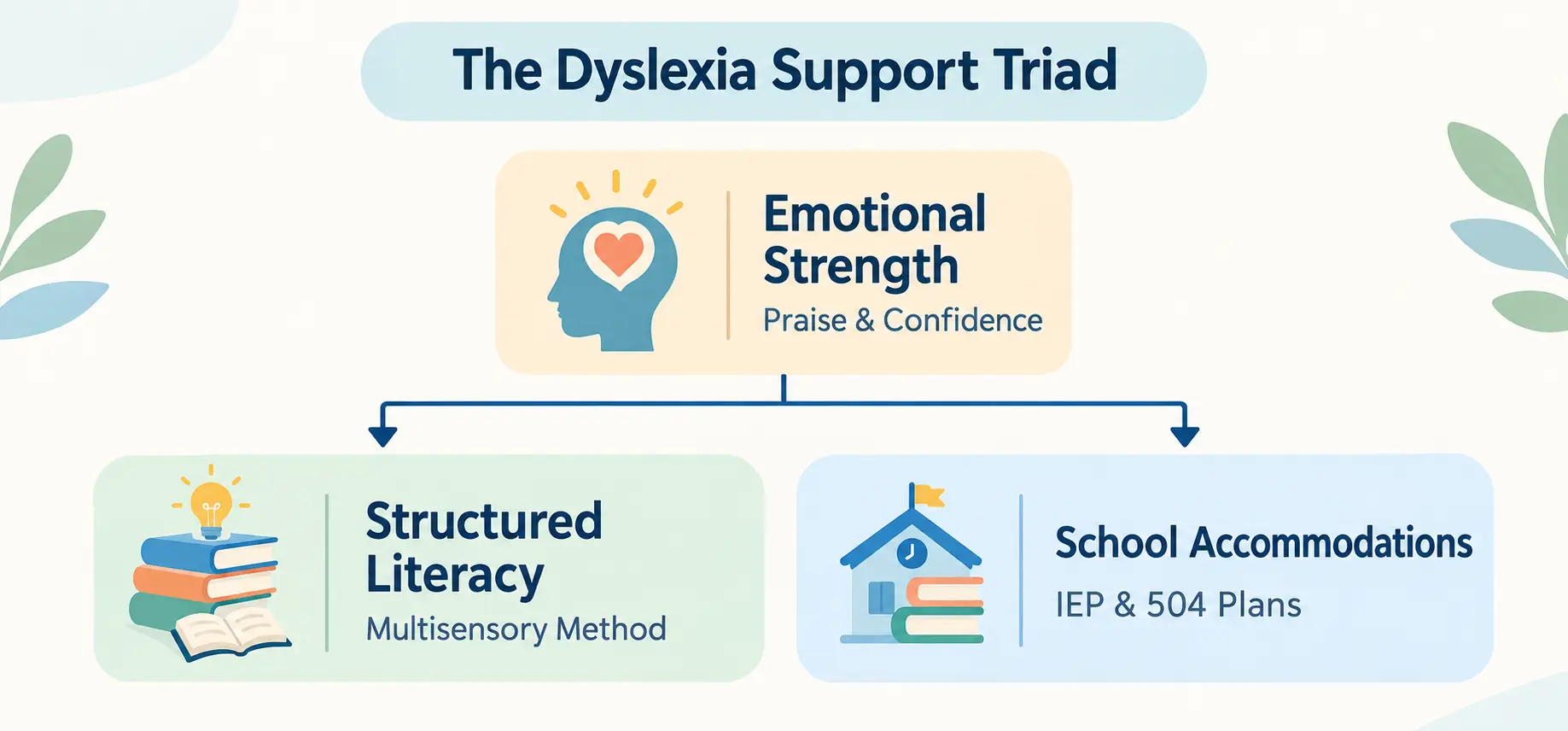
Children dealing with dyslexia do not usually acquire reading skills by cultural osmosis or word-guessing. They require Structured Literacy—a methodical and overt approach based on the Orton-Gillingham method.
Getting in touch with qualified dentists through specialized dyslexia tutoring des moines will ensure your child gets special multisensory training.
Comparing Support Strategies: What Works vs. What to Avoid
| Approach | Effective Strategy (Structured Literacy) | Ineffective Strategy (Balanced Literacy) |
|---|---|---|
| Decoding Words | Sounding out words using phonetic rules | Guessing words using picture clues |
| Pacing | Mastery-based sequential progression | Fast-paced exposure to unteached rules |
| Practice | Multisensory sight and sound practice | Rote visual memorization of flashcards |
| Text Type | Decodable books matching taught rules | Complex leveled readers with untaught patterns |
4. Emotional Support Is Just as Important as Academics
Children and adolescents with dyslexia put in more effort than others yet suffer from mental health issues. Enjoy their childhood with these methods:
- Appreciate Hard Work: Keep them motivated to learn to read with positive words and compliments.
- Nurture Interests: Let them engage in activities such as painting, playing sports, designing, or coding.
- Encourage Making Mistakes: Let them enjoy making mistakes as they are part of the learning process.
5. Assistive Technology: Level the Playing Field
With the help of assistive technology, young learners continue to receive learning without being hindered by their disability. Audiobooks, speech recognition software, and text-to-speech technology enable children to remain aware of their skills while developing independence.
6. School Accommodations Are Essential for Success
Parents’ role is to be advocates. Help your child get an Individualized Education Program (IEP) or 504 Plan to allow your child to get necessary adjustments in the classroom:
- Longer Time to Complete Tests: Having more time to complete the test decreases the level of anxiety and enables proper processing of information
- Oral Examinations: The ability to answer questions verbally allows us to ensure their true comprehension.
- Reduced Reading Loads: Assignments are reduced to prevent their minds from burning out.
7. Patience and Consistency Build Long-Term Success
The achievement in combating dyslexia comes by means of growing your talents step by step as opposed to looking forward to the entirety to occur immediately. If an infant could get hold of continuous assistance and guidance from his/her mother and father and instructors, he/she would accumulate sufficient talents to end up a good reader for life.
Conclusion
Assisting your child with dyslexia means being innovative, knowledgeable, and imaginative. By making use of dependent literacy strategies and the use of various adjustments in the classroom setting, you may improve your child’s mastery level notably.
