Walking into a classroom full of nervous faces on the first day can feel like stepping onto a stage.
The air buzzes with anticipation, uncertainty, and the promise of fresh beginnings.
Teachers know this week sets the tone for everything that follows, making it crucial to create an atmosphere where students feel welcomed, valued, and eager to learn.
The challenge lies in breaking down walls quickly while establishing routines that will carry through the year.
Students need opportunities to connect with classmates, understand expectations, and discover that learning can be joyful.
Whether teaching elementary explorers or high school scholars, the right activities transform awkward silence into enthusiastic participation.
These carefully selected games and exercises help build classroom community while revealing students personalities, interests, and learning styles, which will inform teaching strategies for months ahead.
Building Connections Through Interactive Activities
Creating bonds between students early establishes a supportive learning environment throughout the year.
Icebreakers and Introduction Games

Activities that help students learn names and discover commonalities while easing first-day jitters.
1. Two Truths and a Lie
Students share three statements about themselves, with classmates guessing which one is false. This classic game reveals interesting facts while encouraging careful listening.
Why it works: Sparks curiosity, builds listening skills, promotes authentic sharing
Participants: Whole class or small groups
2. Human Bingo
Students receive cards with traits like “has a pet” or “loves pizza” and find classmates matching each description. Winners complete rows first.
Why it works: Encourages movement, creates natural conversations, helps identify shared interests
Participants: Whole class
3. Name Toss
Standing in a circle, students toss a ball while saying their name and the recipient’s name. Speed increases as familiarity grows.
Why it works: Reinforces name memorization, adds physical activity, builds group energy
Participants: Groups of ten to thirty
4. Find Your Match
Teacher distributes cards with matching pairs like famous duos or math problems with answers. Students mingle to find their partner.
Why it works: Creates immediate partnerships, reduces social anxiety, incorporates curriculum connections
Participants: Whole class
5. Snowball Fight
Students write facts about themselves on paper, crumple into balls, and have a playful throwing session. Each person reads the paper they catch.
Why it works: Adds playful energy, maintains anonymity initially, generates laughter
Participants: Whole class
6. Speed Meeting
Students pair up for timed conversations, rotating partners every few minutes to meet multiple classmates quickly and efficiently.
Why it works: Ensures everyone interacts, prevents cliques from forming early, and manages shy students
Participants: Even-numbered classes
7. Would You Rather
The teacher poses dilemmas like “beach or mountains” while students move to different sides of the room based on preferences.
Why it works: Reveals personalities, requires no preparation, creates visible group divisions
Participants: Whole class
8. Classroom Scavenger Hunt
Students search for specific items or locations around the room using clue lists, helping them familiarize themselves with the learning space.
Why it works: Teaches room layout, promotes exploration, builds comfort with the environment
Participants: Small groups or pairs
9. Interview Circle
Students interview a partner using guided questions, then introduce their partner to the class, shifting focus from self-presentation to storytelling.
Why it works: Reduces speaking anxiety, develops questioning skills, builds empathy
Participants: Whole class in pairs
10. Common Ground
Small groups discover what all members share beyond obvious traits, then present their commonality to the class.
Why it works: Encourages deeper conversations, highlights unexpected connections, and builds group identity
Participants: Groups of four to six
Collaborative Rule-Making and Norm-Setting

Empowering students to shape classroom culture increases investment in maintaining positive behavior.
11. Classroom Constitution
Students collaborate to create class values and expectations, signing the final document to demonstrate commitment and ownership.
Why it works: Increases buy-in, teaches democratic processes, creates accountability
Participants: Whole class
12. Hopes and Dreams
Each student shares academic and social goals for the year, which teachers display to reference throughout subsequent months.
Why it works: Sets positive intentions, reveals student priorities, creates personal investment
Participants: Whole class
13. Expectation Scenarios
Teacher presents hypothetical situations and students discuss appropriate responses, clarifying behavioral expectations through practical examples.
Why it works: Addresses ambiguity proactively, encourages critical thinking, prevents future conflicts
Participants: Whole class or groups
14. Time Capsule
Students write letters to their future selves describing current feelings, goals, and predictions, sealing them for end-of-year opening.
Why it works: Creates anticipation, documents growth, builds reflective habits
Participants: Individual activity
15. Classroom Tour Video
Students create welcome videos showcasing classroom spaces, procedures, and culture for absent students or future reference.
Why it works: Reinforces learning space knowledge, develops media skills, creates ownership
Participants: Small groups
16. Morning Meeting Practice
Establish daily gathering routines in which students greet one another, share news, and participate in brief group activities.
Why it works: Createsa predictable structure, builds a daily connection, sets a positive tone
Participants: Whole class
17. Procedure Stations
Students rotate through stations to practice specific routines, such as turning in work, getting supplies, or transitioning between activities.
Why it works: Provides hands-on practice, prevents confusion later, and addresses multiple procedures efficiently
Participants: Small rotating groups
18. Kindness Challenge
Students perform daily acts of kindness, documenting their experiences in journals or on a class chart that tracks collective impact.
Why it works: Establishes positive culture, encourages prosocial behavior, creates shared purpose
Participants: Whole class, individually
19. Problem-Solving Circle
Present a classroom dilemma and have students brainstorm solutions collaboratively, modeling conflict resolution processes for future use.
Why it works: Teaches problem-solving skills, establishes resolution protocols, and prevents power struggles
Participants: Whole class
20. Success Criteria Gallery
Students examine and discuss examples of quality work, developing a shared understanding of expectations and standards.
Why it works: Clarifies academic expectations, develops evaluation skills, reduces grade disputes
Participants: Whole class or groups
Content-Connected Fun
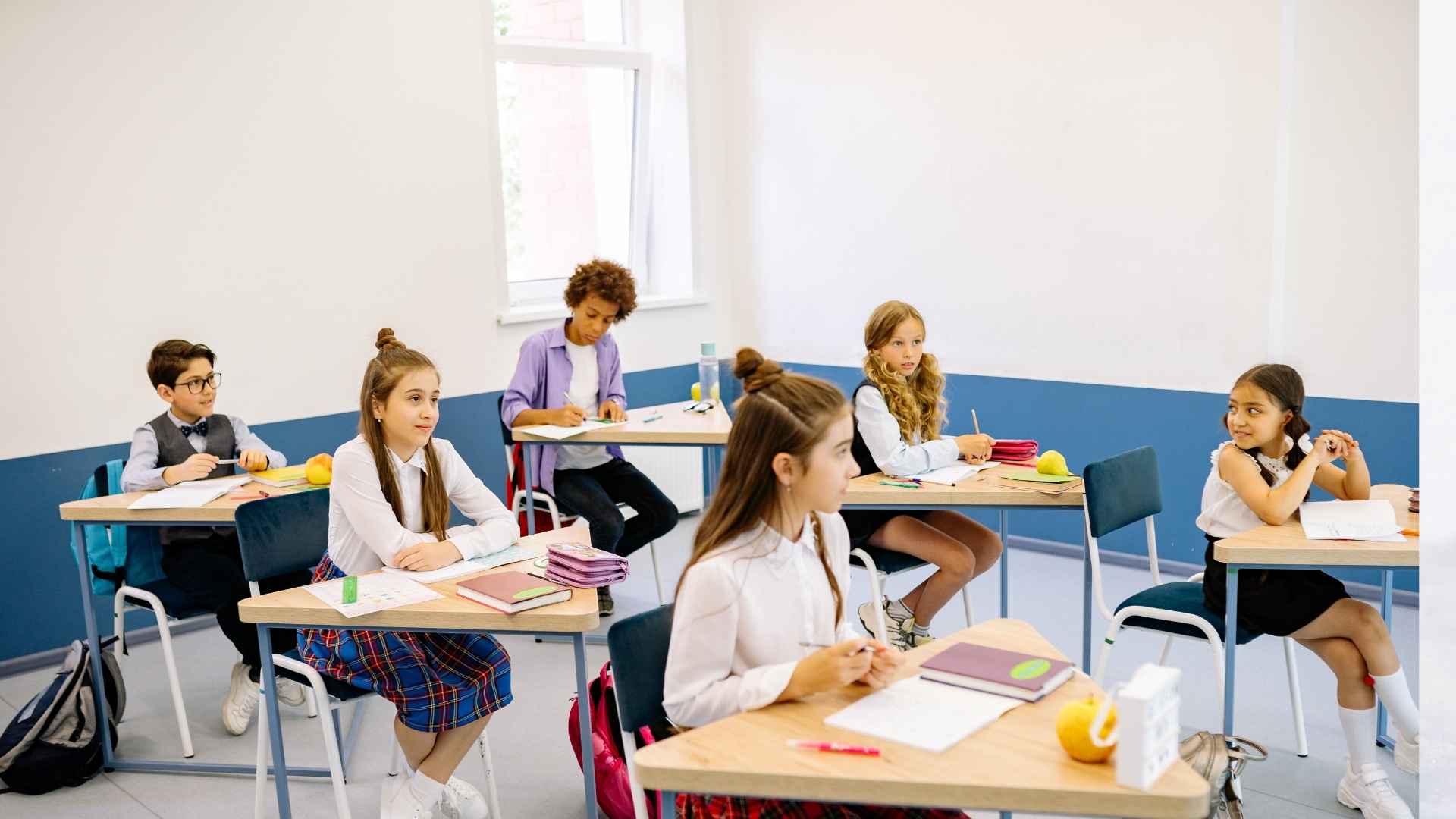
Blending academic content with playful activities demonstrates that learning can be enjoyable and interactive.
21. Subject Trivia
Host friendly competitions testing knowledge across curriculum areas, using questions that preview upcoming topics and assess baseline understanding.
Why it works: Gauges prior knowledge, creates healthy competition, and previews the curriculum
Participants: Teams of four to six
22. Book Speed Dating
Display a variety of books while students rotate through quick previews, selecting titles that interest them for independent reading.
Why it works: Generates reading enthusiasm, honors choice, and introduces the classroom library
Participants: Whole class rotating
23. Math Relay Races
Teams solve problems sequentially, with each member completing one step before passing work to teammates in energetic competition.
Why it works: Reviews math skills, encourages collaboration, adds physical movement
Participants: Teams of four to five
24. Mystery Box
Present curriculum-related objects in covered boxes, and have students use questioning strategies to identify the contents and connect them to learning.
Why it works: Develops inquiry skills, builds curiosity, introduces topics creatively
Participants: Whole class or groups
25. Story Starters
Provide creative writing prompts and have students begin their narratives to establish writing routines and assess current skill levels.
Why it works: Assesses writing abilities, reduces blank-page anxiety, and establishes a creative culture
Participants: Individual activity
26. Vocabulary Pictionary
Students draw curriculum vocabulary words while teammates guess, creating fun associations that enhance retention and understanding.
Why it works: Introduces key terms playfully, accommodates visual learners, and generates energy
Participants: Teams of four to six
27. Science Predictions
Present upcoming experiments and have students predict outcomes, then discuss reasoning to activate prior knowledge and scientific thinking.
Why it works: Engages scientific reasoning, values student thinking, creates investment in results
Participants: Whole class or groups
28. Historical Headlines
Students create newspaper headlines that summarize historical events being studied, practicing summarization while previewing the content.
Why it works: Assesses background knowledge, develops synthesis skills, introduces content
Participants: Small groups or pairs
29. Learning Style Inventory
Students complete activities that identify personal learning preferences, help teachers differentiate instruction, and help students understand themselves.
Why it works: Informs teaching strategies, builds self-awareness, and validates diverse learners
Participants: Individual activity
30. Genius Hour Introduction
Present passion project opportunities where students pursue personal interests, establishing a student-driven learning culture from day one.
Why it works: Honors student interests, promotes autonomy, creates sustained engagement
Participants: Individual with sharing
Conclusion
The first week of school represents more than just another beginning.
It offers teachers a unique window to craft the classroom atmosphere that will either energize or deflate students for months to come.
By thoughtfully selecting activities that balance fun with purpose, educators communicate that their classroom values every voice, celebrates curiosity, and recognizes learning as an active journey rather than a passive reception.
These thirty activities provide a framework, not a script. Teachers should adapt to students’ ages, personalities, and specific classroom needs.
The magic happens when students leave the first week feeling seen, connected, and genuinely excited to return tomorrow.
They should know their teacher as someone who creates joyful learning experiences while maintaining clear expectations.
Share these ideas with fellow educators, try new approaches each year, and watch how investing time in community-building during those crucial first days pays dividends throughout the entire academic year ahead.