
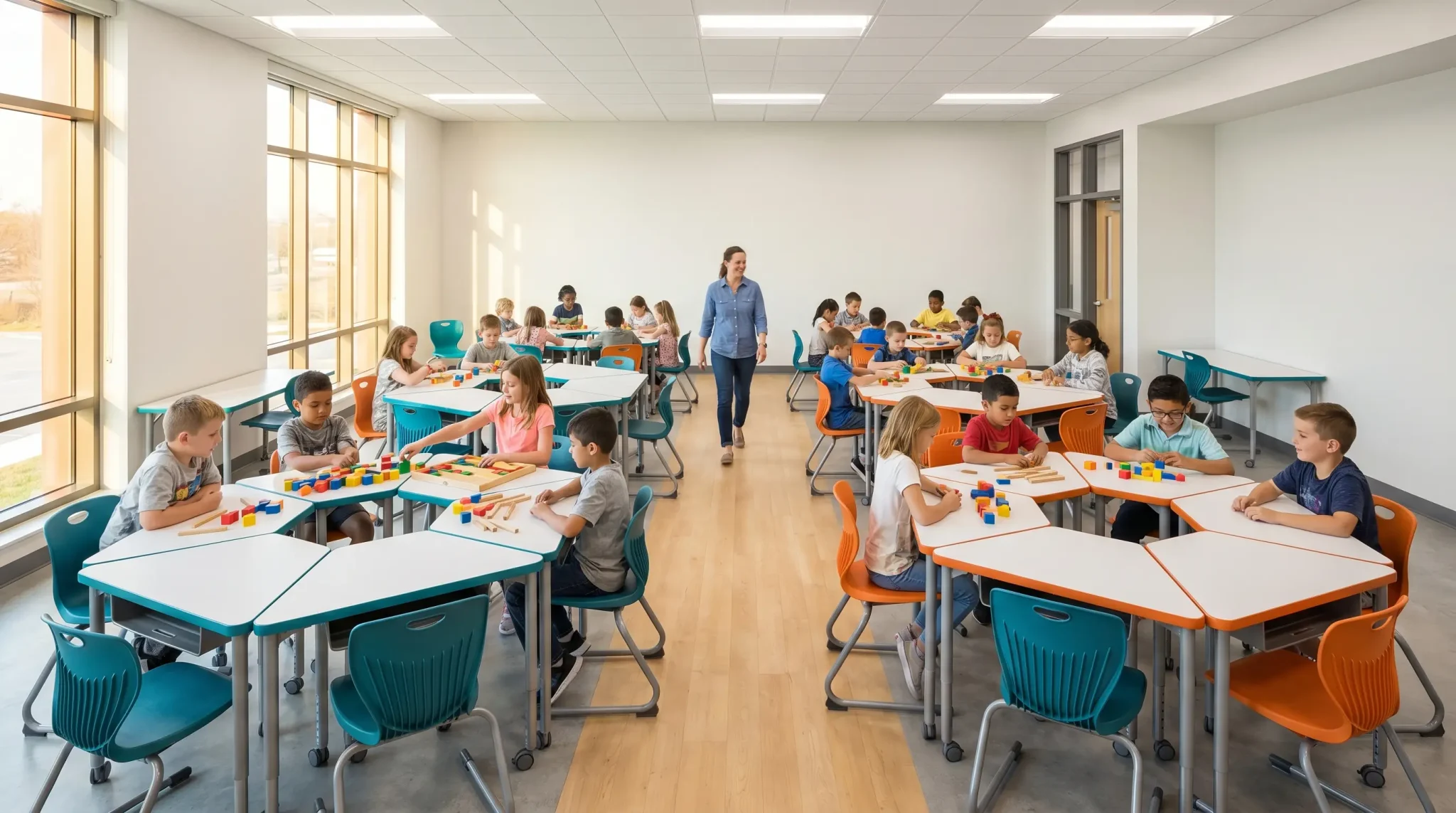
Active learning has changed the way schools think about classroom setup. Traditional rows just do not work when students are constantly moving between group work, partner activities, and independent focus. The right furniture makes those transitions smoother and keeps students more engaged. Schools that have made the switch tend to notice the difference right away. Worthington Direct builds workspace solutions designed specifically for that kind of flexible, responsive environment. Teachers exploring collaborative classroom desks for active learning will find shapes and configurations that work for almost any instructional goal.
How Desk Shape Supports Group Activity
The shape of a desk has more impact on group dynamics than most people realize. Trapezoid and wedge designs fit into pods of two, four, or six students with minimal disruption. Triangle and hexagonal desks create a shared center where every student has equal access to materials. Diamond shapes work well in project-focused classrooms where students need to see each other clearly from multiple directions. The right shape really comes down to how your classroom runs day to day. Pick the geometry that matches your most common activity formats, and transitions become faster and easier to manage.
Mobility and Reconfiguration Features
Casters and glides let students and teachers move furniture quickly without disrupting the flow of a lesson. Desks with locking casters can be repositioned quietly and secured once a layout is set. Glides are better suited to environments where teachers prefer minimal movement noise during class transitions. Height-adjustable legs mean the same desk works across multiple grade levels without buying a new one. Letting students shift between sitting and standing also makes a real difference in how they focus. Kids simply concentrate better when they can move. Furniture that works with the pace of a lesson rather than against it makes a teacher’s job noticeably easier.
Materials and Durability for Daily Use
School furniture takes a beating every single day. That is just the reality. High-pressure laminate tops hold up against moisture, scratches, and the kind of constant use that would wear lesser materials down fast. Edge protection in PVC banding form defends against chips and impact along the desk perimeter. Powder-coated steel frames keep desks strong and light enough to move around without a struggle. Some models include dry erase surfaces that let students work through ideas on the desk itself. Pick the right surface from the start, and you will spend a lot less time and money on repairs down the road.
Designing Layouts for Maximum Flexibility
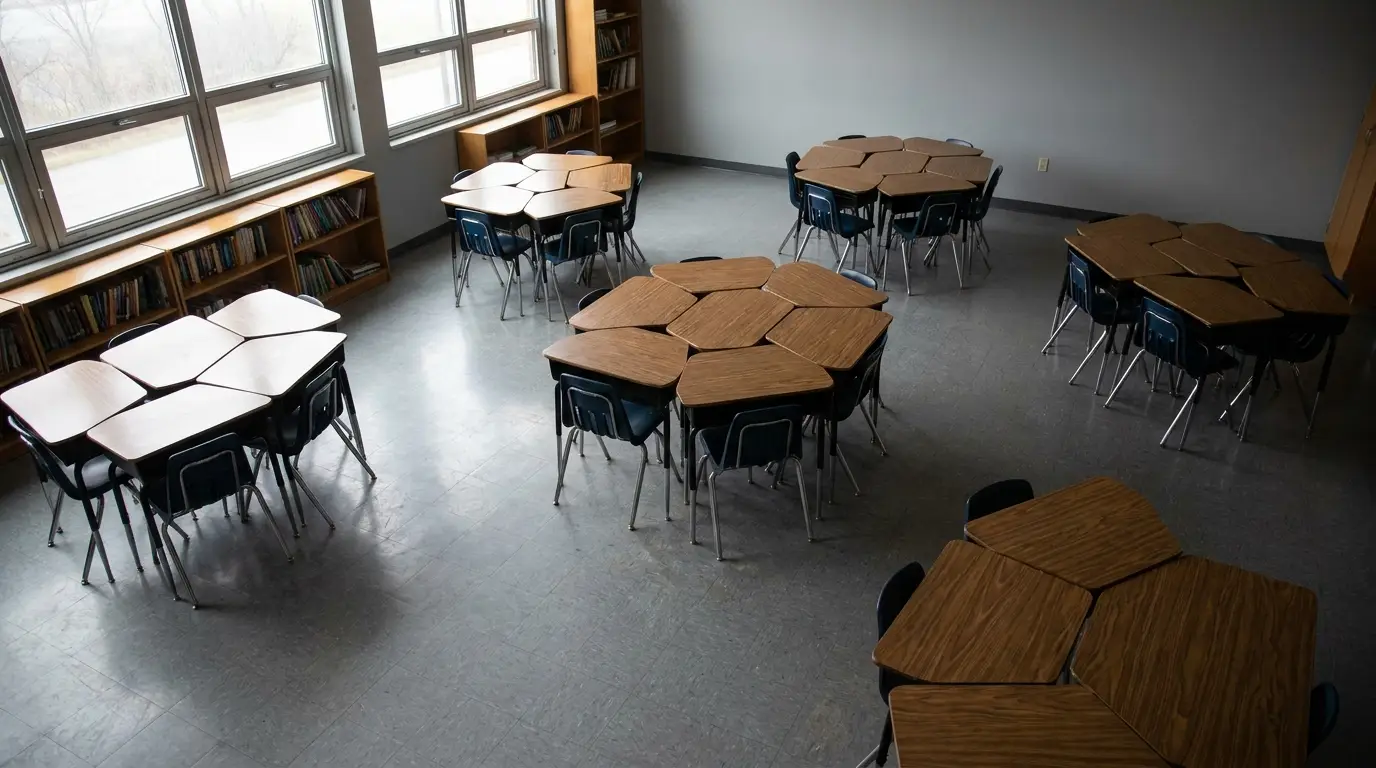
A good classroom layout does a lot more than just organize where students sit. Smaller pods near the walls and larger clusters in the center give teachers room to move around freely. Keep aisles at least 36 inches wide so every student is reachable, and the space stays accessible. Writable surfaces and mobile storage near desk clusters make it easier to support different types of learning in the same room. Quieter focus areas work best along the perimeter. Project zones need open floor space at the center. It also helps to rotate configurations occasionally. Changing things up prevents students from defaulting to the same spots and keeps the space feeling fresh and intentional.
Collaborative Desks Across Grade Levels and Settings
Collaborative desk systems work across a wide range of ages, subjects, and learning environments. In elementary classrooms, smaller pods keep younger students close and focused during group instruction. Middle school settings tend to work well with paired and quad arrangements that handle both structured tasks and open exploration. High school clusters and table height options reflect the kind of teamwork students will actually encounter after graduation. Libraries and STEM labs have embraced these formats to create spaces that shift easily between instruction and hands-on activity. That kind of versatility makes collaborative desk systems a smart investment for any school supporting multiple teaching approaches.
The furniture decisions schools make today shape how students learn for years to come. A classroom built around flexible desks provides teachers and students with the conditions they need to stay engaged every day. Moving away from fixed rows is about more than convenience. It reflects a real shift in how schools think about space and what students are capable of. The right desk arrangement supports STEM programming, group inquiry, and stronger participation across the board. That is not a small thing. Investing in adaptable furniture is one of the most practical steps a school can take toward better outcomes for everyone in the room.
