
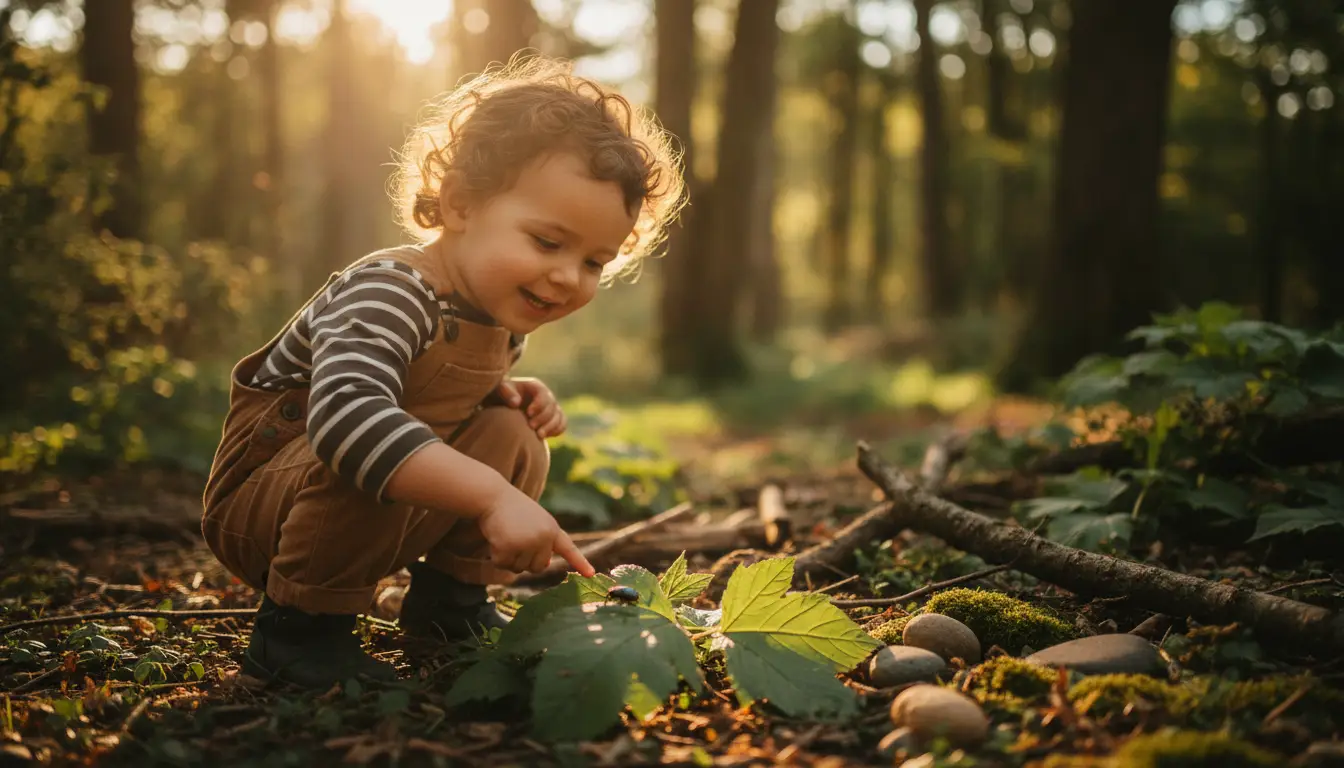
We all have those moments when the day feels a little too heavy. The screen has been on for too long, the noise feels too much, and the body almost tells you, I need a walk. You step outside, breathe a little better, move a little easier, and somehow your thoughts begin to settle.
For children, outdoor spaces can have a similar effect, only deeper. Their bodies are still growing, their brains are still wiring new connections, and their confidence is being shaped by everyday experiences. Time outside gives them space to move, explore, try again, talk freely, and feel connected to the world around them.
The Australian Government’s StartingBlocks resource explains that outdoor play gives children opportunities to explore, experiment, create, express themselves, solve problems, build curiosity, and learn through play. In this post, we will also discuss why outdoor learning matters in early childhood, especially for preschool-age children, and how preschools like Joey’s Cottage in Chipping Norton support this kind of learning through purposeful outdoor environments.
Why Outdoor Learning Matters in Early Childhood
Outdoor learning is the use of natural spaces, open areas, gardens, sand, water, trees, loose parts, movement games, and guided outdoor experiences as part of a child’s daily learning. It is still learning, even when it looks like play from the outside.
When children are outdoors, they are constantly making decisions. They decide how high to climb, how to balance on a beam, how to work with another child, how to build with sticks, or how to describe the insect they just found. These small moments may seem ordinary, but they support the same early skills parents care about, such as physical development, language, problem-solving, self-regulation, confidence, and social connection.
For families in areas like Chipping Norton, Liverpool, and nearby suburbs, outdoor learning can be especially valuable in a world where young children often spend more time indoors, in cars, or around screens than parents would like. A good early learning environment gives children time and space to reconnect with movement, fresh air, and hands-on discovery. Here’s why it matters:
1. Outdoor Learning Supports Physical Development and Movement
Watch a three-year-old for a few minutes in an outdoor space and you will get a sense of what their body is actually asking for. They run, stop suddenly, crouch down to examine something, haul a bucket of sand across the yard, try to balance on the edge of a garden bed. Each of these moments is doing something. Together, they build core strength, coordination, and the kind of body awareness that develops steadily across the early years.
The finer movements count for a lot too. A child pressing a seed into soil with their fingertip, or carefully pouring water from a small jug without spilling, is working the same hand muscles that will later hold a pencil. This connection between outdoor play and fine motor development tends to go unnoticed, but it surfaces in meaningful ways when children reach the writing and drawing stages at school. A child who spends regular time outdoors builds these skills through play, without it ever needing to feel like a lesson.
For preschool-age children, these physical experiences are closely linked to school readiness as well. Strong bodies support sitting, writing, concentrating, joining group activities, and managing the rhythm of a busy day.
2. Outdoor Learning Builds Curiosity, Thinking and Language
Natural environments make children stop and wonder. Why is this leaf a different colour from that one? Where does the ant disappear to? What happens to soil when you add water to it? These questions are not distractions from learning. At this age, they are exactly what learning looks like.
Outdoor settings encourage children to observe, compare, and test ideas in ways that feel entirely natural to them. When educators are present and engaged during these moments, they can introduce vocabulary in the right context. Words like “absorb,” “texture,” “slope,” and “dissolve” carry genuine meaning for a child who has just experienced them firsthand, rather than simply heard them in a room.
Over time, this kind of experience builds both language and a genuine habit of inquiry. That combination serves children well as they move toward formal schooling, where curiosity and the ability to think through problems become increasingly important.
3. Outdoor Learning Supports Confidence, Wellbeing and Social Skills
Open outdoor spaces tend to bring out a different quality in children. There is more room to take initiative, make decisions, and make mistakes without the same self-consciousness that can surface in more contained settings. Many educators notice that children who seem hesitant indoors come alive when given space to move and explore freely.
Group play outside naturally involves working together. Children build things, negotiate the rules of games, and settle disagreements as they arise. Physical challenges, whether crossing a balance beam, climbing a structure, or navigating unfamiliar terrain, offer manageable opportunities to read a situation and trust their own judgment. These are the kinds of experiences that build confidence from the inside, and that kind of confidence shows up later in how children approach new challenges at school and in life.
Sunlight, movement, and fresh air also support emotional regulation. Research has associated regular outdoor time with lower stress and improved mood in young children. Many educators observe that children return from outdoor play feeling more settled and better able to concentrate on the tasks that follow.
Final Thoughts
Outdoor learning sits at the heart of early childhood development. In the first five years, movement, language, curiosity, confidence, and social growth all deepen through experiences that outdoor environments make possible in a way indoor settings rarely can.
When you are comparing early education options in the Liverpool area, it is worth looking closely at how a centre uses outdoor time every day. Quality child care facilities in Chipping Norton, Liverpool and nearby suburbs are known to treat outdoor spaces as a genuine extension of the learning environment, with qualified educators who are present, friendly, and responsive to what children discover outside. That approach makes a meaningful difference in how children develop during these important years. So, if you are looking for a warm, play-based setting, it may be helpful to visit a centre near you, ask questions about daily routines and programs, and learn how the outdoor spaces support children’s learning in real time.
