The Brushing Routine That Actually Works for Ages 3–6
Morning and evening brushing with a preschooler or early elementary kid rarely looks like the polished tutorials online suggest. At this age, it’s less about perfect technique and more about laying the groundwork without turning the bathroom into a daily negotiation. The real challenge isn’t getting them to hold a brush. It’s helping them actually clean properly while their fine motor skills and spatial awareness are still developing.
Why Ages 3–6 Feel So Different
Little kids don’t brush the way older children do. Their hands are still learning coordination, their attention spans rarely stretch past a few minutes, and they have zero internal map of where plaque actually hides. When you hand them a brush and say “go,” they naturally gravitate to what’s easiest: the front teeth, the chewing surfaces, and anything that doesn’t trigger a gag reflex.
Parents end up stepping in, guessing what was missed, or quietly re-brushing after they’re done. It works in the short term, but it doesn’t teach independence. At this stage, the goal isn’t flawless cleaning. It’s building predictability.
What Actually Matters at This Stage
Dental professionals keep it simple for a reason. Start with a small-headed, soft-bristled brush designed for little mouths. A pea-sized drop of fluoride toothpaste is enough—more doesn’t clean better, it just increases swallowing and gum irritation.
Angle the bristles gently toward the gumline and use short, light circles. The brush does the work, not force. Two minutes is the standard goal, but for this age, it helps to break it into four 30-second chunks they can actually track.
Have them spit out the excess paste instead of rinsing heavily. That thin fluoride layer is meant to stay on the enamel, working quietly to protect developing teeth throughout the day or night.
Where the Routine Falls Apart
The bottleneck isn’t defiance. It’s a lack of clear, immediate feedback. Kids at this age can’t tell if they’re brushing too hard, missing the back molars, or rushing through a quadrant.
When parents narrate every stroke (“lower left now,” “don’t scrub,” “go back”), it turns brushing into a performance rather than a habit. They either tune out or push back. What they actually need is a neutral, consistent guide that doesn’t rely on an adult standing right behind them correcting every move.
Repetition builds the rhythm, but repetition without feedback just reinforces bad habits.
When Guidance Replaces Constant Correction
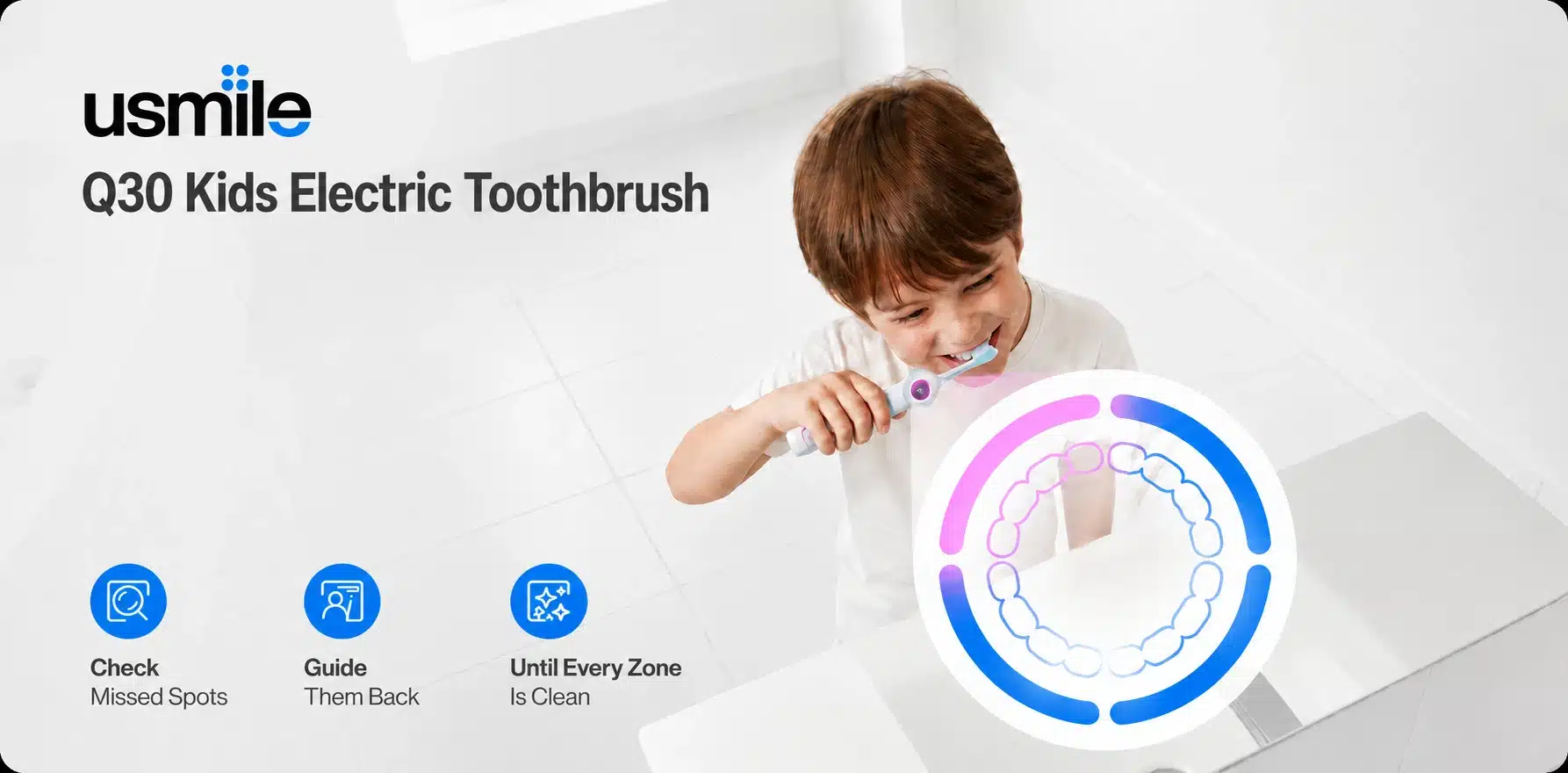
That’s where a quiet coaching layer changes the dynamic. Usmile designed the Q30 specifically to fill this gap for younger kids. The Q30 adds a quiet coaching layer to brushing, using voice prompts, timed zone cues, and simple visual feedback to help children follow the routine more independently.
It walks them through each section with soft 30-second cues, while a simple light system highlights missed zones so they can self-correct without screens or hovering. The companion app tracks coverage over time, but the real win happens at the sink. Less narration, more practice, and a routine that finally starts to stick.
Building the Foundation
Ages 3–6 aren’t about perfection. They’re about building the muscle memory and consistency that carry into older years. When kids get clear, immediate feedback in the moment, they stop treating brushing like a chore and start treating it like a habit.
The bathroom stops being a negotiation, and parents finally get to step back from the referee role. Over time, that steady guidance turns resistance into routine, and the whole household breathes a little easier.
A Small Boost for Back-to-Season Routines
As families settle into new schedules this fall, small upgrades can make a meaningful difference. For a limited time, usmile is offering a back-to-school promo: you can save up to 50% on the usmile Q30 Kids Electric Toothbrush. It’s a practical way to start the season with one less daily negotiation—and one more moment of quiet confidence at the sink.