
Understanding Newborn Breathing and Nasal Health
Bringing a newborn home brings immense joy, but it also introduces new parents to a variety of unfamiliar sounds and behaviors. Among the most common concerns for first-time parents is noisy breathing and sudden nasal stuffiness. During the first few months of life, infants are obligatory nasal breathers. This means they rely almost exclusively on their nasal passages to draw in air, especially during feeding and sleeping.
Because an infant’s nasal pathways are tiny and exceptionally delicate, even a minor buildup of mucus, ambient dust, or dried milk can cause significant congestion. Because babies lack the motor development to blow their own noses, identifying the best nasal aspirator for newborns and pairing it with a gentle, hygienic routine is vital for maintaining clear airways.
It is important to remember that occasional sniffing, sneezing, and light grunting are completely normal parts of newborn development. In the womb, a baby’s lungs and nasal cavities are filled with amniotic fluid, and clearing out residual moisture after birth can take several days or even weeks.
However, when nasal blockages begin to compromise your baby’s ability to nurse effectively, bottle-feed comfortably, or sleep through the night, proactive interventions become necessary. By equipping yourself with the right knowledge and tools, you can handle infant congestion calmly and safely at home.
Common Root Causes of Newborn Nasal Congestion
Infant nasal congestion is not limited to seasonal colds or viral illnesses. In fact, daily indoor environments play a massive role in whether an infant’s airway remains clear or becomes obstructed.
- Dry Ambient Air: Climate control systems, such as central heating in the winter or heavy air conditioning during the summer, strip moisture from the air. This dry air dehydrates delicate infant nasal mucosa, causing the body to overcompensate by producing thicker, stickier mucus.
- Environmental Irritants: Fragrances from laundry detergents, air fresheners, scented candles, pet dander, and household dust can easily irritate a newborn’s sensitive airways, leading to localized swelling.
- Viral Upper Respiratory Infections: As an infant’s immune system begins to adapt to the outside world, exposure to common cold viruses can result in excessive mucus production and inflamed nasal tissues.
- Anatomical Structure: Newborns have exceptionally small nasal passages. What would be a negligible amount of mucus in an adult can fully occlude an infant’s nostril, creating a loud, rattling breathing sound.
Understanding these triggers allows parents to implement preventive measures while selectively using suction tools only when active clearing is necessary.
Step-by-Step Instructions: Safe Nasal Clearing for Babies
Clearing a newborn’s nasal passages requires patience, care, and a gentle touch. Attempting to suction dry, hardened mucus directly can irritate delicate nasal linings or cause minor swelling. Following a structured, step-by-step process ensures a stress-free experience for both parent and child.
Step 1: Soften Mucus with Saline
Never attempt to clear dry nasal passages. Always begin by applying 1 to 2 drops of sterile, isotonic pediatric saline solution into each nostril.
- Place your baby on a safe, flat surface, or cradle them gently with their head slightly elevated.
- Carefully squeeze 1 to 2 drops of saline into the opening of one nostril.
- Allow the baby to sit for 30 to 60 seconds. This gives the saline time to loosen stubborn, crusty buildup and break down thick mucus.
Step 2: Select the Proper Tool and Technique
Once the mucus is softened, use a specialized suction device designed for infants. Ensure the tip is made of soft, BPA-free silicone that sits comfortably at the edge of the nostril without penetrating deep into the nasal cavity.
- Gently place the soft silicone tip right at the entrance of the nostril to form a light seal.
- Engage gentle, low-level suction to extract the loosened fluid.
- Remove the tool, wipe the tip clean, and repeat on the opposite side if needed.
Step 3: Soothe and Comfort
Nasal suctioning can sometimes startle a young baby. To minimize fussiness, perform the procedure in a well-lit, calm environment. Soothing noises, soft lighting, or gentle rocking immediately after suctioning helps reassure your infant and keeps their heart rate steady.
Evaluating Nasal Care Tools: Manual vs. Electric Aspirators
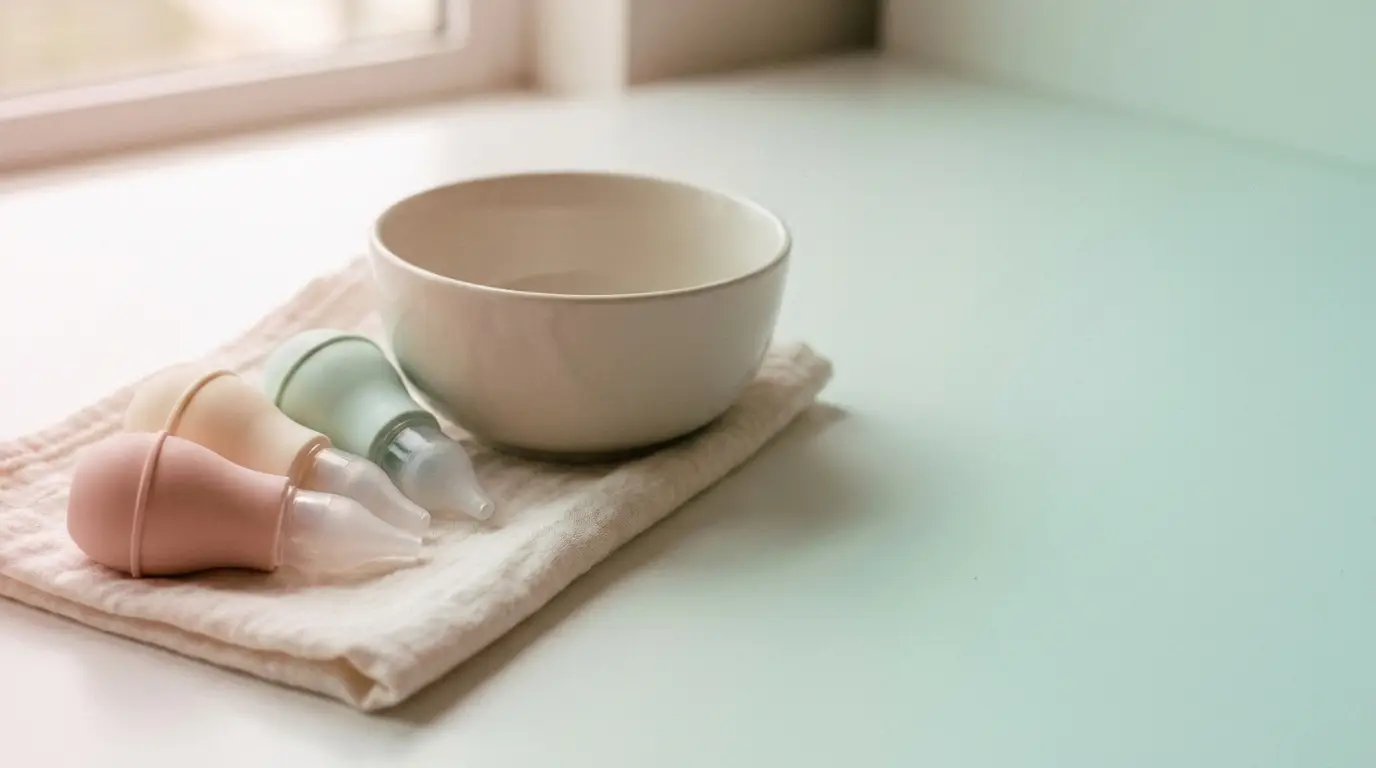
Selecting the right device is a personal choice for every family. Comparing the primary features of common nasal care tools helps clarify which design best fits your daily nursery routine.
Manual Bulb Syringes
Bulb syringes are widely distributed in hospitals and remain a classic option. They rely on manual hand pressure to generate a single burst of suction. While simple and inexpensive, they offer limited control over suction consistency, and their opaque, single-body construction makes internal cleaning and inspection challenging.
Human-Suction Manual Devices
These aspirators utilize a flexible tube where a parent provides suction using their own breath through a protective filter. They grant direct, intuitive control over suction pressure, but some caregivers find them awkward to operate while holding a wriggling baby.
Modern Electric Aspirators
Electric aspirators provide continuous, steady suction powered by a small internal motor. Modern designs feature adjustable suction levels calibrated for delicate infant tissue, ultra-quiet operation (often under 45–50 dB), soft silicone tips, and fully detachable, easy-to-clean storage chambers. Many also feature built-in mist functions or soothing lullabies to distract infants during care.
Key Best Practices for Safe Infant Nasal Care
To protect your baby’s delicate respiratory mucosa and ensure hygienic operation, adhere to these essential guidelines during every clearing session.
- Avoid Over-Suctioning: Limit active suction sessions to 2 to 3 times per day. Overusing suction tools can cause localized swelling and tissue irritation, which actually exacerbates the feeling of congestion.
- Time Care Around Daily Routines: Perform nasal hygiene about 15 minutes before feedings or bedtime. A clear airway allows your baby to latch or bottle-feed without pausing for air and promotes uninterrupted sleep.
- Sanitize After Every Use: Disassemble all removable components—especially silicone tips and collection cups—and wash them thoroughly with warm, soapy water after each session. Sterilize heat-safe parts regularly according to the manufacturer’s directions.
- Never Insert Rigid Objects: Avoid using cotton swabs or hard plastic tools inside a baby’s nostrils. Sudden head movements can cause accidental injury to sensitive internal tissues.
- Keep the Nursery Environment Moist: Use a cool-mist humidifier in your baby’s nursery to maintain ambient relative humidity between 40% and 50%, preventing nasal passages from drying out overnight.
When to Seek Professional Pediatric Care
While the vast majority of newborn congestion is mild and manageable at home, parents should monitor their child closely for signs that warrant professional medical evaluation.
Contact your pediatrician immediately if you observe any of the following symptoms:
- Signs of Respiratory Distress: Rapid breathing, nostrils flaring dramatically with each breath, or visible skin “sucking in” around the ribs and neck (retractions).
- High Fever: Any elevated temperature in a newborn under three months of age requires immediate medical consultation.
- Feeding Refusal and Dehydrated Signs: Complete refusal to feed over multiple consecutive cycles, accompanied by a noticeable decrease in wet diapers.
- Persistent Congestion: Nasal blockages that do not improve after 10 to 14 days, or are accompanied by a persistent, deep chest cough.
By keeping your home environment properly humidified, utilizing safe saline-assisted suction techniques, and selecting gentle, well-engineered clearing devices, you can confidently protect your infant’s breathing comfort and support their ongoing health and happiness.