
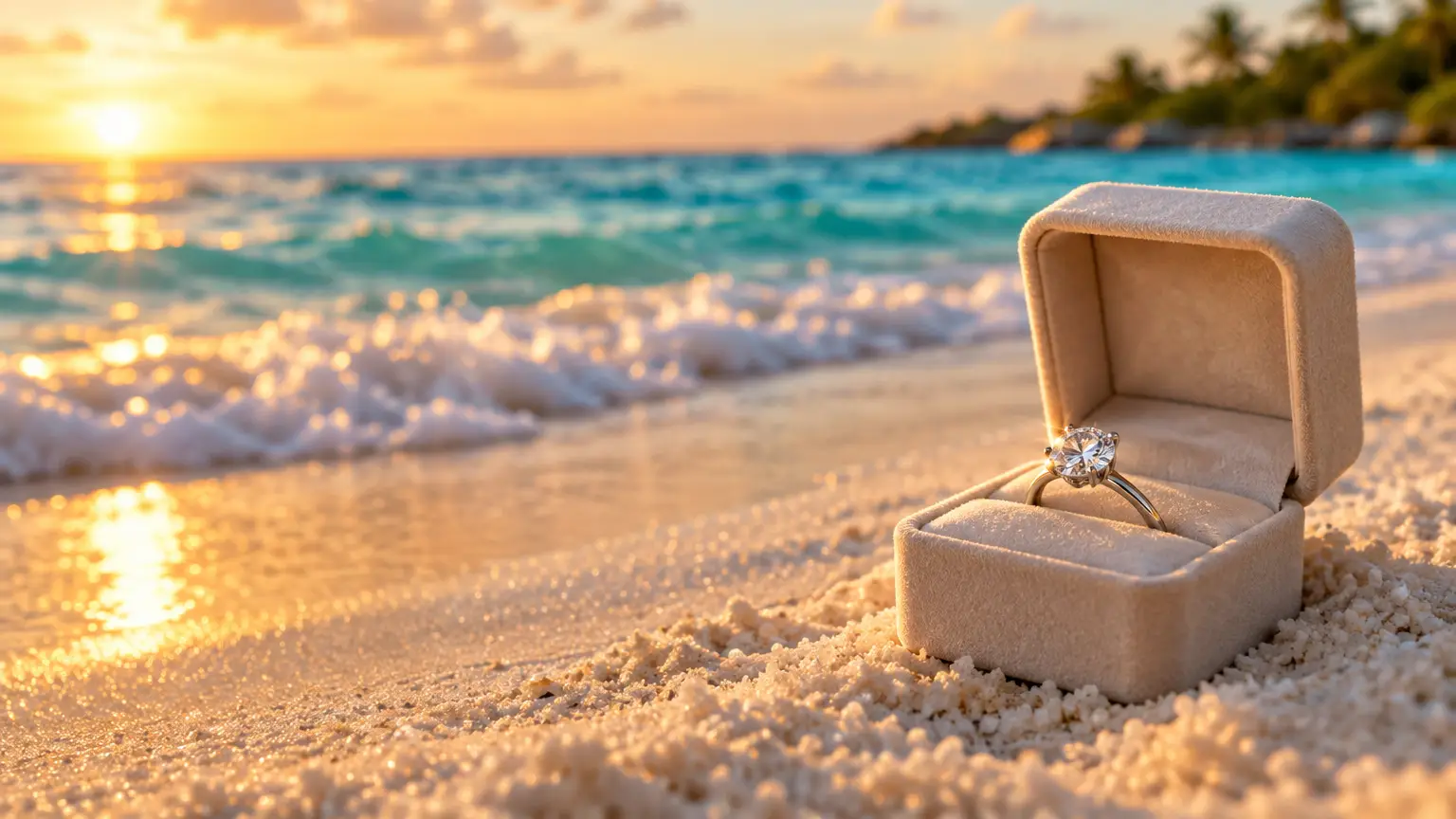
You’ve pictured it a hundred times. Bare feet on a Caribbean beach at golden hour, the water going from turquoise to gold, your partner turning around to find you on one knee. The flights are booked.
The resort has a quiet stretch of sand you’ve already scouted on the map. Everything is set except for the one thing that will outlast the trip: the ring.
Choosing an engagement ring is a big decision on its own. Choosing one that has to survive airport security, salt air, and a surprise reveal thousands of miles from home adds a few extra considerations. The good news is that a little planning makes the ring part just as smooth as the proposal itself. Here’s how to get it right.
Start Earlier Than You Think
Destination proposals run on a fixed date, and rings don’t always arrive on schedule. Custom settings, engraving, and resizing can each add days or weeks. Give yourself at least six to eight weeks before departure, and more if you want anything personalized.
Timing matters for another reason too. According to The Knot’s Jewelry and Engagement Study, 34% of proposals now take place at a scenic spot and 14% happen while on vacation, with the vast majority of proposers planning the moment well in advance rather than improvising. A destination proposal puts you in good company, and it rewards the same careful preparation that goes into the trip itself.
Learn What Your Partner Actually Likes
Before you look at a single ring, gather clues. Notice the jewelry they wear daily: yellow gold or white metal, delicate or substantial, classic or a little unconventional. Ask a close friend or sibling to help if you’re unsure. Screenshots on their phone, saved posts, and offhand comments about a friend’s ring are all fair game.
Pay particular attention to shape. Round, oval, pear, emerald, and cushion cuts each have a distinct personality, and shape preference is often stronger than people expect.
Understand the Basics Without Getting Lost in Them
You don’t need a gemology degree, but a working knowledge of the four Cs helps you shop confidently:
- Cut determines sparkle and is worth prioritizing above everything else
- Color is graded from colorless downward; near-colorless grades look white to the eye at a fraction of the cost
- Clarity refers to inclusions; “eye-clean” is the practical goal rather than flawless
- Carat is weight, not size, and the setting can make a stone look larger than its number suggests
Lab-grown diamonds are chemically identical to mined stones and often let you choose a larger or higher-quality diamond for the same budget, which many destination proposers appreciate when travel costs are already part of the equation.
Pick a Setting That Travels Well
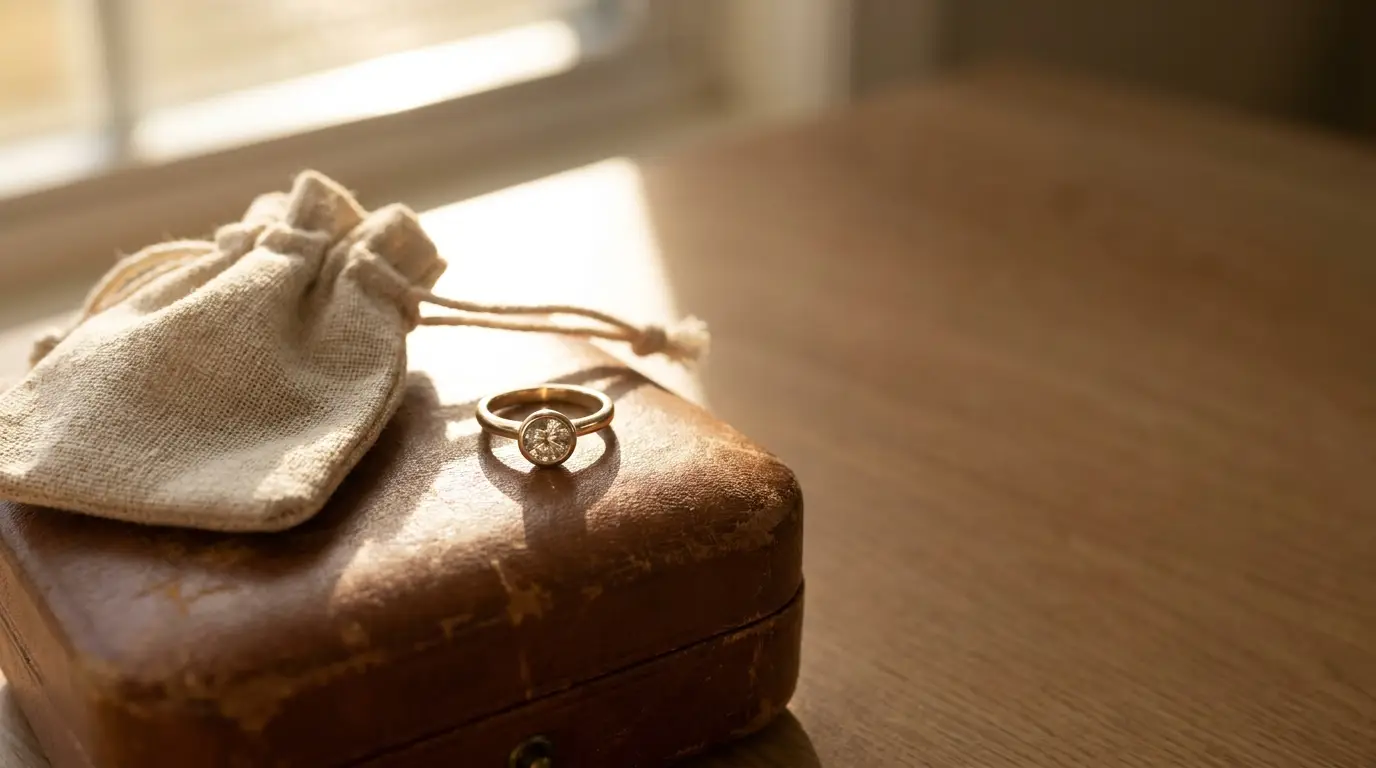
A destination proposal is hard on a ring. It will be in a bag, through security scanners, near sand, and possibly in humid, salty air before it ever goes on a finger. A few setting choices make life easier:
- Low-profile or bezel settings are less likely to snag or catch on fabric
- Secure prongs with a solid basket keep the stone safe if the box gets jostled
- Platinum or 14k gold hold up well to humidity and resist tarnish
- Simple bands are easier to resize afterward if the fit isn’t perfect
Shopping for engagement rings online gives you time to compare settings side by side without a sales pitch, which is especially useful when you’re also juggling travel logistics. Ritani has built its process around that kind of remote shopping: you can pair a setting with a specific diamond, preview the finished ring before it’s made, and have it shipped and insured ahead of your trip. Being able to see exactly what you’re buying, from your couch and on your own schedule, takes a lot of the pressure out of a purchase you can’t easily exchange once you’ve landed.
Get the Size as Close as You Can
A ring that doesn’t fit is a small problem at home and a bigger one on a beach. Borrow a ring your partner wears on the correct finger and have a jeweler measure it. If that’s not possible, most jewelers can resize after the proposal, so err slightly larger rather than smaller. A ring that slides on easily during the proposal is far better than one that sticks at the knuckle.
Protect It in Transit
A few habits keep the ring safe and the secret intact:
- Carry it on; never check it
- Use a slim travel case rather than a bulky velvet box
- Add the ring to your travel insurance or a jeweler’s policy before you leave
- Keep it in an inner pocket or toiletry bag your partner won’t rummage through
- Have a discreet word with security staff if you’re worried about the scanner revealing the surprise
Once you arrive, store it in the room safe until the moment comes.
Think About the Photos
Destination proposals get photographed, whether by a hired photographer, a helpful stranger, or the two of you afterward. A ring with a bright, well-cut stone photographs beautifully in natural light.
Consider how the metal color will look against sand, sea, and skin tones in your photos. It’s a small detail, but the pictures will be shared for years.
Conclusion
A destination proposal is a story your partner will tell for the rest of their life, and the ring is the part of that story they’ll carry every day. Start early, learn what they love, focus on cut and setting over raw carat weight, and choose a design that can handle travel and sunshine.
Shop somewhere that lets you see the finished ring before it ships, get the size as close as you can, and protect it on the journey. Do that, and when the moment arrives on that beach, the only thing you’ll need to think about is the question.
