
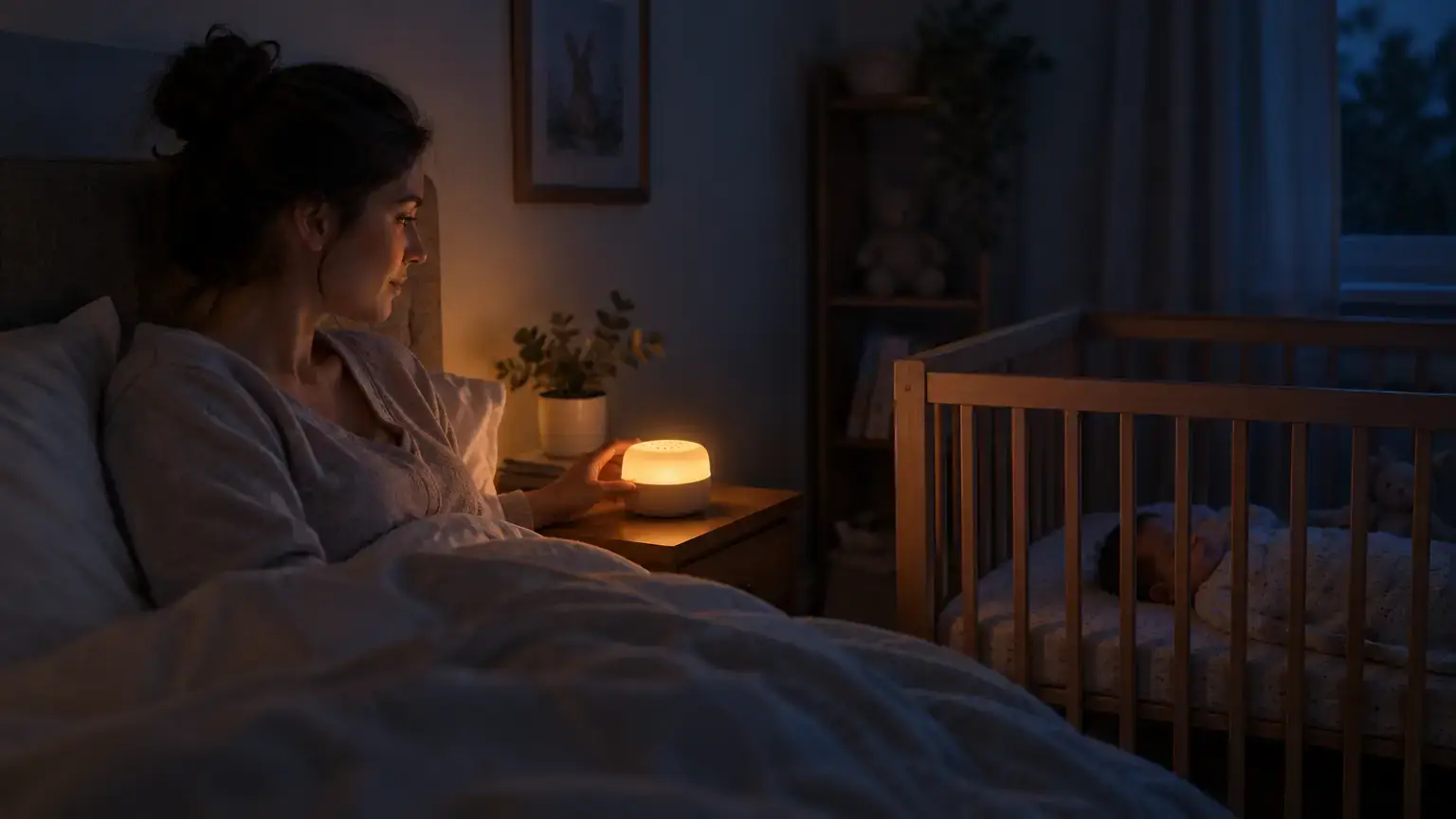
Discussions around newborn nursery design often focus exclusively on the infant’s comfort, frequently overlooking the biological and psychological needs of the postpartum mother. The fourth trimester is a period of intense physiological transformation, characterized by sharp hormonal drops, physical healing, and heightened maternal hyper-vigilance.
Postpartum mothers often experience a state of elevated sensory awareness, lying awake listening intently for every soft squeak, breath change, or shift in their baby’s movement. This continuous state of alertness prevents mothers from entering deep, restorative slow-wave sleep during the brief intervals when their infant is resting.
Protecting maternal mental health and reducing postpartum anxiety requires designing a sensory environment that supports both mother and child. Incorporating a high-performance baby sound machine into the shared bedroom setup creates a soothing acoustic foundation that dampens hyper-vigilance, allowing new mothers to rest deeply whenever their newborn sleeps.
Optimizing the postpartum sleep environment requires hardware that operates seamlessly without adding mental load or physical strain. Outdated bedside noise makers requiring rigid manual button presses or emitting harsh indicator lights introduce unnecessary friction during night check-ins.
Advanced connected systems, such as the Momcozy Baby Sound Machine App Remote Control, are engineered to support maternal sleep recovery. Featuring custom-calibrated pink and white noise profiles, melatonin-friendly RGB nightlight spectrums, and intuitive smartphone app integration, this smart nursery hub enables mothers to adjust light intensities, tweak decibel levels, or change sound tracks directly from their phone—eliminating physical strain and helping mothers return to sleep quickly after caregiving shifts.
1. The Neurobiology of Postpartum Maternal Hyper-Vigilance
Understanding the neuroendocrine shifts during the postpartum period reveals why sensory room design is vital for maternal mental health.
Maternal Sleep Recovery Environmental Protocol:
[1] Acoustic Decoupling: Maintain continuous pink noise to buffer phantom cries and minor infant rustles.
[2] Melatonin Preservation: Deploy warm red/amber nightlight spectrums (below 2700K) during night feeds.
[3] Zero-Friction Management: Utilize smartphone app controls to alter room parameters from bed.
[4] Safe Spatial Clearance: Position the sound unit 3 to 6 feet away from both crib and mother’s bed.
Hormonal Shifts and Elevated Auditory Audition
Following delivery, rapid decreases in progesterone and estrogen alter neurotransmitter pathways, placing the maternal brain on high alert. This adaptive evolutionary response ensures maternal responsiveness, but in modern nursery environments, it often leads to hyper-vigilance. Postpartum mothers frequently suffer from “phantom crying”—perceiving non-existent infant distress in the quiet hum of a silent room. Continuous pink noise provides a steady auditory baseline that dampens phantom auditory triggers, soothing the maternal nervous system.
Protecting Maternal Sleep Architecture Between Feedings
Newborn sleep is naturally fragmented, meaning mothers must maximize sleep efficiency during short 2-to-3-hour rest windows. If a mother spends 45 minutes trying to calm her racing mind after a midnight feeding, her total restorative sleep drops significantly. Establishing a peaceful light and sound environment lowers maternal cortisol levels, accelerating the transition from wakefulness into deep NREM sleep.
2. Low-Friction Night Care: Preserving Parental Sleep Inertia
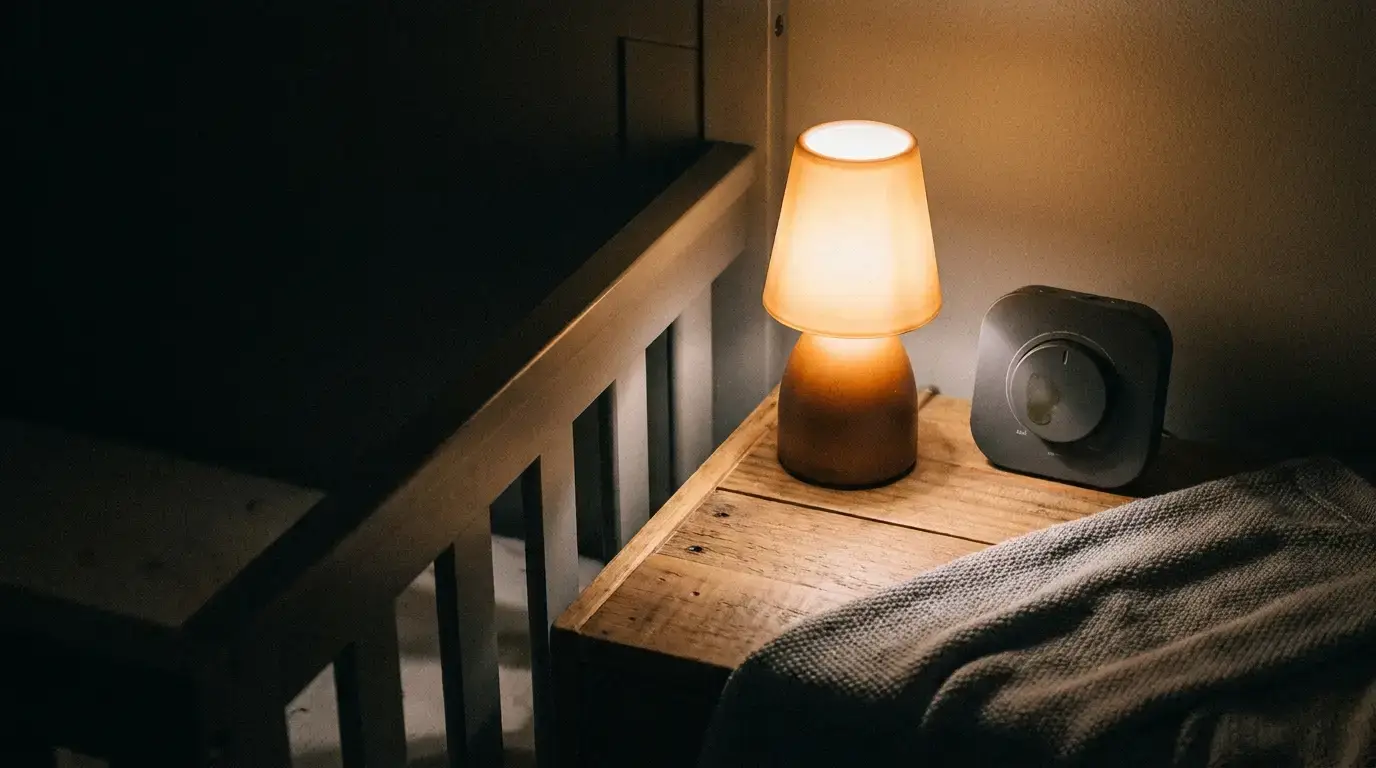
Late-night nursing and diaper changes can easily disrupt a mother’s sleep inertia if the room environment is overly stimulating.
The Role of Melatonin-Safe Nightlighting
Turning on bright overhead lights or cool-toned lamps during late-night feedings suppresses pineal melatonin production for both mother and infant. This sudden light exposure resets circadian clocks, leaving mothers wide awake even after the baby is settled. Dimmable warm red or deep amber nightlight spectrums (wavelengths above 600 nanometers) provide ample visibility for bottle preparation or nursing attachment while preserving natural melatonin levels.
Silent Room Control via Smartphone Synchronization
Reaching across a nightstand to fumble with physical buttons can cause accidental volume spikes or shadow movements that awaken a drowsy baby. Smartphone app control allows mothers to adjust volume levels, dim lighting, or set automated sleep schedules completely silently from their phone screen, ensuring smooth, uninterrupted night care.
3. Comparative Overview: Maternal Mental Health Utility Across Nursery Devices
Evaluating nursery sleep tools based on ease of use, maternal comfort, and environmental adaptability highlights key advantages of smart app-controlled hubs:
| Maternal Care Metric | Standard Bedside Lamp | Basic Mechanical Sound Box | Smart App-Controlled Nursery Hub |
|---|---|---|---|
| Light Spectrum Control | Cool white / Non-adjustable | Single fixed LED | Dimmable warm red/amber RGB spectrums |
| Acoustic Masking Quality | None | Limited analog loops | High-fidelity non-looping pink & white noise |
| Maternal Ergonomics | High strain (Wall switch) | Moderate strain (Button press) | Zero strain (Silent smartphone app control) |
| Phantom Cry Buffering | None | Limited efficacy | High (Smooth continuous pink noise masking) |
| Routine Automation | Manual | Basic mechanical timer | Automated saved presets for night routines |
4. Pediatric and Maternal Decibel Safety, Placement, and Maintenance Standards
Following established pediatric and environmental safety standards ensures your sound unit provides optimal sound masking while safeguarding hearing health for both mother and baby.
- Optimal Distance Placement: Position the sound machine at least 3 to 6 feet away from both the baby’s crib and the mother’s bed. Place the unit near hallway doors or windows to intercept external household noises before they reach the sleeping area.
- Pediatric Decibel Compliance: Maintain continuous continuous background sound levels around 50 to 60 decibels (dB) measured at mattress height—similar to soft rainfall or a gentle stream.
- Routine Equipment Hygiene: Unplug the device weekly to wipe down exterior surfaces, light domes, and speaker grilles using a soft microfiber cloth slightly dampened with warm water. Keep all power cables neatly routed along baseboards, strictly out of reach.
5. Summary: Supporting Maternal Wellness Through Environmental Harmony
Nursery design should care for the mother just as thoughtfully as it cares for the newborn. By integrating safe acoustic masking, melatonin-friendly lighting, and effortless smartphone control, families can build a soothing sleep sanctuary that eases postpartum anxiety, promotes deep rest, and supports maternal mental health throughout the fourth trimester.
