
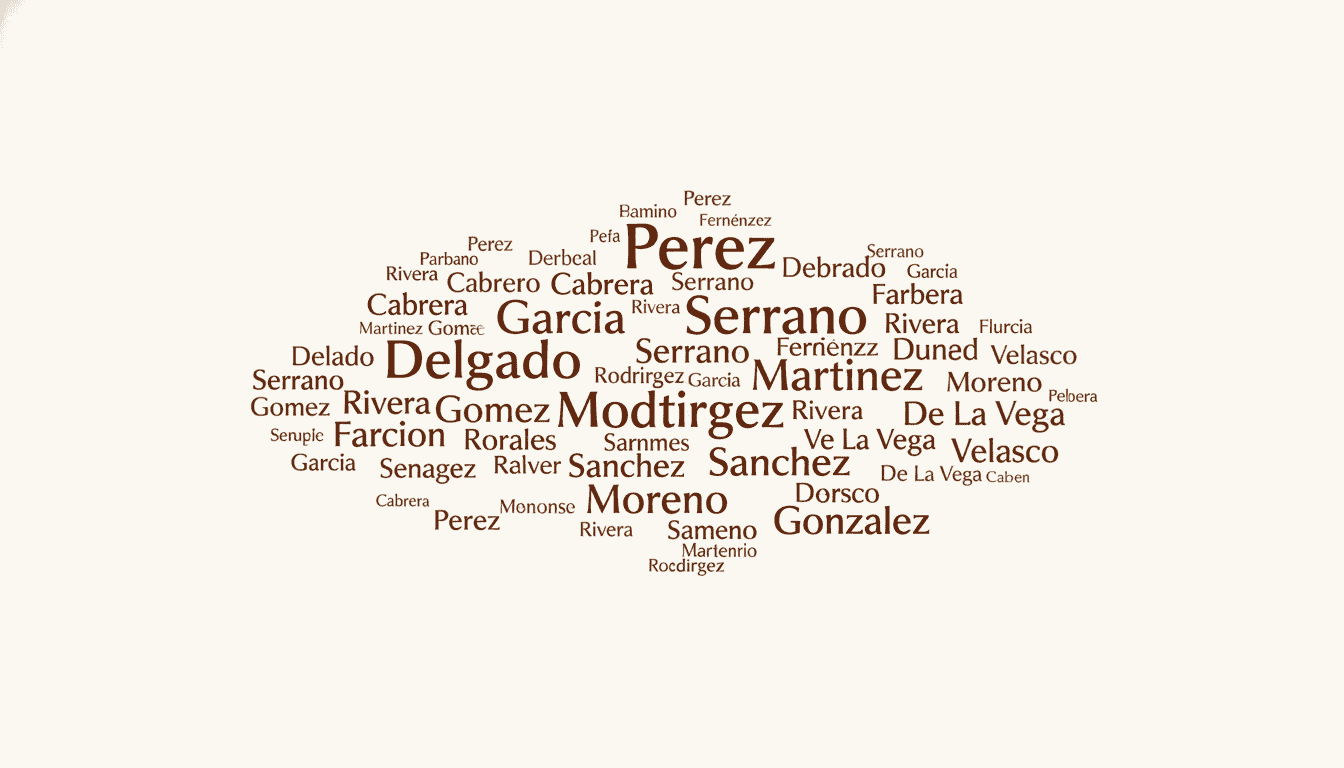
Ever wondered why so many people share surnames like García or Rodríguez?
Spanish last names carry stories of ancient trades, family lineages, and geographic roots that stretch back centuries.
These surnames aren’t just labels; they’re windows into history, connecting millions of people worldwide to their Spanish heritage.
From names inspired by nature to those honoring patron saints, each one tells a unique tale. Spanish naming traditions have shaped identities across Spain, Latin America, and beyond.
If you’re curious about your own surname or love learning about cultural heritage, you’re in the right place.
Let’s find out one hundred beautiful Spanish last names and uncover the fascinating meanings behind them.
History and Origin of Spanish Surnames
Spanish surnames emerged as practical solutions to growing communities in medieval Spain.
Before the 10th century, most people had only first names. As villages expanded into cities, confusion arose when multiple individuals shared the same given name.
The Catholic Church and royal decrees encouraged permanent family identifiers during the 1100s and 1200s. Nobles adopted surnames first, followed by merchants and common folk.
By the 1400s, most Spanish families had established hereditary surnames that children inherited from their parents.
Spain’s position as a cultural crossroads brought diverse influences to its naming system. Roman colonization introduced structured naming conventions.
Moorish rule added distinctive sounds and meanings from the Arabic language. The Basque people maintained their ancient linguistic traditions in northern regions.
Jewish and Germanic tribes contributed their own patterns. This cultural mixing created a surname system unlike any other in Europe, reflecting centuries of coexistence and interaction among different peoples.
Spanish Last Names and Their Meanings
Spanish surnames reflect a rich cultural history. Here are 100 distinct last names organized by their origins.
Names Based on Patronymic Origins
These surnames come from the father’s given names, often ending in -ez, meaning “son of.”
- Rodríguez – Son of Rodrigo, meaning son of the famous ruler or influential leader
- Fernández – Son of Fernando, translating to son of the brave traveler or adventurer
- González – Son of Gonzalo, meaning son of the battle or war-ready person
- Martínez – Son of Martín, derived from Mars, the Roman god of war and strength
- López – Son of Lope, meaning son of the wolf, symbolizing strength and courage
- Sánchez – Son of Sancho, meaning son of the saint or the sanctified one
- Pérez – Son of Pero or Pedro, translating to son of Peter or the rock
- Gómez – Son of Gome, meaning son of the man or the human being
- Ramírez – Son of Ramiro, meaning son of the wise protector or famous counselor
- Álvarez – Son of Álvaro, meaning son of the elf warrior or guardian spirit
- Hernández – Son of Hernando, meaning son of the bold voyager or explorer
- Jiménez – Son of Jimeno, meaning son of the one who hears or listener
- Díaz – Son of Diego, meaning son of the supplanter or the teaching one
- Vázquez – Son of Vasco, meaning son of the Basque person or crow-like individual
- Muñoz – Son of Muño, meaning son of the hill dweller or mountain person
- Gutiérrez – Son of Gutier, meaning son of the warrior or army ruler
- Domínguez – Son of Domingo, translating to son of the Lord or Sunday-born child
- Benítez – Son of Benito, meaning blessed one with religious significance attached
- Ibáñez – Son of Juan, the Basque version meaning son of John
- Méndez – Son of Mendo, also connected to wise or thoughtful family traits
Names Derived from Geographic Locations
These surnames indicate ancestral towns, regions, or landscape features where families originated.
- Torres – From the towers, referring to someone living near castle towers or fortifications
- Rivera – From the riverbank, indicating families who lived along rivers or streams
- Castillo – From the castle, denoting those who lived near or worked in castles
- Mendoza – From the cold mountain, a Basque surname referring to a mountainous cold region
- Navarro – From Navarre, indicating origins in the northern Spanish region of Navarre
- Campos – From the fields, referring to those who lived or worked in open countryside
- Medina – From the city, derived from the Arabic word for city or urban center
- Valencia – From Valencia, indicating origins in the eastern coastal region of Spain
- Córdoba – From Córdoba, referring to the historic Andalusian town in southern Spain
- Sevilla – From Seville, denoting origins in the capital city of the Andalusia region
- Castro – The fortress, indicating someone who lived near or guarded a fortified place
- Peña – The rock or cliff, denoting someone living near rocky terrain or cliffs
- Sierra – The mountain range, referring to those dwelling in or near mountain areas
- Vega – The meadow, referring to fertile lowlands or those farming in meadow areas
- Montes – The mountains, denoting people from mountainous regions or highland dwellers
- Arroyo – The stream, denoting those living along small streams or creek beds
- Villanueva – New town, referring to families from newly established settlements or villages
- Alcántara – The bridge, from the Arabic word for arch or bridge structure in landscape
- Trujillo – From the town of Trujillo, referring to this historic Spanish city location
- Arellano – From Arellano town, indicating origins in this specific Basque region location
- Medrano – From Arabic origin, referring to city dwellers or urban center inhabitants
- Almanza – The fortress, from Arabic, indicating a secure or fortified settlement location
- Salazar – Old hall, from the Basque, indicating an ancient house or an established family dwelling
- Villegas – From old houses, indicating origins in areas with ancient, established buildings
- Betancourt – Beautiful court, from a French-influenced name meaning lovely courtyard or palace area
Names Based on Occupations and Personal Traits
These surnames reflect ancestral professions, physical characteristics, or personality traits within Spanish communities.
- Herrera – The blacksmith, referring to someone who worked with iron and metal forging
- Guerrero – The warrior, indicating ancestors who served as soldiers or military fighters
- Molina – The miller, denoting someone who operated mills or ground grain for communities
- Delgado – The thin one, possibly referring to a slender person or fine craftsman
- Moreno – The dark one, referring to someone with dark hair, complexion, or features
- Suárez – Guardian of the pigs, indicating ancestors who were swineherds or pig keepers
- Romero – The pilgrim, denoting someone who made religious pilgrimages to holy sites
- Cabrera – The goatherd, referring to those who raised or tended goats in rural areas
- Cortés – The courteous one, indicating polite, refined, or well-mannered ancestral behavior
- Gallardo – The brave or handsome, describing courageous or attractive family members historically
- Pizarro – The slate cutter, referring to someone who worked quarrying or cutting slate
- Bravo – The fierce one, indicating bold, courageous, or untamed personality in ancestors
- Franco – The free one, suggesting ancestors who were freemen or frank in nature
- Rico – The wealthy one, indicating prosperous ancestors or those with substantial means
- Cano – The gray-haired, referring to premature graying or elderly, respected family members
- Blanco – The white one, referring to fair-haired or light-complexioned individuals
- Rubio – The blonde, indicating someone with fair or golden-colored hair and features
- Caballero – The knight or gentleman, denoting noble status or chivalric ancestry
- Carrillo – The little cart, possibly referring to cart makers or transporters of goods
- Duarte – Wealthy guardian, Portuguese-origin name meaning prosperous protector or keeper
Names Inspired by Nature and Natural Elements
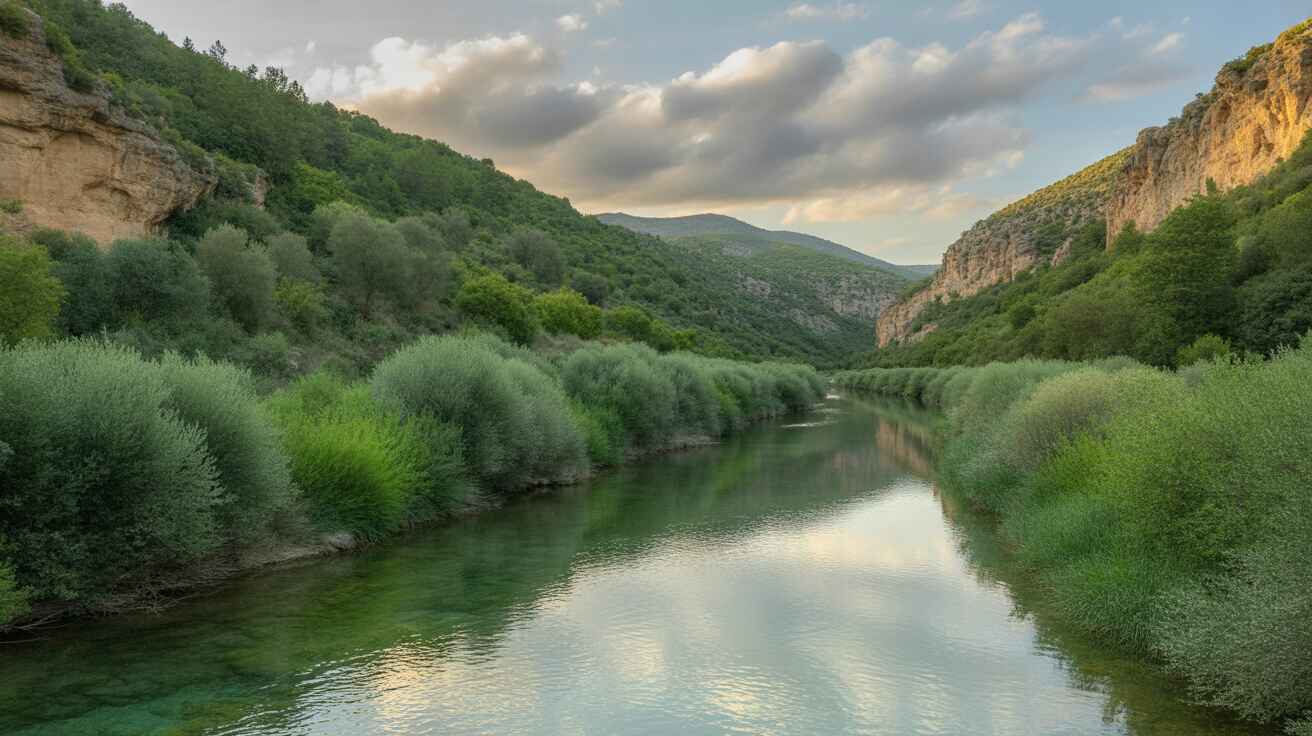
These surnames derive from plants, animals, landscapes, and other features found in the natural world.
- Flores – The flowers, referring to someone living near flower fields or floral gardens
- Ramos – The branches, indicating those who lived near trees or worked with wood
- León – The lion, symbolizing strength, courage, or someone from the León region
- Parra – The grapevine, indicating ancestors involved in viticulture or wine production
- Rojas – The red ones, possibly referring to red-haired individuals or reddish soil areas
- Ríos – The rivers, denoting families living near or along multiple river systems
- Oliva – The olive tree, indicating those who grew olives or lived near olive groves
- Prado – The meadow or field, referring to open grasslands where families lived
- Fuentes – The fountains or springs, denoting those living near water sources or springs
- Escobar – The broom field, indicating areas where broom plants grew abundantly
- Carrasco – From holm oak, referring to areas where these evergreen oak trees grow
- Cisneros – From swans, indicating areas where swans lived or swan-related family symbols
- Marín – From the sea, indicating coastal dwellers or those with maritime connections
- Morales – From the mulberry trees, but also linked to moral or ethical character
- Pedraza – Rocky place, describing terrain with numerous rocks or stony ground areas
- Echeverría – New house, a Basque surname referring to newly built homes or establishments
- Aguirre – The prominent place, a Basque surname referring to visible or exposed locations
- Mendizábal – Wide mountain, indicating origins in the broad mountainous Basque territory areas
- Uribe – The village center, a Basque name referring to town centers or settlements
- Gorostiaga – Holly tree place, referring to areas where holly trees grew in the Basque lands
Names with Religious and Noble Heritage

These surnames reflect Christian devotion, connections to royalty, nobility, or spiritual significance in family history.
- Cruz – The cross, symbolizing Christian faith or someone living near a cross monument
- Santos – The saints, indicating devotion to holy figures or living near church property
- Iglesias – The churches, referring to those living near churches or working for the clergy
- Reyes – The kings, possibly indicating service to royalty or royal descent connections
- Príncipe – The prince, suggesting noble lineage or service to princely households
- Ángel – The angel, symbolizing a divine messenger or purity in family traditions
- De La Cruz – Of the cross, indicating origins near cross monuments or strong faith
- Guadalupe – River of the wolf, combining Arabic and Latin meaning sacred river valley
- Coronado – The crowned one, suggesting royal connection or honored status in society
- Ortiz – Son of Ordoño, but also linked to fortunate or brave occupation holders
- Elizondo – Near the church, indicating Basque families living close to church buildings
- Zúñiga – From wetlands, indicating origins in marshy or swampy Basque territory areas
- Garay – Height or peak, a Basque surname referring to elevated lands or summits
- Salvatore – The savior, reflecting deep religious faith or redemption in family history
- Alvarado – The whitened place, from Arabic, describing a white or bright geographic location
Each of these Spanish surnames tells a story that has been passed down through generations.
Conclusion
Spanish last names are more than just identifiers. They connect us to ancestors, places, and traditions that shaped entire cultures.
From patronymic surnames honoring fathers to names celebrating natural landscapes, each carries a piece of history worth preserving.
Understanding these names helps us appreciate the diverse roots of Spanish-speaking communities worldwide.
Does your surname appear on this list? Take a moment to share your family name’s story with others.
Researching surname meanings strengthens our connection to heritage and reminds us how intertwined our histories truly are.
Keep celebrating the names that make your family unique, and pass these stories down to future generations who’ll cherish them.
