

There’s nothing quite like the panic of touching your baby’s forehead at 2 a.m. and feeling that unmistakable warmth.
Your heart races, your mind floods with questions, and suddenly you’re wide awake, wondering what to do next.
Fevers are one of the most common reasons parents lose sleep, literally and figuratively. The good news?
Most fevers are your baby’s body doing exactly what it should, fighting off an infection.
Knowing how to reduce baby fever at night isn’t about eliminating it but managing it safely while keeping your little one comfortable.
This guide walks you through everything you need to know, from recognizing when a fever needs attention to practical steps that actually help during those long nighttime hours.
What Counts as a Fever in Babies?
Here’s something that catches many parents off guard: your baby’s “normal” temperature isn’t a fixed number.
It shifts throughout the day, usually running a bit higher in the late afternoon and evening. The way you check also matters: a rectal reading will be higher than one from the forehead or armpit.
And yes, every child is a little different. What’s typical for your baby might be slightly different from your neighbor’s baby. This is why it helps to know your child’s baseline when they’re healthy.
Fever Thresholds by Age: You Should Know
Knowing when a fever needs immediate attention depends mainly on your baby’s age.
- 0 to 1 year: 100.4°F or higher needs urgent medical advice immediately.
- 1 to 2 years: 102°F or higher lasting a day needs attention.
- 2 to 3 years: Similar guidelines, though toddlers communicate discomfort better.
The youngest babies need extra caution because their immune systems are still developing.
Infections can progress quickly in newborns, and a fever could signal something serious that requires immediate attention.
The Best Way to Check Temperature at Night
When your baby feels warm at 2 a.m., you need a thermometer you can trust.
Rectal thermometers are the gold standard for babies under 3 months. They’re the most accurate, which matters when even half a degree can change your next move.
Forehead (temporal artery) thermometers work well for quick checks on older babies, though they can read lower than actual body temperature.
Armpit readings are less accurate but can be helpful for a rough idea if your baby won’t tolerate other methods.
If a reading seems off, like surprisingly high or surprisingly low, wait a few minutes and check again.
Make sure the thermometer is positioned correctly and that your baby hasn’t just been bundled in heavy blankets, which can temporarily raise skin temperature.
Why Fever Often Spikes at Night?
Your baby’s body temperature naturally follows a daily rhythm, typically running warmer in the late afternoon and evening.
This regular pattern means fevers often peak at night, which can feel alarming when you’re already exhausted. Symptoms also feel more intense during sleep hours because your baby is lying down and may be less distracted.
A nighttime spike becomes concerning when your baby is hard to wake, struggling to breathe, or showing signs of dehydration.
If they’re fussy but still waking to feed and making eye contact, that’s more reassuring. Trust your instincts. If something feels off, it probably is.
Step-by-Step Nighttime Plan to Lower Fever Safely

When your baby’s running a fever in the middle of the night, having a clear plan helps you stay calm and focused on what actually matters.
Step 1: Check Baby’s Overall Condition First
Before you do anything else, take a moment to observe your baby.
- How’s their breathing?
- Are they alert when awake?
- Are they feeding normally?
- When was the last wet diaper?
These details matter more than the temperature number alone.
Keep a simple log by the bedside: jot down the time, temperature, any symptoms you notice, and medications given.
This helps you track patterns and gives your helpful pediatrician information if you need to call.
Step 2: Create a Fever-Friendly Sleep Setup
Resist the urge to bundle your baby up. Overdressing can trap heat and make the fever worse.
Dress them in light, breathable pajamas. One layer is usually enough. If you’re worried they’ll get cold, keep an extra blanket nearby, but don’t pile it on.
Keep the room comfortably cool, around 68 to 72°F. Good air circulation helps too.
Step 3: Fluids and Feeding Support
Staying hydrated is crucial when your baby has a fever.
Stick with breast milk or formula as the primary source of fluids. If your baby isn’t interested in full feeds, offer smaller amounts more frequently.
Watch for signs of dehydration overnight: fewer wet diapers than usual, dry mouth, no tears when crying, or unusual sleepiness. If you notice these, contact your pediatrician.
Step 4: Comfort Measures That Are Usually Safe
A lukewarm washcloth on the forehead or back of the neck can feel soothing if your baby seems uncomfortable. Skip cold water, which can cause shivering.
Focus on what comforts your baby: gentle rocking, cuddling, or just being close. Keep the lights low and the room quiet.
Step 5: Fever Medicine, When It Helps and How to Use It Safely
You’re treating discomfort, not chasing a specific temperature number.
If your baby is miserable and fussy, medicine can help. If they’re resting peacefully, they might not need it.
Acetaminophen and ibuprofen are the standard options. Dosing must be based on weight and age, so follow your pediatrician’s instructions.
Never give aspirin to babies. If the fever lasts more than 24 hours in babies under 2, call your doctor.
What Not to Do When Baby Has a Fever at Night?
Fear and old advice can lead you down the wrong path, so let’s clear up what actually harms more than helps.
- Don’t use ice baths or icy water. Cold temperatures can cause shivering, which raises body temperature instead of lowering it. Stick with lukewarm water if you need to cool your baby down.
- Skip the alcohol rubs entirely. Rubbing alcohol on the skin can be absorbed and cause serious problems. This outdated practice is dangerous and should never be used.
- Don’t bundle your baby to “sweat it out.” Extra blankets and layers trap heat and prevent the body from naturally cooling down. Light clothing works better.
- Never give aspirin to babies or children. Aspirin can cause Reye’s syndrome, a rare but serious condition affecting the brain and liver. Always use age-appropriate fever reducers.
- Avoid waking your baby to give medicine. If they’re sleeping comfortably, rest is often more valuable than another dose of medication. Let them sleep unless they’re clearly distressed.
Should I Wake a Sleeping Baby with a Fever?
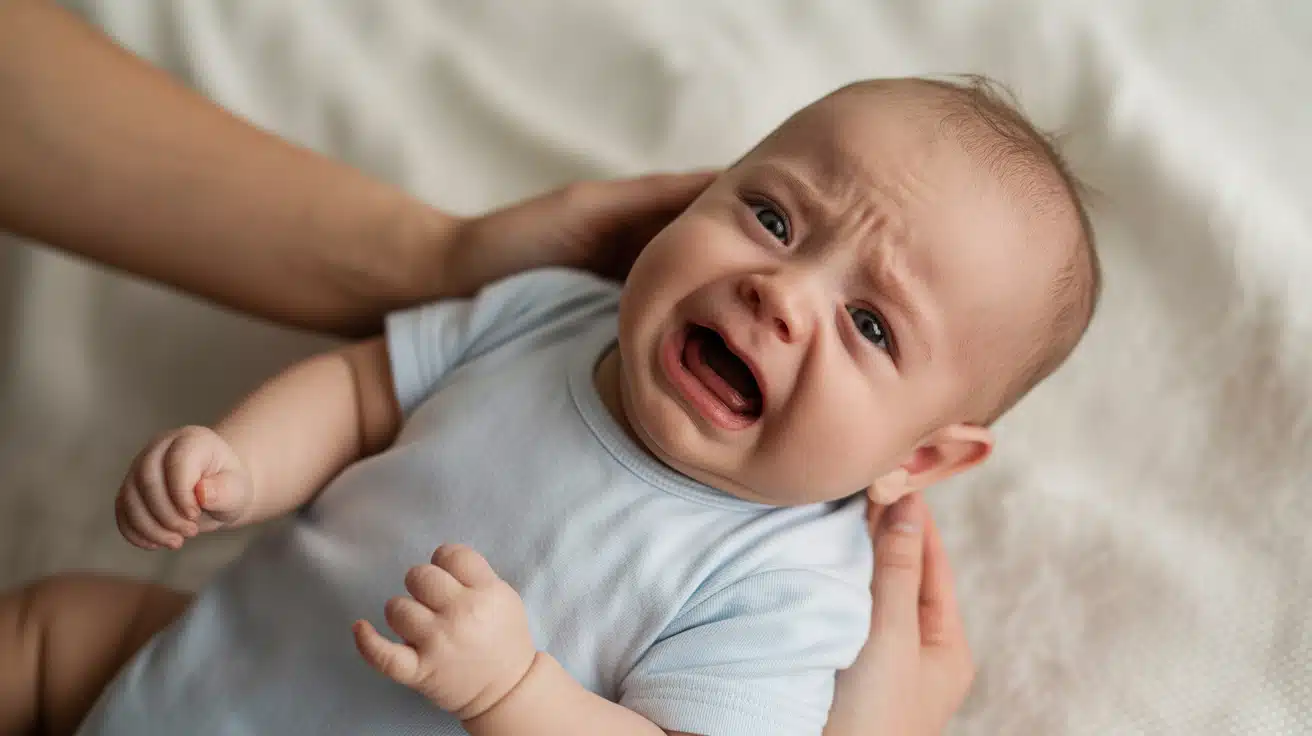
This brings up a question many parents wrestle with at 3 a.m., Should you let them sleep or check on them?
Sleep is healing, and if your baby is resting peacefully, that’s usually a good sign. Let them sleep if they’re breathing normally and look okay before going down.
However, wake your baby if it’s been several hours since they’ve had fluids, especially if dehydration is a concern. Also, check on them if the fever was very high earlier or if they seemed unusually lethargic before falling asleep.
For babies under 3 months, peek in every hour or two to watch their breathing and color. Older infants who seem mildly ill can go longer between checks, maybe every 3 to 4 hours.
Trust what you saw before bedtime. If your baby is playful and eating well despite the fever, they can likely sleep undisturbed.
When to Call the Doctor or Get Urgent Care?

If your baby is under 3 months old with a temperature of 100.4°F (38°C) or higher, contact your pediatrician immediately. Young infants need prompt evaluation.

Seek immediate medical care if your baby shows trouble breathing, bluish lips, signs of dehydration, seizures, stiff neck, persistent vomiting, extreme lethargy, or inconsolable crying.
A fever accompanied by a concerning rash also needs urgent attention.

Fevers lasting beyond 24 hours in babies under 2 or more than 3 days in older toddlers warrant a call to your doctor. If the fever keeps returning or symptoms worsen, don't wait.
Conclusion
Dealing with a fever in the middle of the night is never easy, but you’re more prepared than you think.
Remember, the number on the thermometer is just one piece of the puzzle. How your baby looks, acts, and responds matters just as much, if not more.
Trust your instincts. You know your baby better than anyone. If something feels off, don’t hesitate to reach out to your pediatrician. That’s what they’re there for, even at odd hours.
Keep this guide handy for those inevitable middle-of-the-night moments. Bookmark it, save it, or print it out.
And if you found this helpful, share it with other parents who might need it. We’re all in this together, one sleepless night at a time.
You’ve got this.
