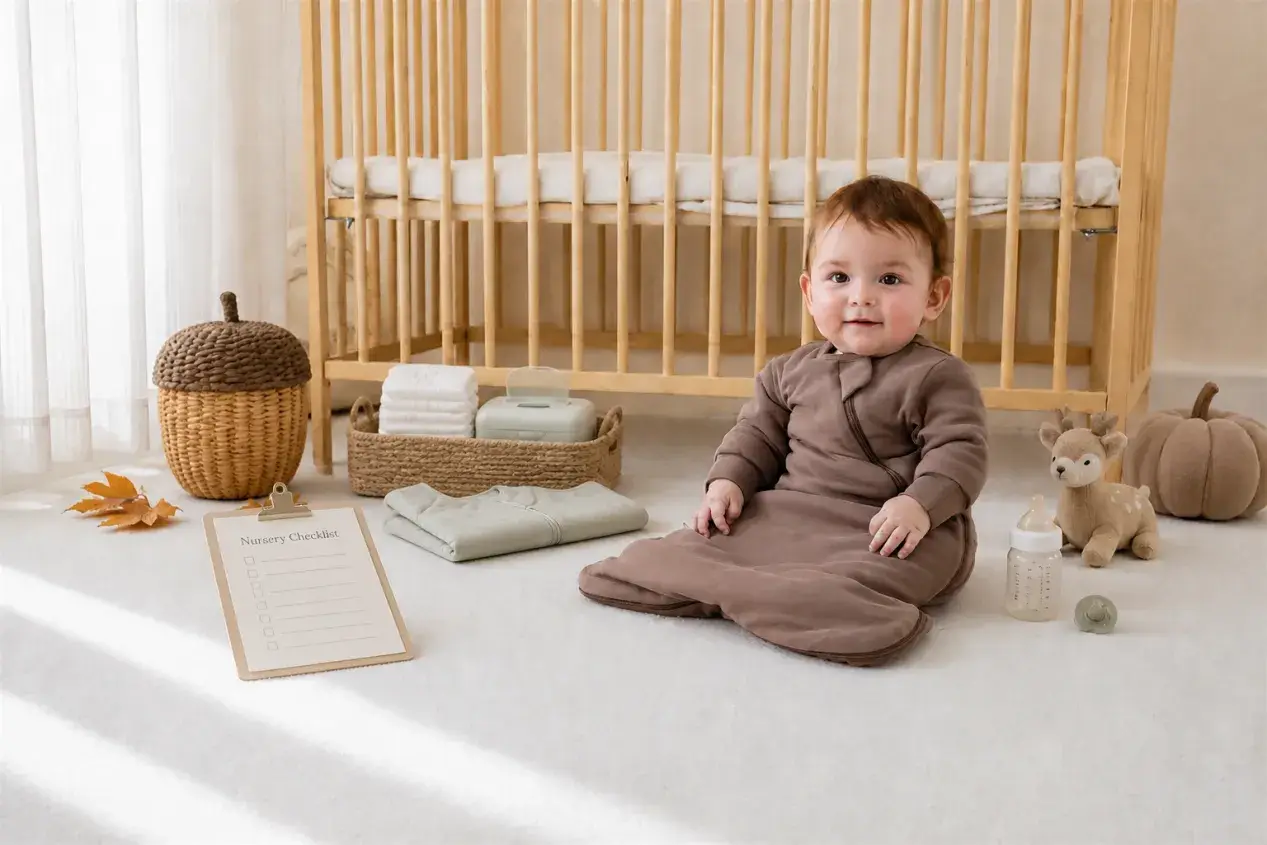
We set up the nursery three months before our daughter arrived, working from a checklist I found online. It had 41 items on it. We bought most of them.
About a third earned their place. We used another third now and then. The last third sat in a closet until we gave it away.
The list wasn’t wrong, exactly. It was written for everyone, which means it was written for nobody. Our room ran warm. Our daughter outgrew newborn size in about a week. We used the bassinet in our bedroom for months and barely touched the crib. None of that was knowable in advance.
So here’s the list I’d give a friend instead: seven things to buy now, six to buy later, and a longer list you can ignore.
The Checklist
Buy First — the Seven
| Item | Estimated price |
| Safe sleep space + firm mattress, with 2–3 fitted sheets | $260–$390 |
| Changing surface + washable pad | $250–$325 |
| One comfortable chair | $230–$330 |
| Blackout curtains | $50–$70 |
| Simple storage | $50–$70 |
| Room thermometer | $10–$15 |
| Laundry hamper | $15–$25 |
Add the column, and you land somewhere between $865 and $1,225 — call it $900–$1,200 before tax for planning.
These are current U.S. market ranges, not our receipts. Prices move, and yours will land somewhere else.
The three lines that swing the total most are the chair, the dresser-and-pad setup, and whether you start with a crib or a bassinet. Everything else is rounding.
Useful Soon — Buy After She Arrives, Not Before
| Item | Estimated price |
| Sound machine | $16–$40 |
| Dim night light | $8–$22 |
| Small rolling cart for beside the chair | $40 |
| Extra sheets + mattress protectors | $30–$65 |
| Bin for outgrown clothes | $6–$18 |
| Carbon monoxide detector, if the room lacks one | $22–$35 |
About $125–$220 for all six. That’s the point — nothing here costs enough to be worth guessing about three months early.
Can Wait — or Skip
| Item | Why we didn’t need it |
| Mobile | We bought one because nurseries in photos have one. It was stimulating at exactly the moments we wanted calm, down within a month. |
| Full newborn wardrobe | She outgrew the size in about a week. Buy a handful, then buy to fit. |
| Themed bedding sets | The only thing that goes in the crib is a tight fitted sheet. |
| Dedicated changing table | You outgrow it. A dresser you keep for a decade. |
| Second changing station | We planned one per floor and used one. A travel mat handled the rest of the house. |
| Decor and wall art | The room fills with real things on its own. I liked having a room I enjoyed looking at — I just didn’t need it in the first six months. |
| Wipe warmer | For us, no. |
| Anything chosen because it photographs well | Ask what it does at 3 a.m. |
Bought new, this group adds roughly $250–$750 to a nursery. It was also most of what ended up in our closet. That number is the whole argument of this article.
I’ve left prices off this table on purpose. Once you see that a mobile is only $30, you buy the mobile.
Why the List Is These Seven
Four things actually happen in a nursery: the baby sleeps, the baby gets changed, someone sits holding her for a long stretch, and things have to go somewhere.
Almost every genuinely useful purchase serves one of those four. Anything that doesn’t is decoration — fine to buy, but buy it last.
1. A safe sleep space. Firm, flat, separate, clear. Use only a tight fitted sheet: no loose blankets, no pillows, no bumpers, no soft toys.
If you’re worried about her being cold, that’s what a wearable sleep sack is for — it keeps the warmth on the baby instead of loose in the crib.
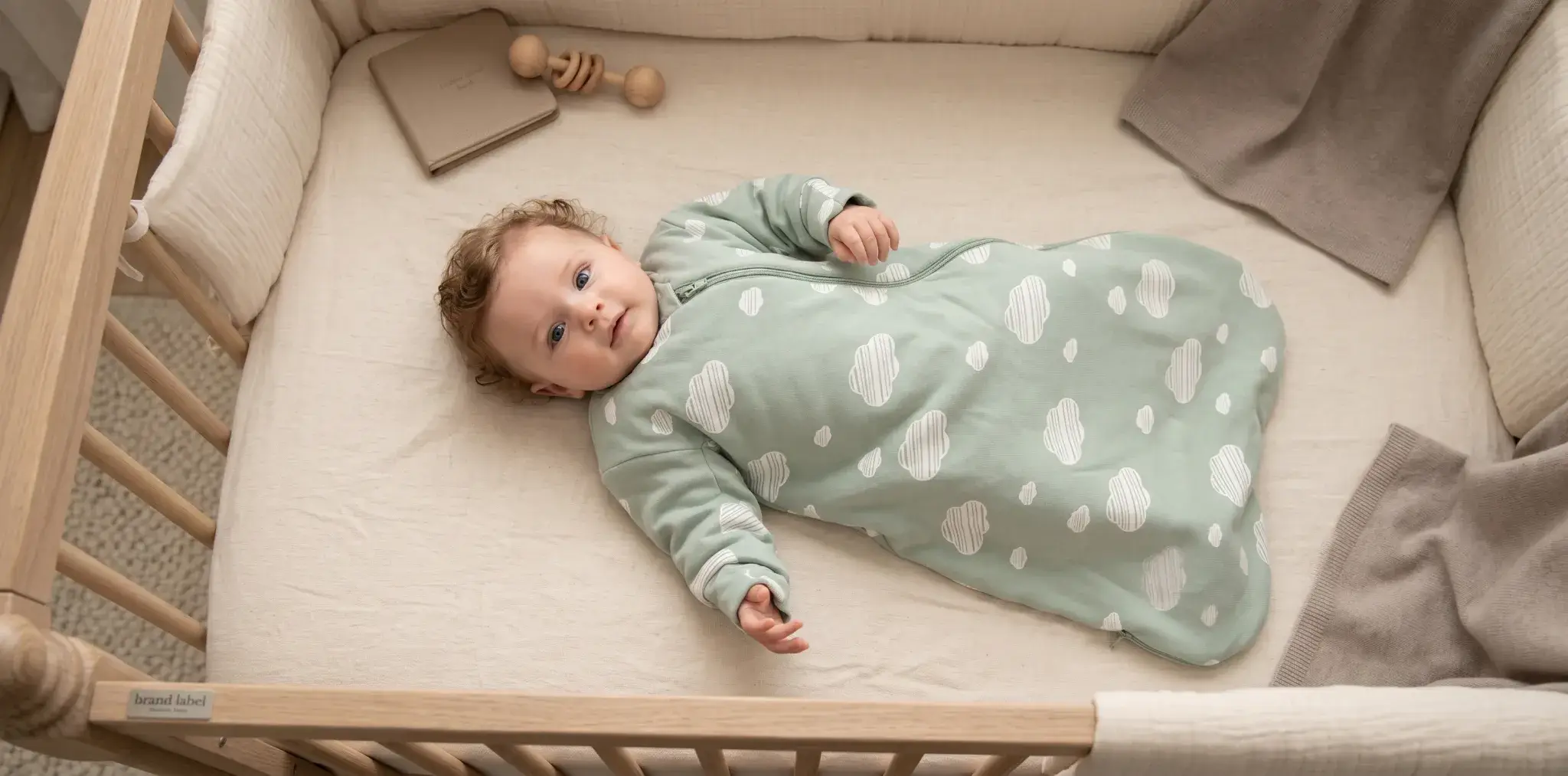
And you really don’t need both a bassinet and a crib on day one. Ours sat empty for months.
2. A changing surface. A dresser with a washable pad on top does the job and is still a dresser in five years. Some families never set up a station at all and just use a mat wherever they are.
3. A comfortable chair. Worth the most time and the most money of anything here. You will spend more hours in that chair than anywhere else in the house.
Sit in one before she arrives, while you still have the energy to return it if it’s wrong. We nearly economized here and I’m glad we didn’t. A friend swears by an exercise ball instead, which costs nothing if you already own one.
4. Blackout curtains. The difference between a daytime nap and no daytime nap, for less than most nursery decor. Add a dim night light later, and lighting is solved for the first year.
5. Simple storage. More below — it’s the thing everyone underestimates.
6. A room thermometer. Under $15, and it changed more decisions than any piece of furniture we bought. Also more below.
7. A laundry hamper. On wheels. This sounds like a joke until the second week.
Storage Is the Thing Everyone Underestimates
The volume of small objects that arrives with a baby is surprising, and it arrives faster than you can invent places for it.
Decide the categories before the things show up:
- a drawer for the size she’s in now
- a bin for what she’s outgrown
- a shelf for spare bedding
- a basket by the chair for what you reach for daily
The system matters more than the furniture. Ours ended up being a cheap closet organizer and a few fabric bins, and it worked better than the expensive dresser did.
Sort clothes by size, not by type. I organized ours into onesies, sleepwear, and socks, and had to redo the entire thing in the first week. You dress a baby by what fits, not by what category it belongs to — and a newborn is in two or three sizes at once.
If the room is small: go vertical, let the dresser double as the changing surface, use a rolling cart instead of a side table.
If she’s sharing your room to start, the bassinet is the only urgent purchase. The nursery can stay a storage room a while longer.
The Room Itself Mattered More Than What Was in It
Here’s what surprised me most. Our nursery sat above the kitchen and ran several degrees warmer than the rest of the house in the evening, then dropped noticeably after midnight when the heat went off.
We had no idea until we put a $12 thermometer on the shelf.
We aimed for the high 60s Fahrenheit — around 20°C — which sits at the cool end of the usual recommended nursery range of 68–72°F (20–22°C).
What made it workable wasn’t the thermostat. It was layers: sleep sacks in a couple of different weights, and an extra layer underneath on cold nights. If you’ve never had to think about this before, the weight is what the TOG rating on a sleep sack tells you — lighter number for a warm room, heavier for a cold one.
Once we could see the actual temperature, one piece of the night-waking guesswork got easier. It gave us another explanation to check besides hunger: the room had dropped four degrees at 1 a.m.
The safety pass is mostly low-cost and takes an afternoon: a carbon monoxide detector if the room doesn’t have one (about $20–$35, the only real expense), blind and curtain cords tied well out of reach, furniture anchored to the wall, and nothing hanging above the crib.
Do it before she’s mobile, because she’ll be mobile before you expect it.
The Small Things Nobody Puts on the List
Layer the crib. Mattress protector, fitted sheet, second mattress protector, second fitted sheet. At 2 a.m. you strip one layer off, and there’s a clean bed underneath.
Put a surface next to the chair. Water, snacks, phone, a burp cloth — everything you need in the hour you’re pinned under a sleeping baby.
Keep a drawer for yourself. A spare shirt, deodorant. Having it in the room is what made me change on days I otherwise wouldn’t have.
If I Did It Again
I’d spend on four things: the chair, the sleep surface, blackout curtains, and storage that outlasts the nursery. Around $30–$55 on the thermometer and a sound machine.
Everything else I’d leave until three weeks after bringing her home, which is roughly how long it took to learn what we actually reached for.
The checklists aren’t wrong, exactly. They’re just written for everyone, which means they’re written for nobody. Your room, your baby, your house, and your budget will tell you what you need faster than any list will.
And nothing is urgent. Almost everything arrives in two days, and the stores are still there.