

Japan after dark tells a different story. Offices empty, train platforms thin out, and entire neighbourhoods quietly reset themselves into places of food, drink, and unhurried conversation. Neon signs flicker on. Paper lanterns glow. Somewhere down a narrow alley, smoke curls up from a grill that’s been running since sunset.
Night markets in Japan aren’t always formal markets. They’re fluid, lived-in spaces—clusters of izakayas, food stalls, standing bars, and late-night counters that reward curiosity and a willingness to wander.
Lantern Streets and the Art of Wandering
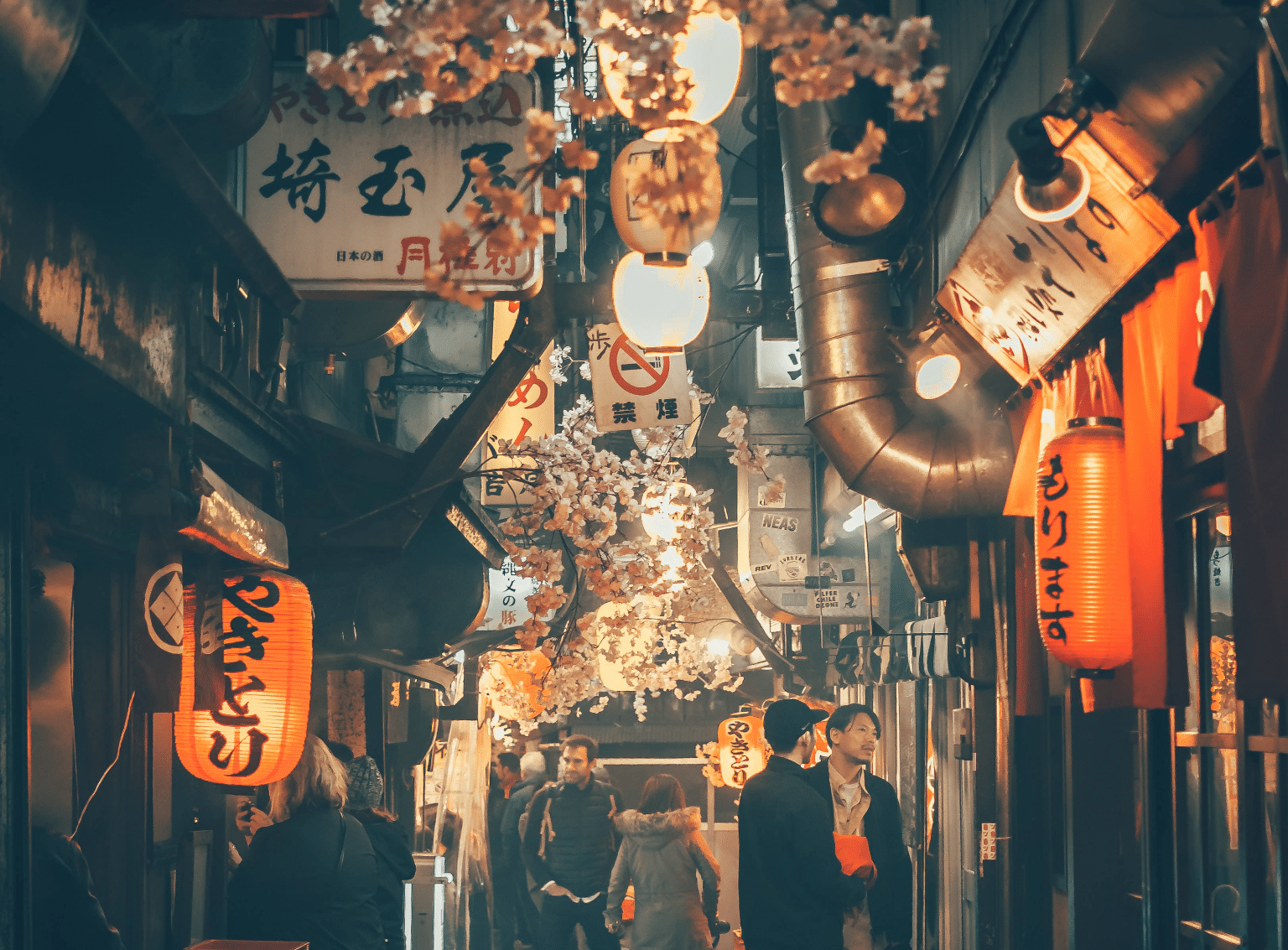
In cities like Tokyo, the best night experiences often happen away from main roads. Lantern-lit alleys in areas such as Shinjuku’s Omoide Yokocho or the backstreets of Ebisu feel almost improvised. Tiny bars seat six people at most. Menus are handwritten. You’re close enough to the grill to feel the heat on your knees.
There’s no pressure to rush. Locals drift in after work, order a drink, exchange a few words with the owner, and move on. It’s common to visit three or four places in a single evening, each for just one dish or drink. The joy is in the movement—following light, sound, and smell rather than Google Maps.
This kind of wandering is encouraged. Many places don’t advertise heavily. Some don’t even have English menus. But that’s part of the appeal: pointing at a skewer, trusting the process, and letting the night unfold without a plan.
Izakayas: Where Food Meets Conversation

Izakayas are the backbone of Japan’s nightlife. They sit somewhere between a pub, a tapas bar, and a living room. The menu is built for sharing—grilled chicken skewers, simmered vegetables, sashimi, fried tofu, late-night ramen. Drinks arrive quickly, often before you’ve fully settled into your seat.
In Osaka, izakayas lean loud and generous. Portions are bigger. Laughter spills out onto the street. The city’s food culture is famously informal, and that spirit carries through the night. Standing bars near train stations fill with regulars who argue cheerfully about baseball while eating kushikatsu straight off the fryer.
Further north, in Kyoto, izakayas feel more restrained. Many are tucked behind sliding doors on quiet lanes. The food is seasonal and precise, often using local vegetables and delicate broths. Even late at night, there’s a calmness to the experience—a sense that conversation should never overpower the room.
Street Food After Dark
Japan’s street food scene truly comes alive at night. Some cities have permanent yatai (food stalls), while others host seasonal night markets tied to festivals or neighbourhood events.
Fukuoka is famous for its yatai culture. Along the river or near major streets, rows of small stalls open after sunset, serving ramen, yakitori, and oden well into the early hours. Strangers sit shoulder to shoulder on narrow stools, often striking up conversations over steaming bowls of tonkotsu ramen.
Unlike many countries, street food in Japan feels orderly and calm. Queues form naturally. Trash is managed discreetly. Even at midnight, there’s a sense of rhythm rather than chaos.
For travellers, these stalls offer something rare: food that’s deeply local, affordable, and social—all without needing a reservation or language fluency.
Late-Night Eats as a Cultural Ritual
Eating late in Japan isn’t just about hunger. It’s a continuation of the day. Colleagues decompress over drinks. Friends reconnect after long workweeks. Solo diners find comfort in familiar counters where the staff remember their usual order.
Convenience stores get a lot of attention for late-night snacks, but the real stories happen in these small, human spaces. A bowl of noodles at 1am after missing the last train. A final skewer before heading home. A quiet beer in a bar that feels temporarily like yours alone.
This side of Japan often gets overlooked in daytime itineraries, yet it’s easily one of the best things to do in Japan if you want to understand how people actually live, relax, and connect.
How to Experience Japan’s Night Markets Well

The best nights usually aren’t planned down to the minute. Choose a neighbourhood known for food, arrive hungry, and give yourself time. Avoid peak dinner hours if you’re nervous about crowds—late evening is often more relaxed and more local.
Cash is still useful, especially in smaller places. Learn a few simple phrases, but don’t stress—pointing and smiling goes a long way. Most importantly, don’t linger too long in one spot unless it feels right. Night markets are meant to be explored in motion.
If you want help weaving these experiences into your trip naturally, working with custom Japan itinerary specialists can make the difference between ticking boxes and truly discovering places you’d never find on your own. The right local travel experts know which streets come alive after dark—and which nights are worth staying out late for.
Why the Night Matters
Japan’s night markets aren’t loud spectacles. They’re subtle, layered, and deeply human. They reward attention rather than urgency. Whether you’re sharing a counter with strangers in Osaka or slipping quietly into a lantern-lit alley in Tokyo, these late-night moments often become the memories that linger longest.
When the lights come on and the city exhales, that’s when Japan feels most itself.
