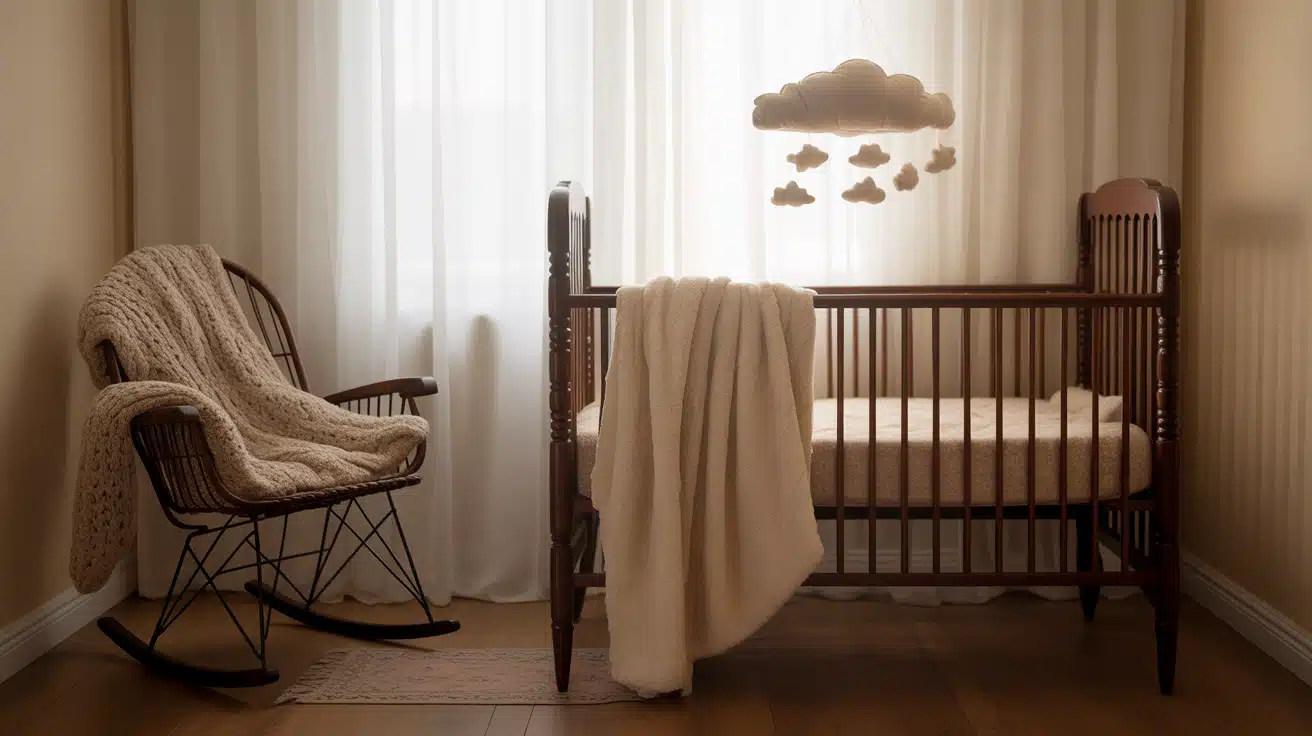
Your heart races with excitement about your baby girl’s arrival, but the small space in your nursery has you feeling overwhelmed.
How do you create a beautiful, functional room when you’re working with just a few square feet?
The good news? Small nursery ideas can be just as charming and practical as spacious ones.
With bright baby girl nursery ideas and clever space-saving tricks, your tiny room will become a cozy haven that works perfectly for your growing family.
Ready to convert your compact space into the nursery of your dreams?
Let’s explore brilliant solutions that prove size doesn’t limit style or function.
Why Small Nursery Design Is a Big Deal?
Creating a well-planned nursery design for small room spaces isn’t just about making things fit; it’s about building a peaceful haven for you and your baby girl.
Smart baby room planning tips help you strike a balance between comfort, function, and beauty in every square inch.
When your small nursery flows well, daily tasks like feeding, changing, and bedtime become more manageable and less stressful.
Good design choices create a calm, organized space that feels larger than it actually is, providing both you and your little one with a nurturing environment to bond and grow together.
Your Go-To Baby Girl Nursery Setup Checklist
Before selecting paint colors or shopping for the crib, ensure you’ve covered all these essentials.
| PLANNING ELEMENT | WHAT TO CONSIDER | WHY IT MATTERS |
|---|---|---|
| Room Measurements | Measure length, width, ceiling height, and door/window placement | Helps you choose furniture that fits and plan traffic flow |
| Must-Have vs. Nice-to-Have | Essential: crib, changing area, storage. Optional: rocking chair, decorative items | Prevents overcrowding and keeps the budget focused |
| Storage Zones | Plan spots for clothes, diapers, toys, and baby gear | Keeps small spaces organized and clutter-free |
| Lighting and Safety | Soft night lights, outlet covers, and secure furniture to the walls | Creates a safe, functional space for day and night care |
| Color Palette | Choose 2-3 primary colors that make the room feel larger | Light colors reflect more light and open up small spaces |
Pro Tip: Print this checklist and keep it handy while shopping for nursery items to stay focused on what your small space really needs.
37 Genius Nursery Ideas for Baby Girls in Small Spaces
Transform your small space into a functional and beautiful nursery with these smart ideas for small nurseries. Each tip maximizes every inch while creating a cozy haven for your baby girl.
1. Use a Mini Crib Instead of a Full-Size One
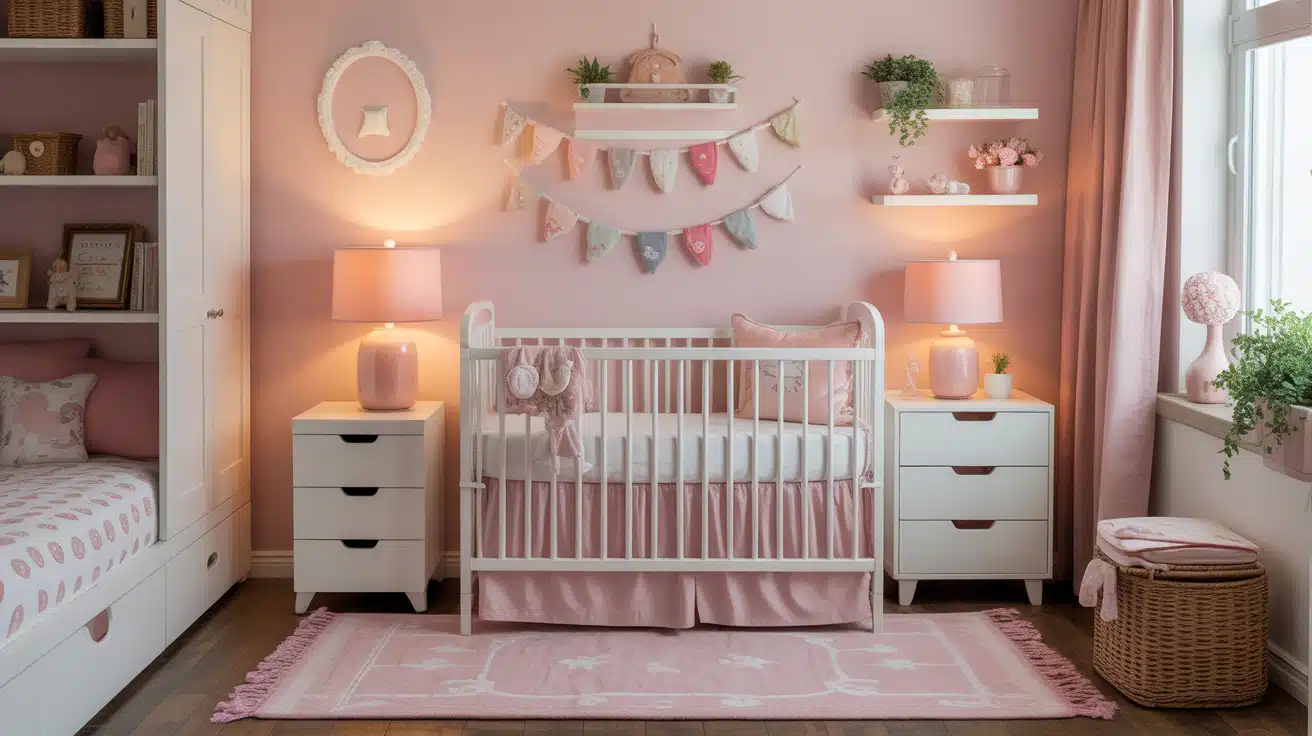
Mini cribs occupy 30% less floor space than standard cribs, making them ideal for tight quarters. They fit comfortably in corners, next to your bed, or even inside walk-in closets.
Most mini cribs convert to toddler beds, giving you years of use while maintaining the space-saving benefits.
Key Benefits:
- Saves 6-12 inches on each side compared to a full-size
- Perfect for compact baby room layouts
2. Install Floating Shelves for Books & Decor

Wall-mounted shelves add valuable storage without eating up precious floor space in small nurseries.
They create vertical interest while keeping baby books, small toys, and decorative items within easy reach. Select light-colored shelves that complement your walls to maintain an open and airy feel.
Smart Placement:
- Mount 18 inches above the crib for safety
- Use 3-shelf clusters for visual balance
3. Choose a Light Color Palette to Make the Room Feel Bigger
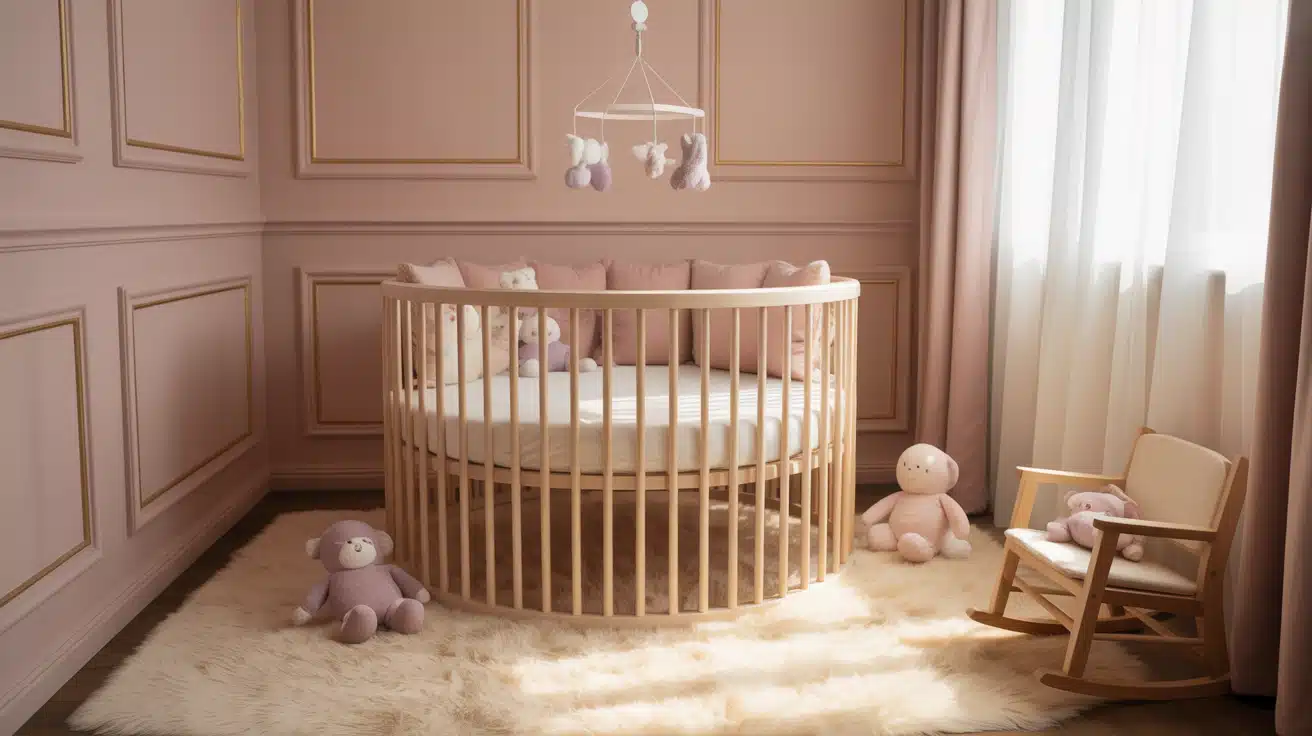
Soft pinks, whites, and pastels reflect more natural light and create an illusion of spaciousness. Light colors trick the eye into perceiving more square footage than actually exists in your nursery.
This simple color strategy is more effective than any furniture arrangement for opening up cramped spaces.
Best Combinations:
- Blush pink with cream and gold accents
- Lavender with white and silver touches
4. Peel-and-Stick Wallpaper for Instant Charm

Removable wallpaper provides a high-end designer look without requiring permanent changes or damaging rental walls.
Focus on creating one lovely accent wall rather than covering the entire room with wallpaper to avoid overwhelming your small space.
Top Spots:
- Behind the crib is a focal wall
- Inside closet doors for hidden surprises
5. Opt for a Dresser That Doubles as a Changing Table
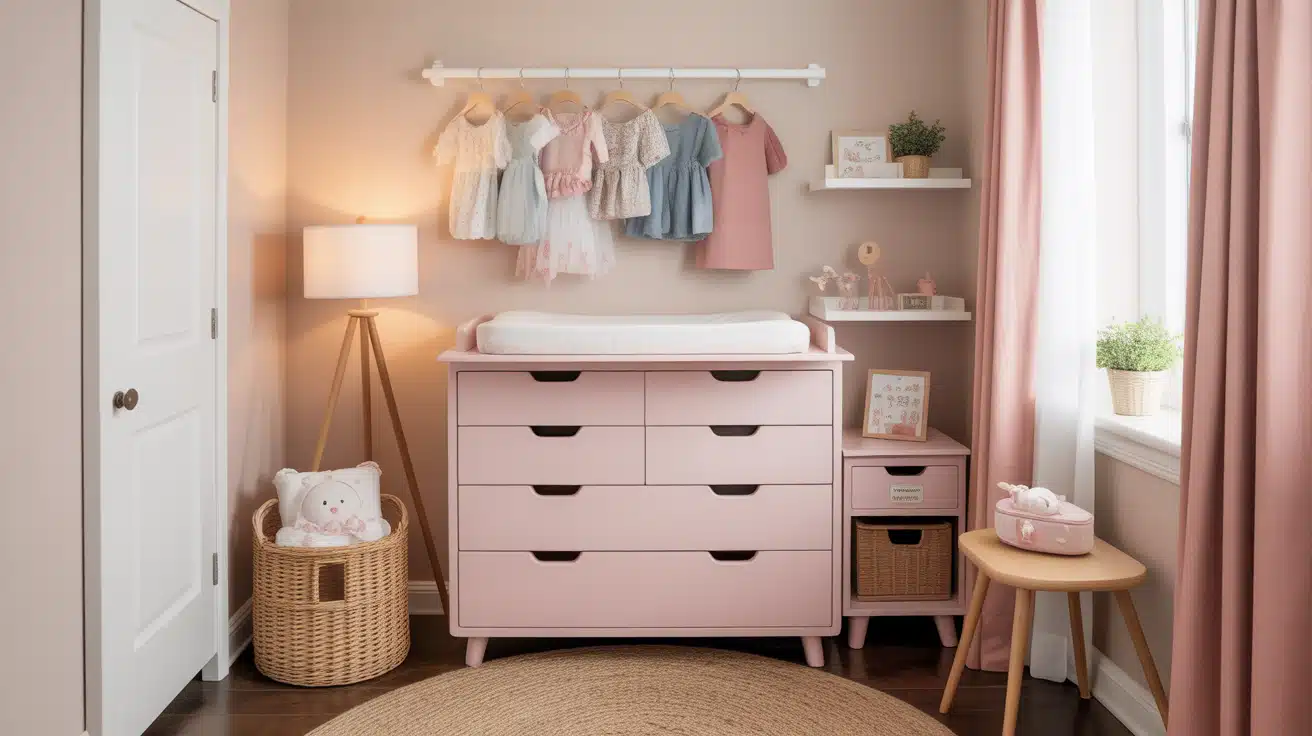
Combination furniture pieces serve double duty in tiny nursery tips, eliminating the need for separate changing tables.
Choose dressers with removable changing toppers that can be removed later for long-term bedroom use. This wise choice saves both floor space and money while maintaining full functionality.
Must-Have Features:
- Safety rails on the top surface
- Height between 36 and 40 inches for comfort
6. Hang a Canopy Over the Crib for a Whimsical Touch
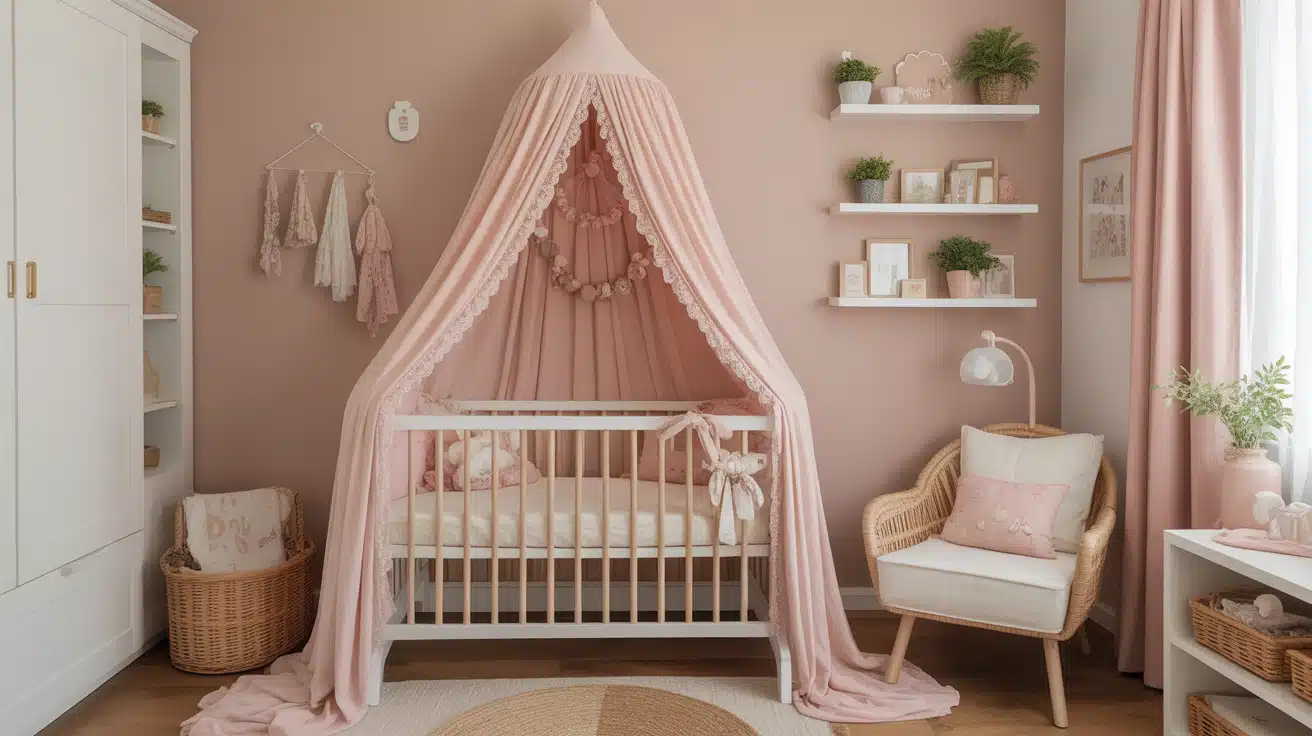
Ceiling-mounted canopies add fairy tale charm and visual height without consuming any floor space. They create a cozy, protected sleeping nook that makes your baby feel secure and safe.
Choose sheer fabrics in soft colors that complement your nursery palette for the most beautiful effect.
Safety Tips:
- Use lightweight fabric like tulle or cotton
- Keep all fabric away from the baby’s reach
7. Use Baskets Under the Crib for Hidden Storage
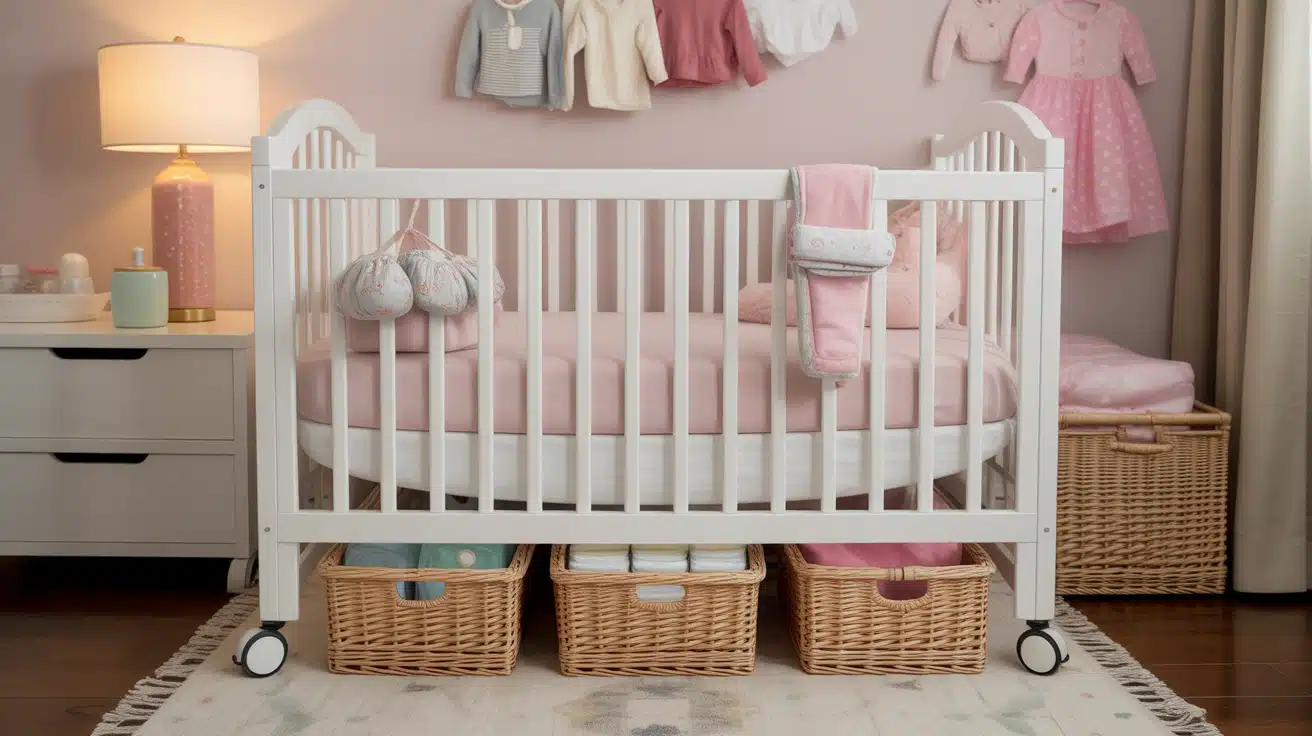
Roll-out baskets underneath cribs convert dead space into valuable storage for bulky items like extra bedding and diapers.
This clever solution keeps essentials close at hand while maintaining a clean, organized appearance. Choose baskets with smooth wheels that glide quietly during nighttime access.
Storage Ideas:
- Seasonal clothing in vacuum-sealed bags
- Extra diapers and an emergency supply stockpile
8. Install Over-the-Door Organizers for Baby Essentials

Door backs offer completely untapped storage potential in small nurseries that most parents overlook entirely.
Clear pocket organizers keep supplies visible and easily accessible while utilizing space that would otherwise go to waste.
Best Uses:
- Diaper changing supplies are on the main nursery door
- Baby medicines, thermometers, and tiny accessories
9. Choose Compact Rockers or Gliders
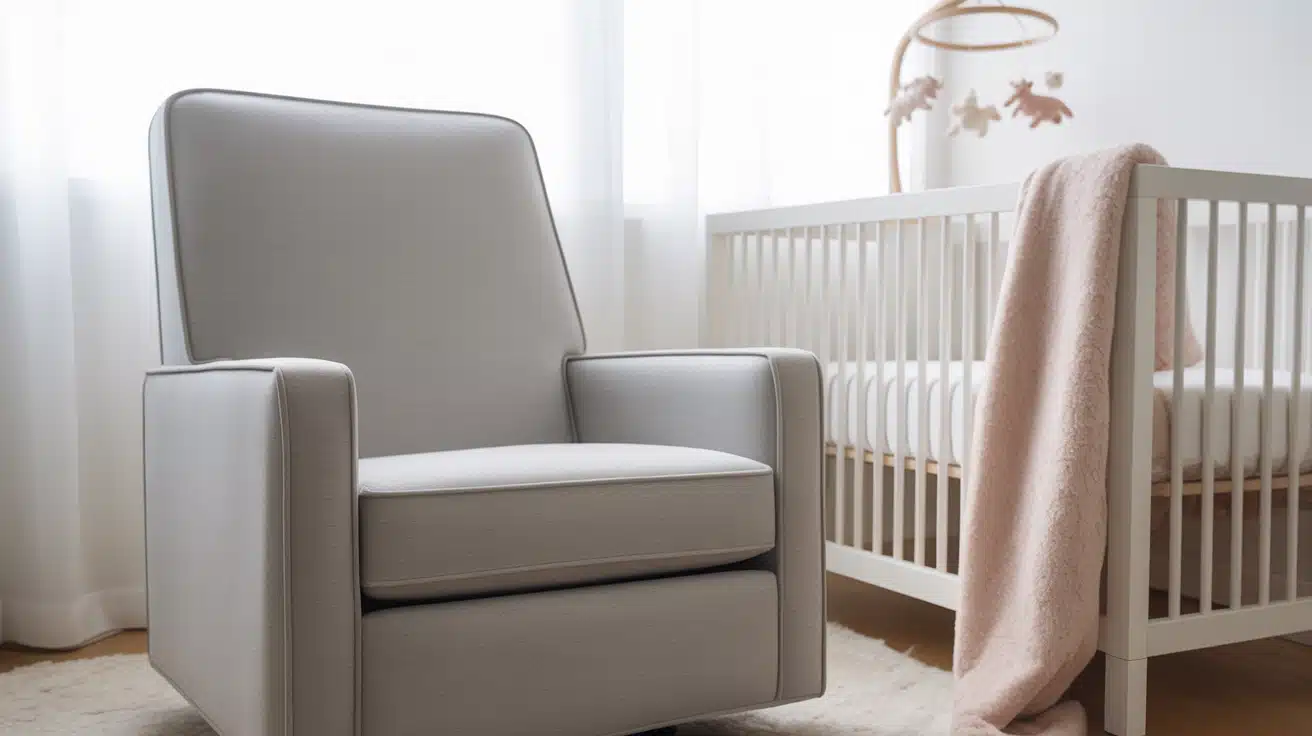
Skip oversized recliners and traditional rocking chairs for sleek, space-saving seating options that offer comfort without compromise.
Armless designs and compact footprints work much better in tight quarters while maintaining the soothing motion babies love. Look for chairs that swivel rather than rock to save even more space.
Space-Smart Features:
- Swivel bases instead of the traditional rocking motion
- Narrow profiles measuring under 30 inches wide
10. Decorate With a Personalized Name Sign Above the Crib
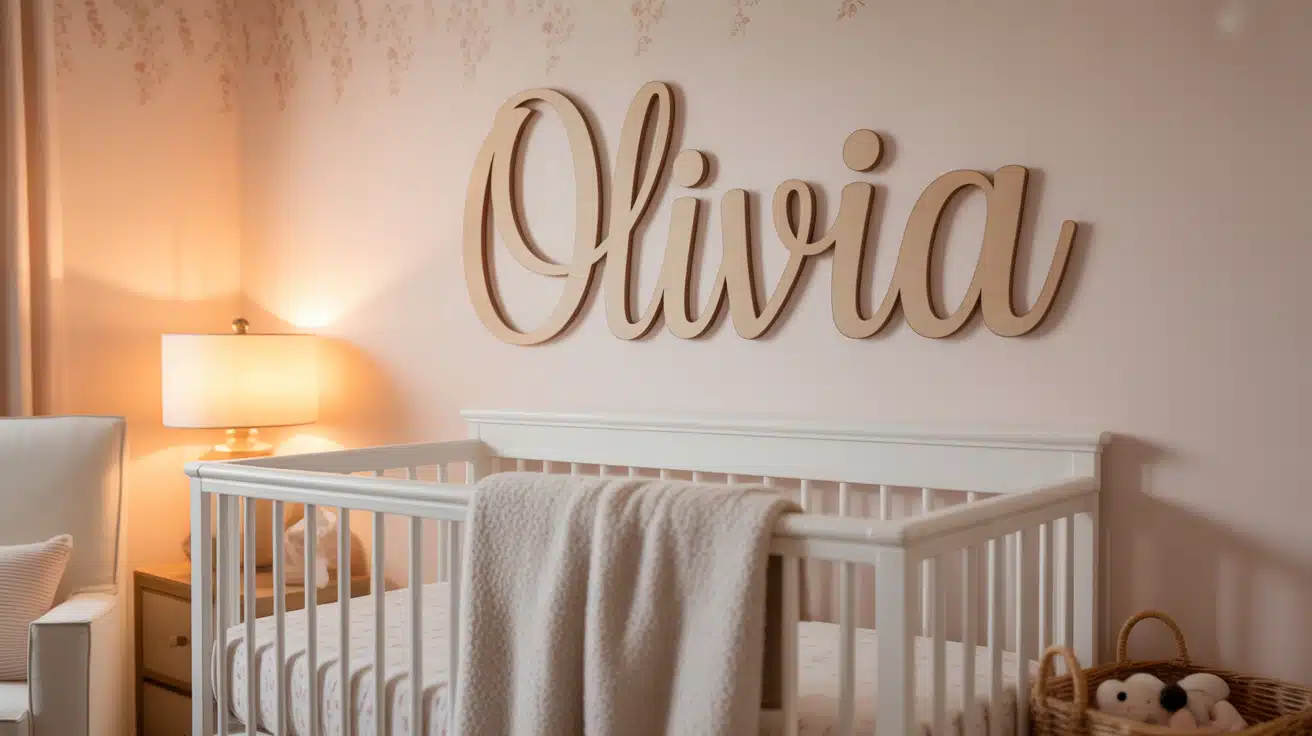
Custom wall decor adds a meaningful personality to your nursery without requiring any floor or shelf space.
Name signs become treasured keepsakes that your daughter can move to her big-girl room later. Select materials and fonts that complement your overall design theme for a cohesive look.
Design Options:
- Wooden letters in flowing script fonts
- Clear acrylic with LED backlighting effects
11. Add a Slim Wall-Mounted Bookshelf
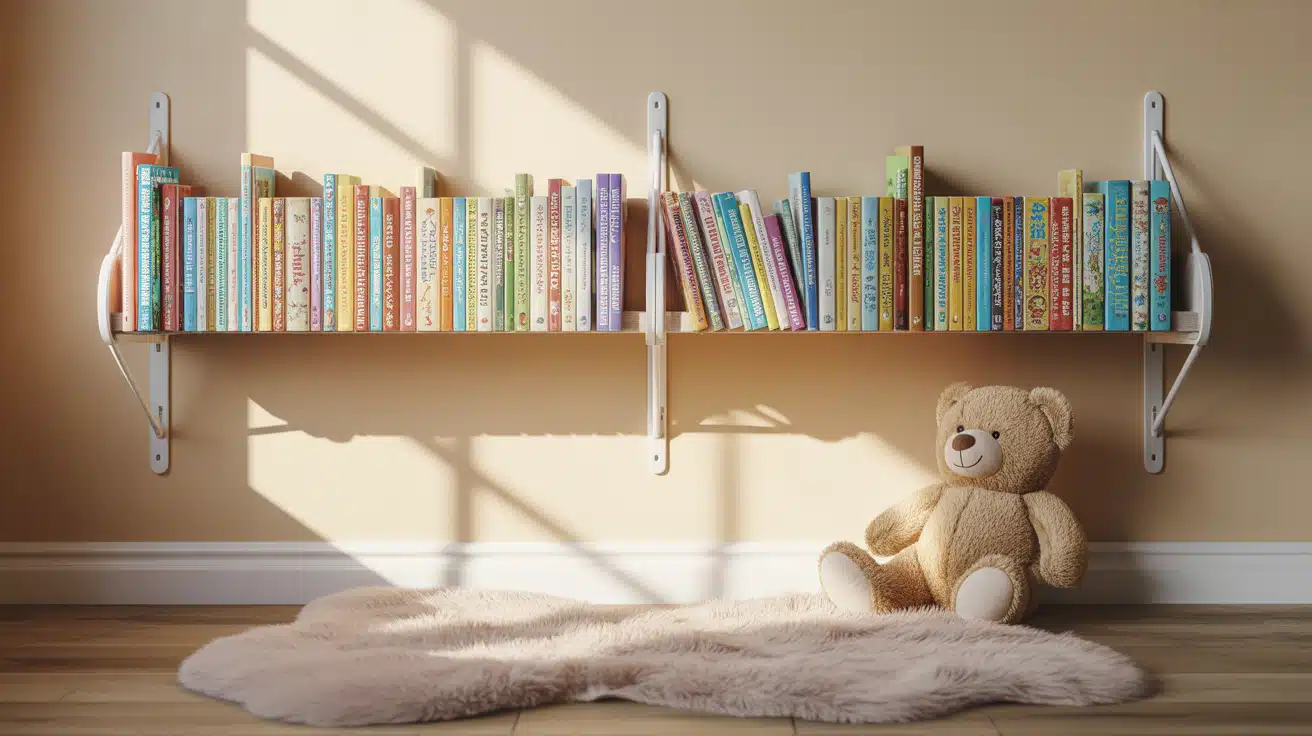
Narrow ledge shelves display book spines like a charming library while taking up minimal wall space. They store board books beautifully while adding literary charm to your nursery design.
Install multiple shelves at varying heights to create visual interest and accommodate your growing book collection.
Styling Tips:
- Install at toddler height for future independent access
- Mix colorful book spines with small decorative toys
12. Use Drawer Dividers in Your Dresser
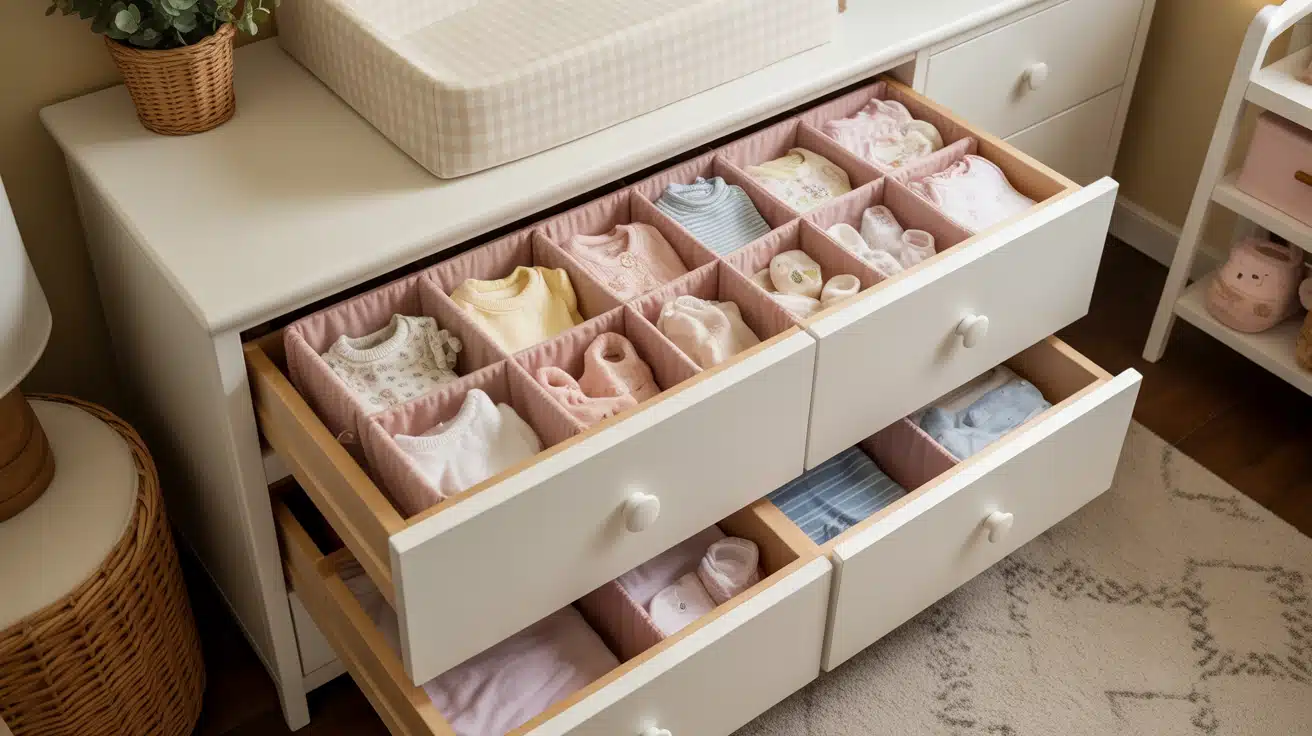
Maximize every inch of limited drawer space with adjustable organizers that keep small baby items organized and separated.
This organization system makes it easy to find specific items during stressful nighttime diaper changes. Invest in quality dividers that can adjust as your storage needs change over time.
Organization Ideas:
- Separate sections for onesies, sleepers, and socks
- Divide newborn and 3-month sizes clearly
13. Try a Crib With Built-In Drawers
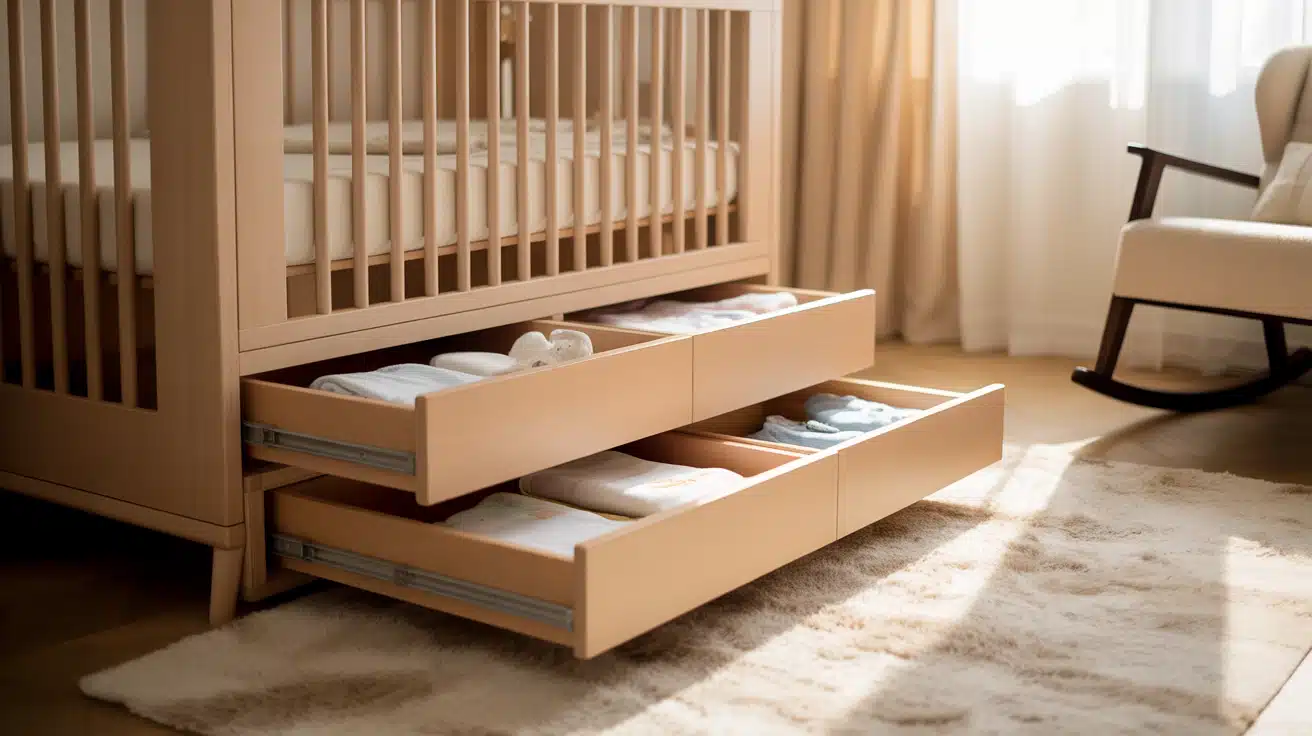
Storage cribs aren’t just for older children – many baby cribs now feature built-in drawer systems.
These baby room planning tips eliminate the need for separate storage furniture while keeping essentials organized.
The drawers work perfectly for storing crib sheets, extra blankets, and outgrown clothing until they are ready for donation.
Practical Benefits:
- Stores crib linens and mattress protectors conveniently
- Holds outgrown clothes until donation or hand-me-downs
14. Install Wall Peg Hooks for Baby Clothes or Bags
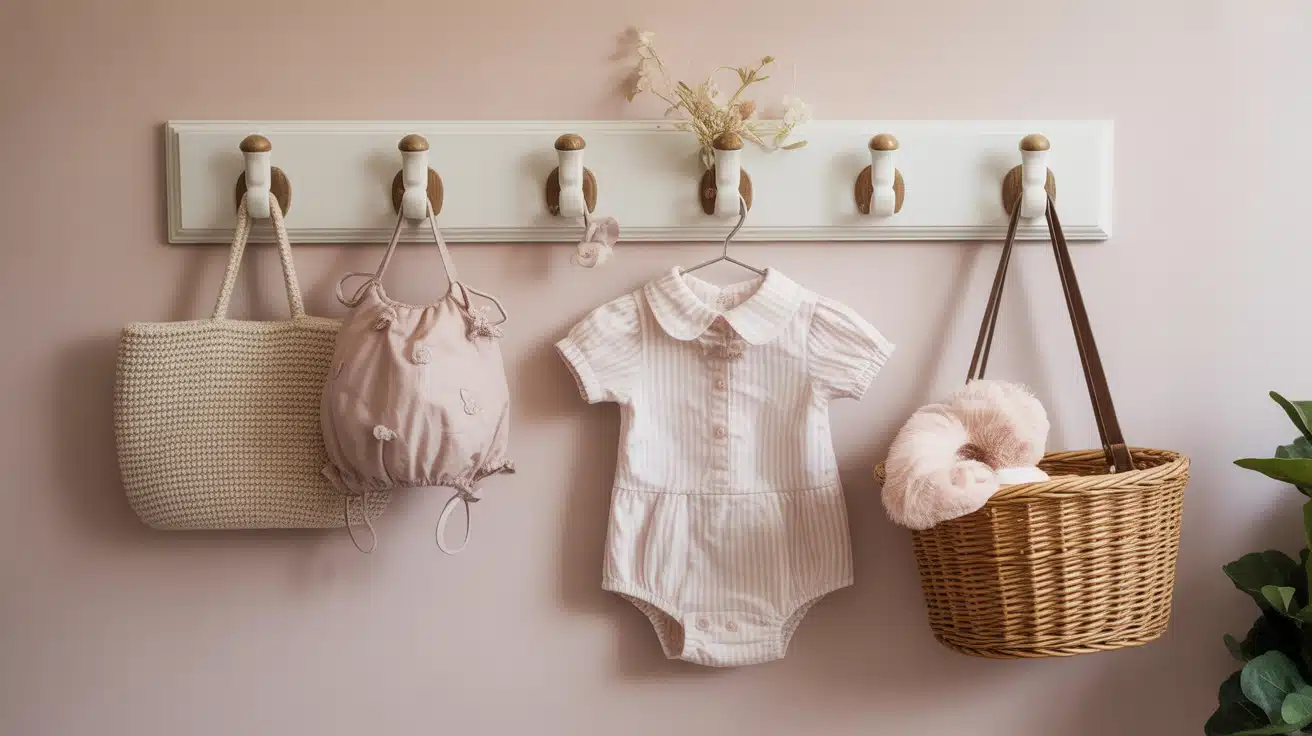
Decorative hooks serve both a practical function and a visual style in small nurseries without taking up floor space.
They provide the perfect spot to display adorable outfits while keeping daily essentials easily accessible. Choose hooks that coordinate with your hardware finishes for a polished, intentional look.
Creative Uses:
- Hang tomorrow’s outfit, ready to grab quickly
- Keep diaper bags and purses off the floor
15. Hang Fairy Lights or Wall Sconces
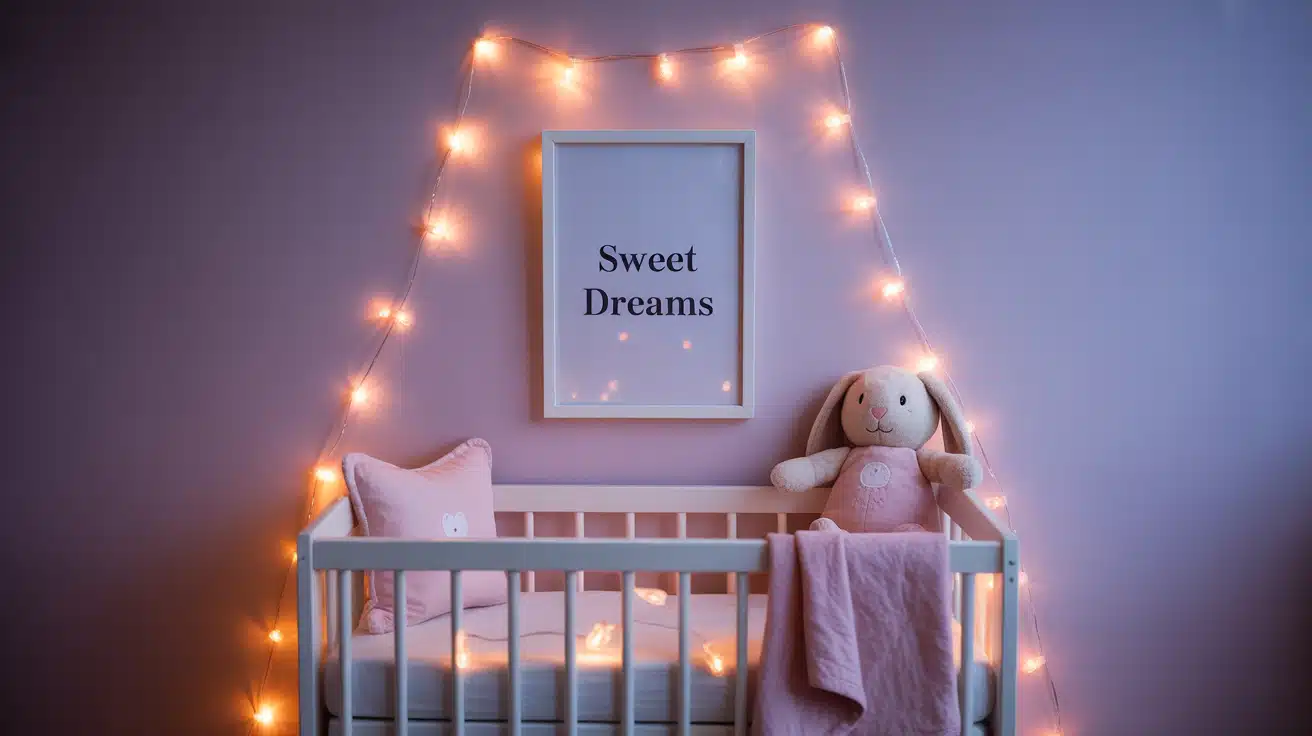
Skip floor lamps that consume precious square footage and opt for wall-mounted lighting solutions instead.
Soft lighting creates a magical ambiance while keeping pathways completely clear for safe nighttime feeding and diaper changes. Battery-operated options eliminate the need for electrical work in rental situations.
Safety First:
- Use cool LED lights that won’t overheat
- Keep all cords completely out of the baby’s reach
16. Swap the Rocker for a Floor Pouf

Ottoman-style seating provides surprising comfort without the bulk of traditional nursery furniture pieces.
They’re lightweight and easily movable for cleaning or rearranging your space as needed. Many poufs include hidden storage compartments for blankets, toys, or nursing supplies.
Functional Features:
- Internal storage space for blankets or small toys
- Easy mobility for cleaning and room rearrangement
17. Add a Mirror for More Light & Space
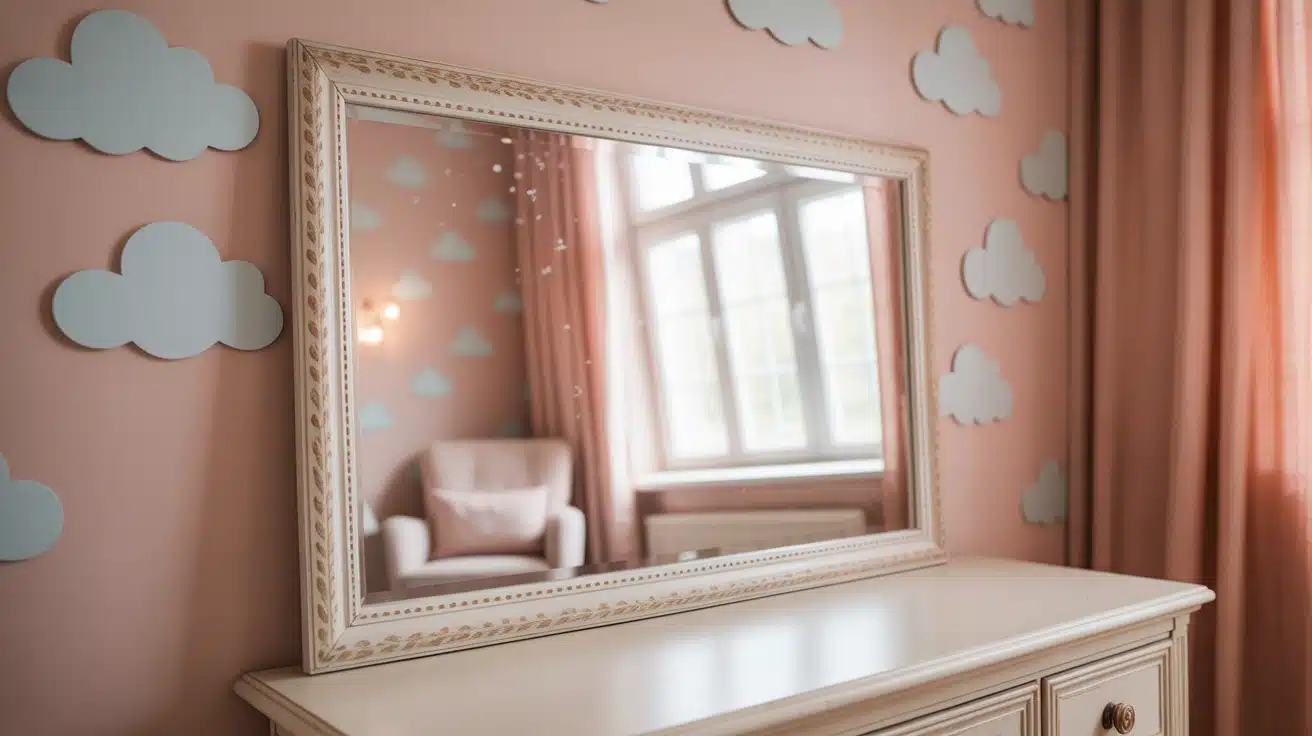
Strategic mirror placement doubles available natural light while creating visual depth in cramped quarters. Choose unbreakable acrylic options and mount them securely high on walls for safety.
Mirrors work especially well in nurseries with limited window space or northern exposures that receive less sunlight.
Best Placement:
- Position opposite windows to reflect precious outdoor light
- Mount dressers above to serve dual decorative purposes
18. Create a Crib Nook in a Closet

Convert underutilized reach-in closets into cozy, built-in sleeping spaces that feel like custom nursery nooks.
Remove closet doors and add proper lighting to create an intimate sleeping area. This solution works especially well in studio apartments or when sharing bedrooms with older siblings.
Simple Steps:
- Remove closet doors and all hardware completely
- Install overhead lighting or battery-powered wall sconces
19. Use a Compact Caddy for Diapering Supplies
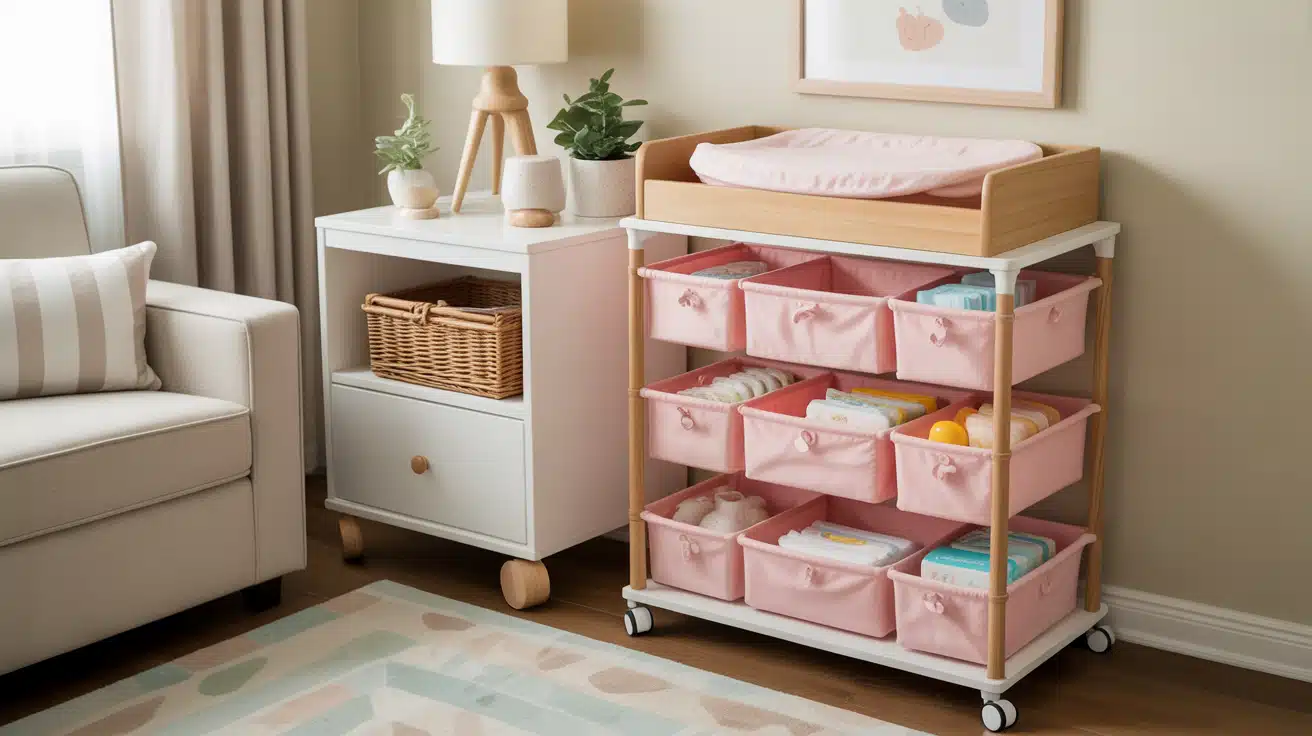
Portable organizers move with you throughout the house and store away easily when not in use. Keep surfaces clear and organized by choosing caddies that fit your specific storage needs.
This mobile solution prevents you from setting up multiple changing stations throughout your home.
Must-Have Items:
- Diapers in the current size plus the next size up
- Wipes, diaper cream, and an emergency change of clothes
20. Choose Wall Decals Instead of Framed Art
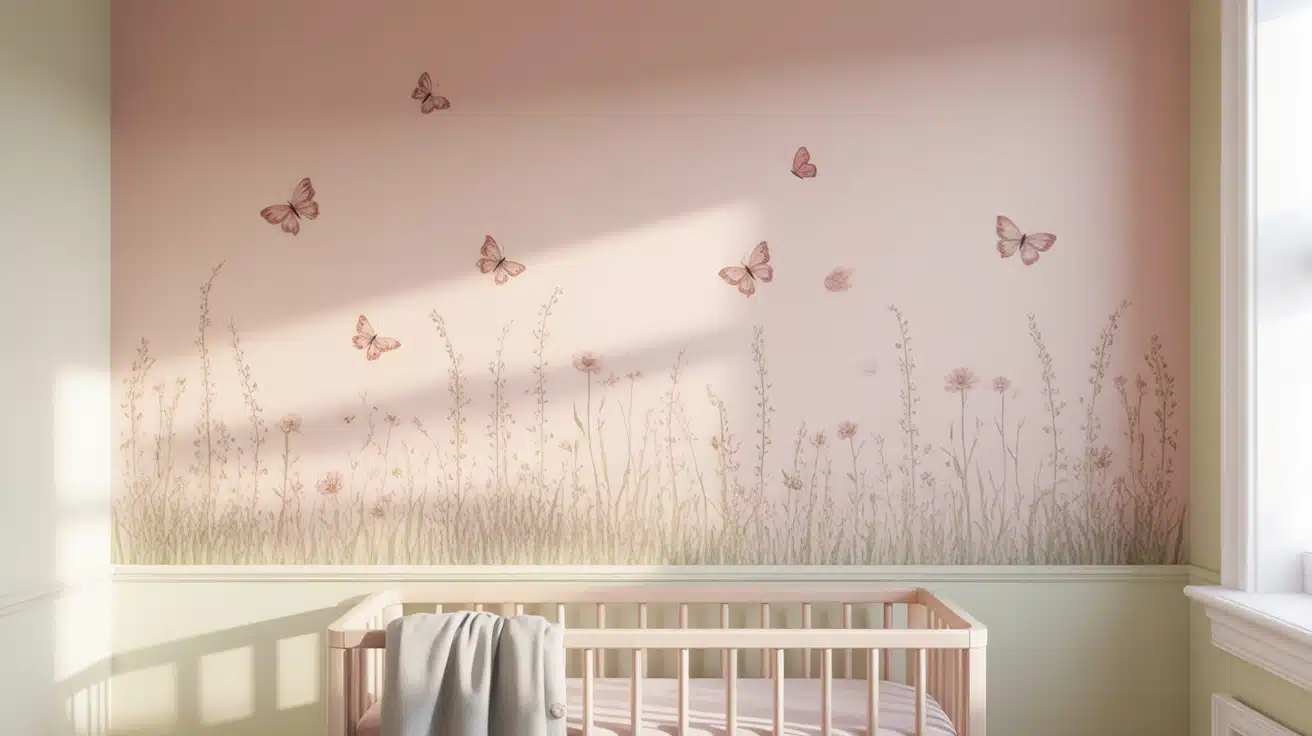
Stickers add beautiful color and pattern without requiring shelf space for traditional framed artwork.
They’re completely renter-friendly and easy to change as your daughter’s tastes evolve. Wall decals offer unlimited design possibilities without the commitment or expense of permanent wallpaper.
Popular Designs:
- Delicate butterfly or flower garden scenes
- Inspirational quotes in beautiful, flowing fonts
21. Install a Corner Hammock for Stuffed Animals
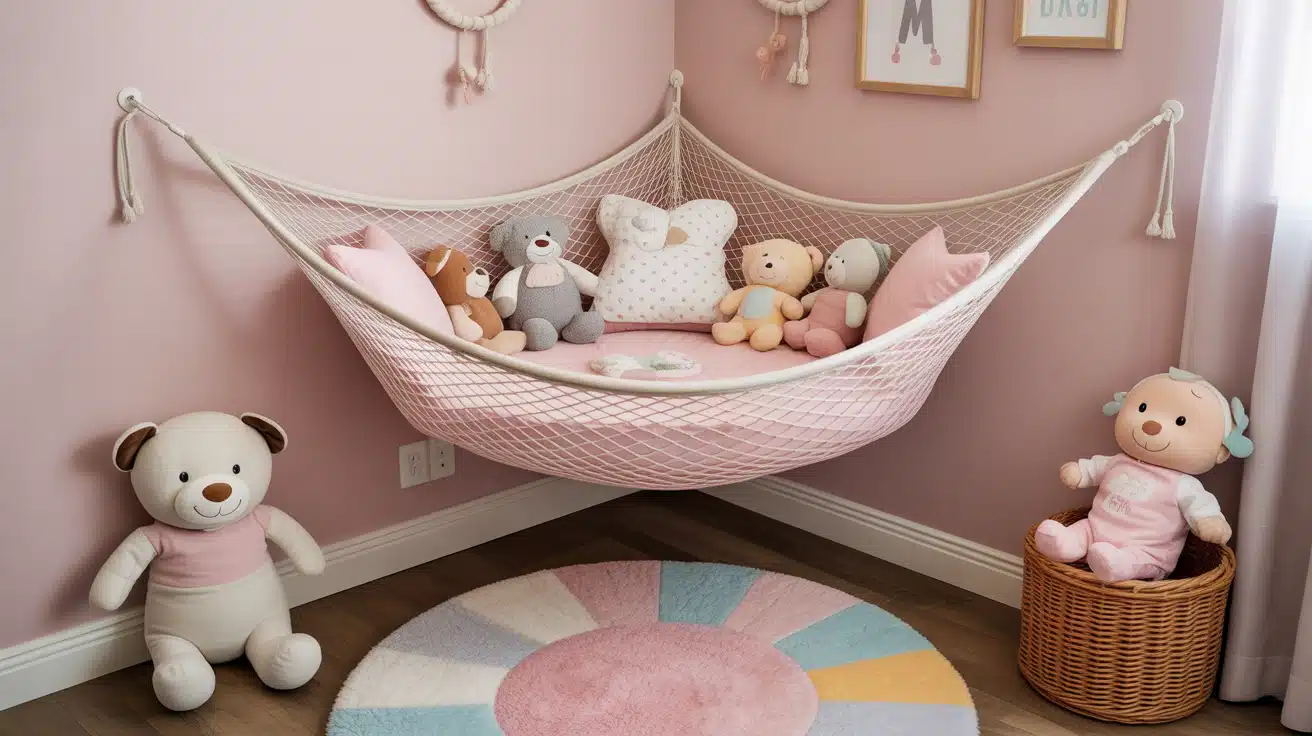
Mesh corner nets keep beloved toys visible while properly containing them, utilizing dead corner space.
They add a playful storage element to your room design while keeping floors clear for safe movement. Position them high enough to stay out of your baby’s reach during the early months.
Installation Tips:
- Mount securely to two adjacent walls with proper anchors
- Place high enough to remain out of crib reach
22. Hang a Fabric Organizer From the Crib Rail
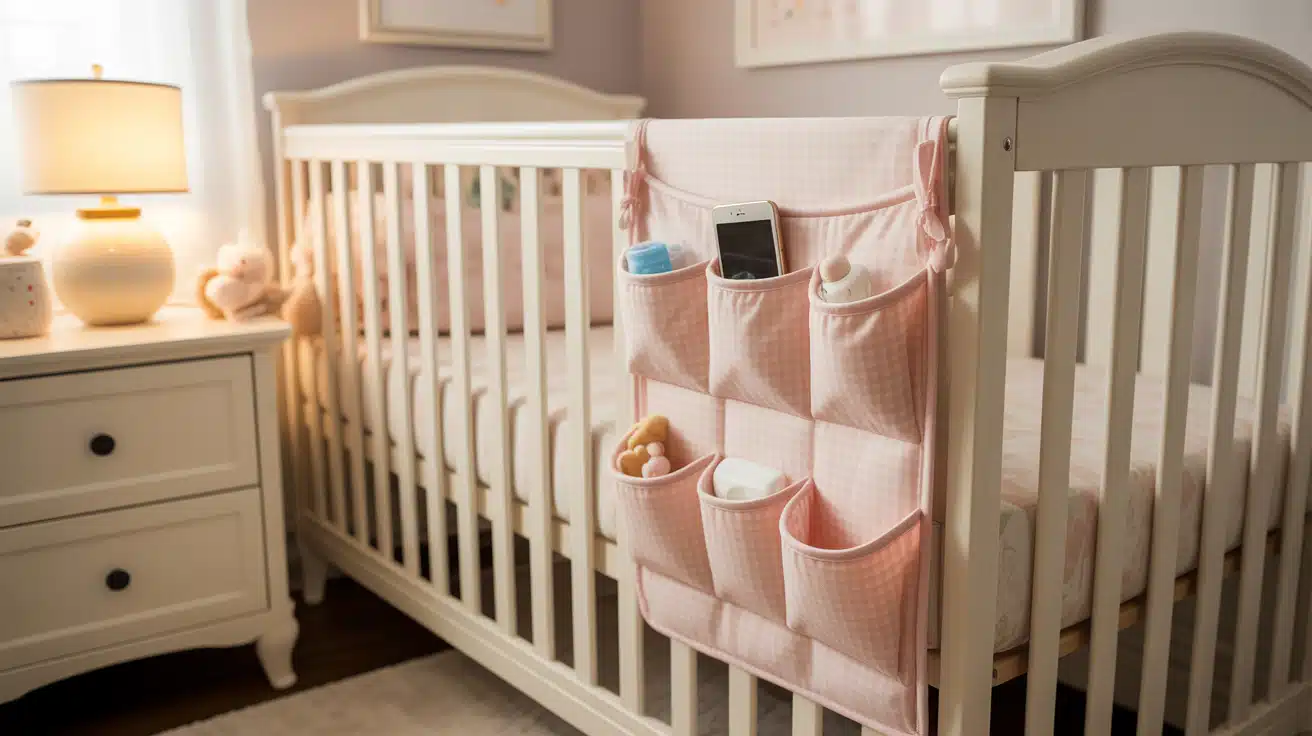
Bedside caddies keep essential nighttime items within arm’s reach during those frequent midnight feedings and changes.
They attach securely to crib rails without requiring any permanent installation or wall mounting. Choose organizers with multiple pockets to separate different types of supplies.
Nighttime Must-Haves:
- Extra pacifiers, burp cloths, and small comfort items
- Phone for monitoring apps, music, or emergency calls
23. Use a Foldable Changing Pad You Can Tuck Away
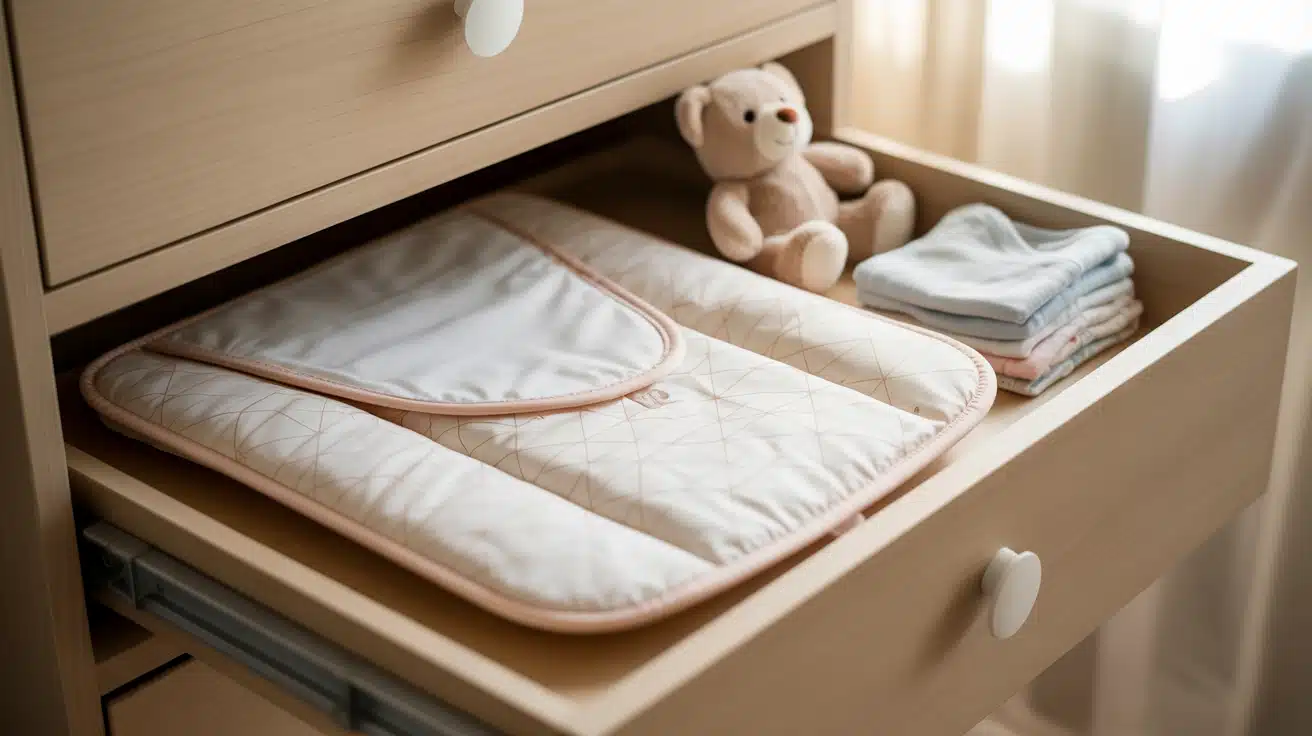
Portable changing solutions offer flexibility, allowing for efficient diaper changes in small spaces. Store these pads completely flat against walls or tucked in drawers when not actively in use.
This option works especially well for families without dedicated nursery space or permanent changing tables.
Versatile Uses:
- Create temporary changing stations on dresser tops
- Pack easily in diaper bags for outings and travel
24. Invest in a Narrow, Tall Dresser Instead of a Wide One
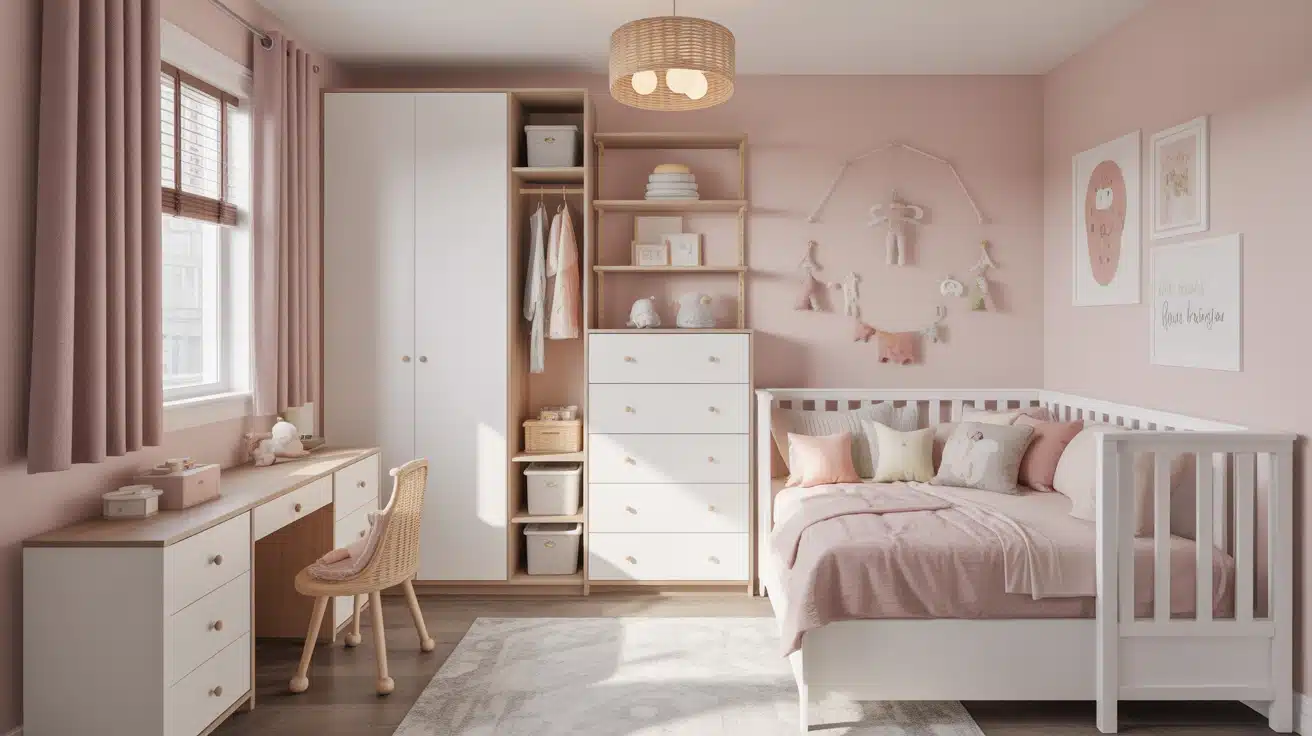
Vertical storage solutions maximize your cubic feet without consuming valuable floor space for walking.
Tall dressers actually hold more clothing than their wide counterparts while keeping traffic pathways completely clear. Choose pieces with smooth-operating drawers that won’t stick or slam during nighttime use.
Size Guidelines:
- Select pieces measuring under 20 inches deep
- Look for 5-6 drawer configurations for maximum storage
25. Choose Furniture With Rounded Edges
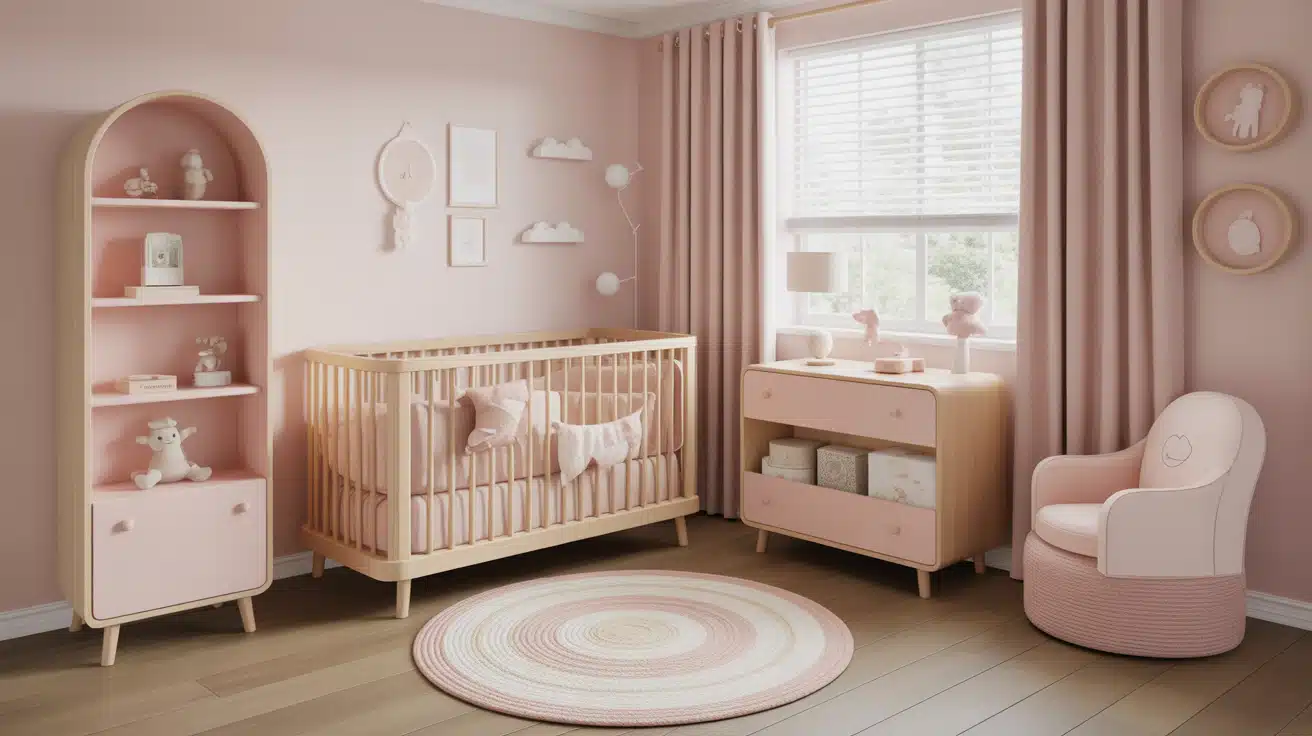
Soft, curved furniture feels safer in tight quarters where accidental bumps happen more frequently.
Rounded edges also create a gentler, more nurturing atmosphere that feels appropriate for baby spaces.
Safety Benefits:
- Significantly reduces injury risk from sharp corners
- Creates much better traffic flow in cramped spaces
26. Decorate With Monochrome or Two-Tone Themes
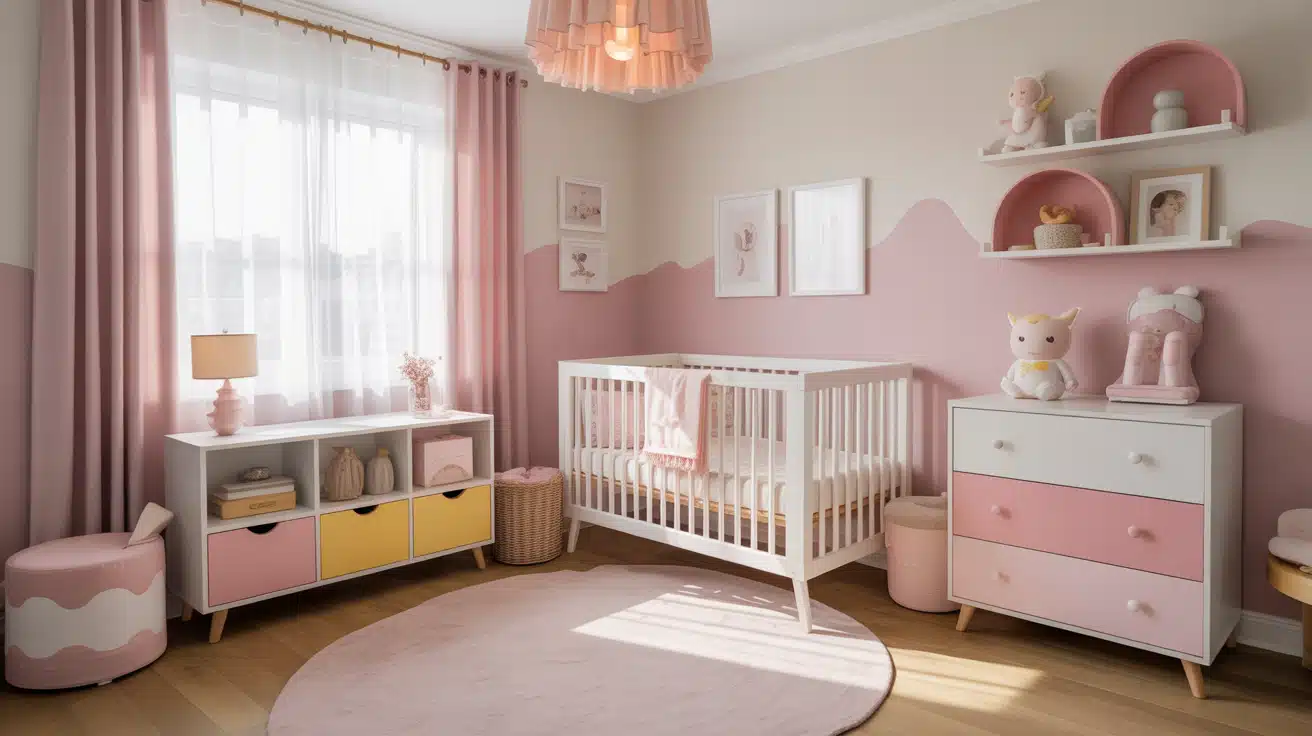
Limited color palettes create visual calm and refinement in small spaces that might otherwise feel chaotic.
Simple color schemes feel less cluttered and more intentional than busy, multi-colored designs. This approach also makes it easier to find coordinating accessories and artwork over time.
Popular Combinations:
- Classic pink and white for timeless femininity
- Modern gray and yellow for contemporary neutrals
27. Use a Rolling Cart for Flexible Storage
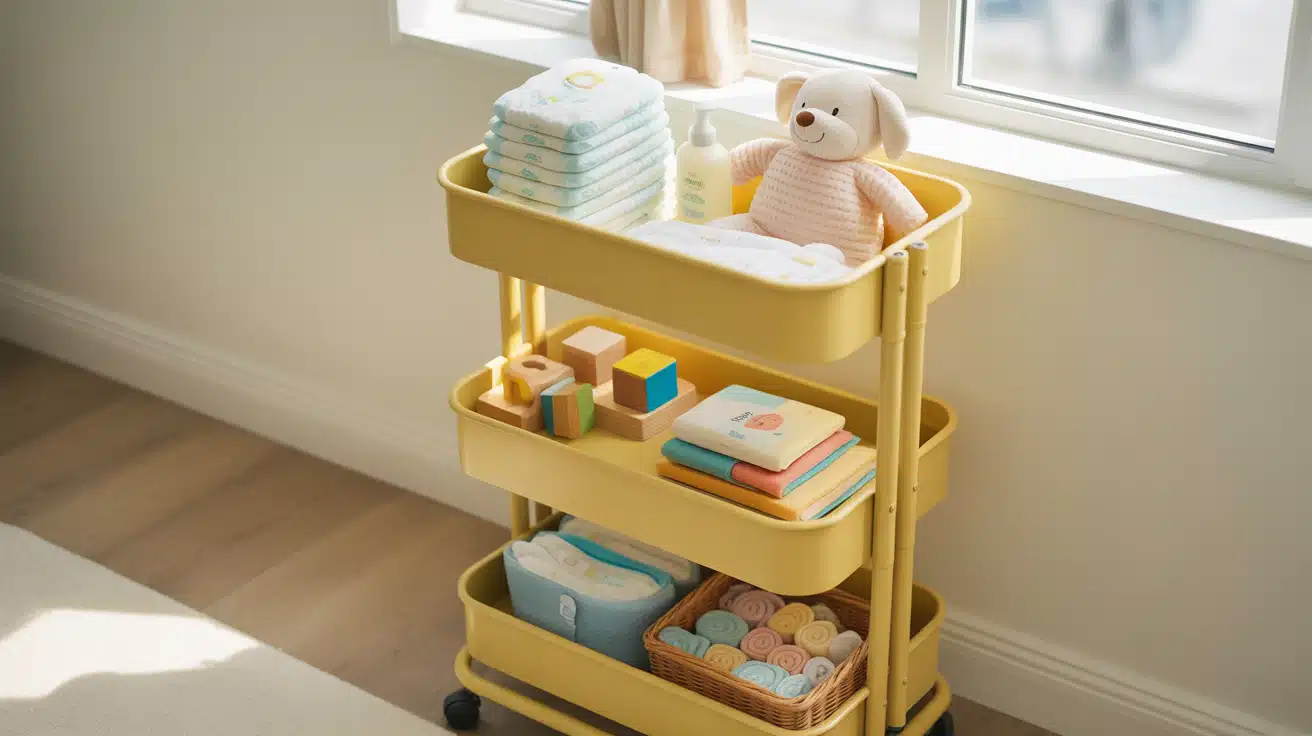
Mobile organizers adapt perfectly to your changing needs as your baby grows and develops new requirements.
Roll them from room to room as needed or tuck them away completely when not in use. These versatile pieces transition beautifully from diaper storage to toy organization to art supply carts.
Multi-Use Ideas:
- Diaper changing supplies during the early months
- Toy storage once the baby becomes mobile and active
Other Ideas to Consider
If you’re still looking for that perfect finishing touch, these extra ideas add style, function, and comfort, without taking up precious space.
28. Replace Curtains With Roman Shades or Roller Blinds
Flat window treatments don’t protrude into your room like traditional curtains with their bulky fabric panels.
They provide excellent privacy and light control without sacrificing any precious square footage near windows. Opt for cordless options for added safety and a clean, streamlined appearance.
Space Benefits:
- Mount inside window frames for ultra-clean lines
- Eliminate side panels that consume wall space
29. Hang a Slim Hamper to Save Floor Space
Laundry solutions that don’t touch the floor keep pathways completely clear for safe movement. Wall-mounted options are especially well-suited for shared spaces where floor space is limited.
Choose hampers with secure mounting systems that can handle the weight of dirty clothes.
Smart Spots:
- Inside closet doors for completely hidden storage
- On the wall directly next to the changing area, for convenience
30. Install a Growth Chart on the Door Frame
Track your daughter’s height milestones without consuming any wall or floor space in your nursery. Door frame charts become permanent home features that can stay with your family for years.
Select designs that coordinate with your nursery theme for a cohesive appearance.
Creative Options:
- Vinyl decals that perfectly match nursery themes
- Rustic wooden rulers for charming farmhouse styles
31. Make Use of Under-Bed Storage If Sharing a Room
When a baby shares a sibling’s or parent’s bedroom, it’s essential to maximize every available storage opportunity efficiently.
Under-bed space provides excellent storage for seasonal items, outgrown clothes, and bulky supplies. This solution works especially well for items you don’t need daily access to retrieve.
Smart Solutions:
- Rolling drawer systems that slide out effortlessly
- Clear storage containers for quick content identification
32. Decorate With Baby Mobiles That Hang From the Ceiling
Overhead decorations draw the eye upward, adding gentle movement and visual interest to your nursery.
They provide entertainment for babies during awake time while keeping all surfaces free for essential items. Choose mobiles with removable elements that can transition to wall decor later.
Safety Guidelines:
- Hang at least 16 inches above the crib mattress surface
- Remove completely once the baby can push up on hands and knees
33. Add a Mini Gallery Wall with Photos and Quotes
Small-scale art collections feel intentional and curated rather than cluttered or overwhelming in tight spaces.
Group 4-6 small frames together for maximum visual impact without consuming too much wall space. Mix meaningful family photos with inspiring words for a personal touch.
Layout Tips:
- Keep entire groupings within 12-inch boundaries
- Use similar frame colors for visual cohesion
34. Use Neutral Tones With Rose Gold or Blush Accents
Refined color schemes evoke a grown-up and timeless feel while still maintaining a feminine charm for your baby girl.
Neutral bases with carefully chosen metallic accents create baby girl room ideas that won’t feel babyish as she grows. This approach allows you to change accent colors easily without major redecorating.
Accent Ideas:
-
Rose gold picture frames and decorative mirrors
-
Soft blush throw pillows and window treatments
35. Incorporate Natural Elements Like Rattan or Woven Baskets
Organic textures add warmth and visual interest without overwhelming small spaces or competing with other design elements.
Natural materials coordinate beautifully with any color scheme while providing practical storage solutions. These elements bring a calming, earthy feel that’s perfect for nursery environments.
Styling Ideas:
- Woven storage baskets for toys and supplies
- Rattan pendant light fixtures as stunning focal points
36. Create a Display Ledge for Shoes or Tiny Accessories
Narrow floating shelves showcase adorable baby items, such as miniature artwork, while utilizing minimal wall space.
They provide both storage and decoration in one simple solution that grows with your child. Position them at varying heights to create visual interest and accommodate different item sizes.
Display Ideas:
- Tiny shoes arranged by size and color coordination
- Hair bows and headbands hung on small decorative hooks
37. Use Labels on Everything
Clear organization systems save valuable time and reduce daily stress for busy parents managing small spaces.
Labels help everyone in your household find items quickly and return them to proper locations. This system becomes especially important when every item must have a designated place in compact nurseries.
Labeling Ideas:
- Drawer sections divided by clothing types and sizes
- Basket contents for instant identification and retrieval
What Not to Do When Designing a Small Nursery
Even the best intentions can go wrong when designing small nursery spaces. Here are the top mistakes that make tiny rooms feel even smaller and less functional.
- Overcrowding the Space: Resist the urge to cram every cute nursery item into your small room; less is truly more.
- Poor Lighting Choices: Avoid relying solely on overhead lights; instead, opt for soft, layered lighting for nighttime feedings.
- Skipping Vertical Space: Don’t ignore your walls and ceiling, they’re your best friends for storage and decor.
- Choosing Dark Colors: Dark paint and heavy patterns will make your already small nursery feel like a cave.
- Lack of Safety Planning: Forgetting to anchor furniture and baby-proof tight spaces creates serious hazards in small rooms.
Final Notes
Creating a beautiful baby girl nursery in a small space isn’t just possible; it’s an opportunity to get creative and intentional with every design choice.
These small nursery ideas prove that limited square footage doesn’t mean limited possibilities for style, function, or charm.
Remember, the most crucial element in any nursery isn’t the size, it’s the love that fills it.
Your daughter will feel just as safe and cherished in a thoughtfully designed small space as she would in a mansion.
Start implementing these space-saving tips today and watch your tiny nursery revamp into the perfect sanctuary for your little princess.
Browse our complete collection of nursery ideas and home decor inspiration.