

Ever feel like toys are multiplying overnight and taking over every room in your house?
Between birthdays, holidays, and random Tuesday trips to Target, toys seem to appear out of nowhere.
If you’ve ever stepped on a LEGO at 2 AM or spent 20 minutes searching for that one specific stuffed animal, you know exactly what we’re talking about.
Learning how to organize kids toys isn’t just about making your home look Instagram-worthy.
It’s about creating a practical system that saves your sanity and actually works for your family’s daily life. The good news?
You don’t need a massive playroom or expensive storage systems to make it happen. You just need a plan.
Why Is It Important to Organize Kids Toys?
Getting a handle on toy chaos does more than just clear your floors. When toys have proper homes, you’ll notice less visual clutter weighing you down throughout the day.
Your stress levels drop when you’re not constantly picking up scattered pieces.
Kids actually benefit, too. An organized system teaches them responsibility and gives them independence. They learn where things belong and can clean up without constantly asking for help.
There’s also a practical side. You’ll save time not searching for missing pieces or buying duplicates of toys you already own. Plus, you’ll save money by storing toys properly, and they’re less likely to get broken or lost.
How to Organize Kids’ Toys?
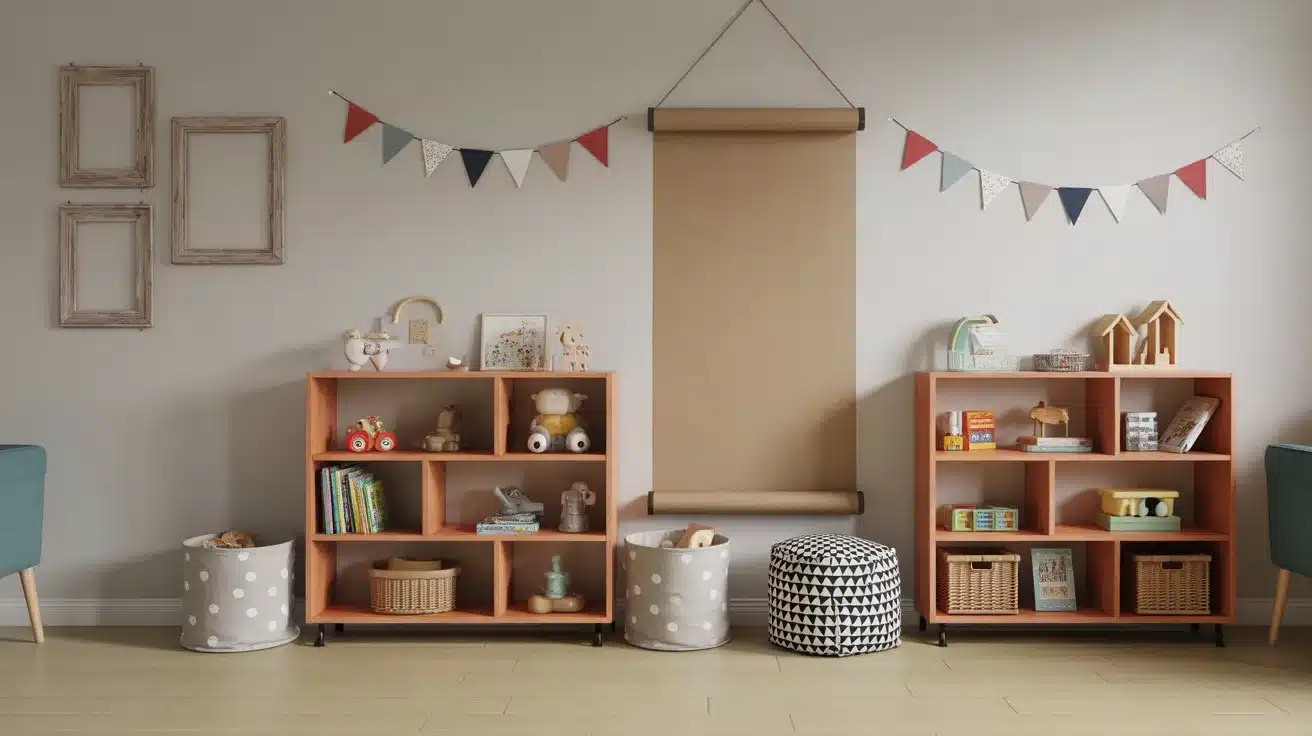
Breaking down the organization process into clear steps makes the task less overwhelming. Here’s a proven approach that works for any home.
Step 1: Start with Decluttering
You can’t organize clutter, so begin by sorting through everything. Get your kids involved and make three piles: keep, donate, and toss.
Be honest about what actually gets played with. Broken toys, items with missing pieces, and things they’ve outgrown should go. This step makes everything else easier.
Step 2: Sort Toys by Category
Once you’ve trimmed down, group similar items together. Put all the building blocks in one spot, art supplies in another, and stuffed animals in their own area.
Think about how your kids play. Categories should make sense for your family’s routine and daily activities.
Step 3: Choose the Right Storage Solutions
Match your storage to the toys themselves. Small items like LEGO bricks need bins with lids. Books work well on low shelves. Larger toys might need baskets or cubbies.
Clear containers help kids see what’s inside. Label everything with pictures for younger kids or words for readers.
Step 4: Assign a Designated Place for Every Toy
Every single toy needs a home. When playtime ends, kids know exactly where things return. It sounds simple, but this one rule changes everything.
No more “I don’t know where this goes” excuses. Everything has a spot, and everyone knows what it is.
Kids Toy Organization Ideas by Room and Space
Different rooms need different approaches. Here’s how to tackle toy storage in every area of your home.
1. Organizing Toys in the Living Room

Keep only rotating favorites in shared spaces. Use attractive baskets or storage ottomans that blend with your décor.
A simple bin for blocks and another for current favorites works well. The key is minimal and contained so toys don’t overwhelm your main living area.
2. Organizing Toys in Kids’ Bedrooms

Low shelves give kids easy access to their belongings. Use a mix of open and closed storage. Favorites go on lower shelves, while less-used items sit higher.
A small bookshelf, a toy chest, and some under-bed storage usually cover most needs. Keep bedtime books separate and accessible.
3. Organizing Toys in Playrooms

This is where you can go all out. Create zones for different activities: a reading corner, an arts and crafts station, a building area.
Use shelving units, cube organizers, and labeled bins. Wall-mounted organizers save floor space. Make sure everything is at kid height so they can independently reach and return items.
4. Toy Organization Ideas for Small Spaces
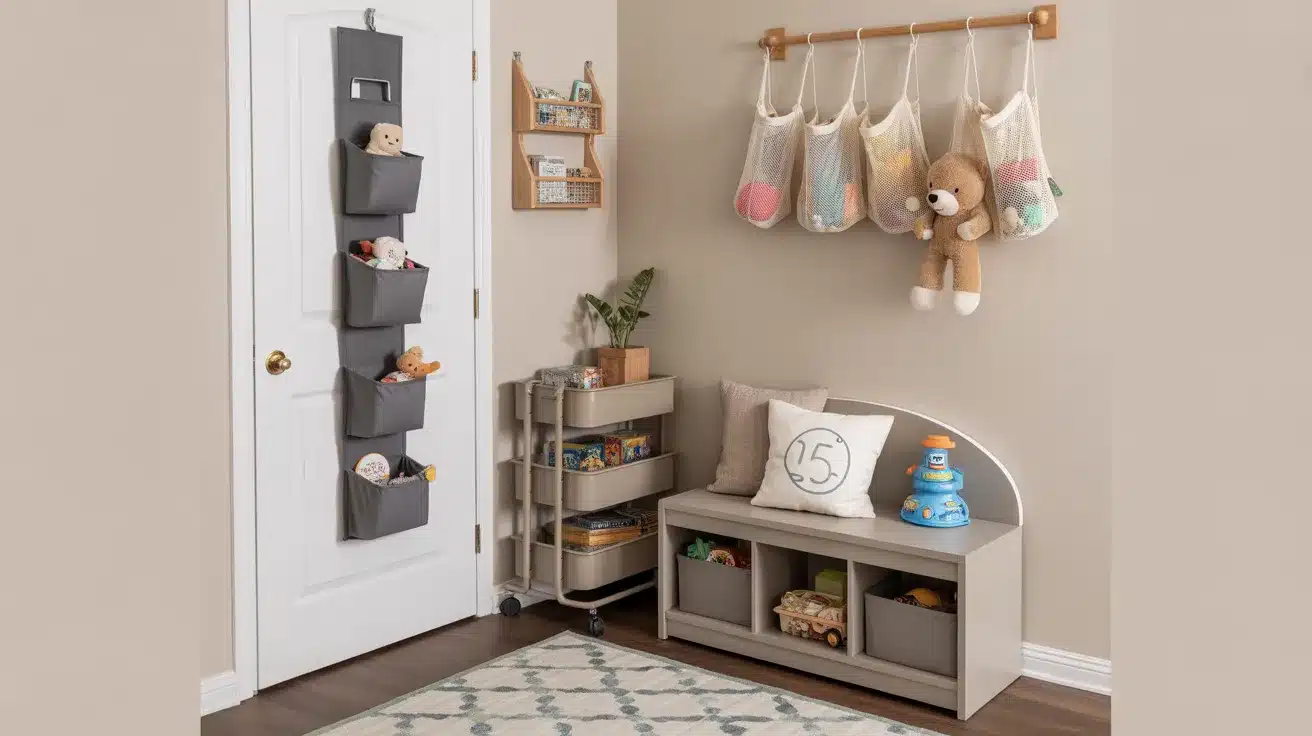
Think vertical and multipurpose. Over-the-door organizers hold small toys. Rolling carts tuck into corners and move where needed.
Use furniture that doubles as storage, like benches with hidden compartments. Hang mesh bags for stuffed animals. Rotate toys seasonally, keeping only current favorites accessible.
Toy Organization Tips by Age Group
Age-appropriate strategies make cleanup easier and teach valuable life skills. Adjust your approach based on your child’s developmental level.
- Use large, open bins that don’t require precise placement for toddlers who need easy wins
- Introduce clear containers as preschoolers develop sorting skills and can identify contents visually
- Add picture labels for non-readers and word labels as children start recognizing letters
- Let older kids design their system to build ownership and responsibility for their space
- Create dedicated zones for homework supplies, separate from play items for school-age children
- Set up accessible art stations where kids can independently get supplies without asking for help
- Use drawer dividers for collections like cards, small figures, or craft materials that need organization
How to Maintain an Organized Toy System?
Organization is only half the battle. Keeping it that way requires simple habits built into your daily routine.
Daily Quick Cleanup Habits
- Set a cleanup timer for 10 minutes before dinner or bedtime
- Make “reset the room” part of the bedtime routine every night
- Keep a donation box visible and add items as kids lose interest
- Encourage kids to put one toy away before taking out another
Weekly Reset Routines
- Choose one day for a deeper organization check
- Return misplaced items to their proper homes throughout the house
- Wipe down bins and shelves to keep everything fresh
- Reassess what’s getting used and what’s being ignored
- Involve kids in a weekend morning cleanup session
Simple Toy Rotation Strategies
- Keep only 50 to 70 percent of toys accessible at any given time
- Store the rest in labeled bins in a closet or garage
- Swap toys every few weeks or monthly to maintain interest
- Rotate based on seasons, like outdoor toys in summer and puzzles in winter
- Let kids help choose what to rotate out and what to bring back
Conclusion
Getting your toy situation under control might feel overwhelming right now, but remember that you don’t have to tackle everything at once.
Start with one small area, maybe just the living room or a single toy category. See what works and what doesn’t.
The beauty of learning how to organize kids’ toys is that your system will evolve as your children grow and their interests shift.
What works for a toddler won’t work for a teenager, and that’s completely okay. The most important thing is to create habits that stick, not to achieve perfection.
So grab a bin, involve your kids, and take that first step today. Your future self (and your feet) will thank you when you’re not dodging plastic dinosaurs in the dark anymore.
Ready to reclaim your space?
