
Finding a children’s orthodontist takes about ten seconds. Picking the right one takes more thought, and it matters more than most parents expect. This is a relationship that can stretch across several years of your child’s growth, from a first checkup around age 7 to braces or aligners much later. So when you open your phone and type pediatric orthodontist near me, the closest office is only the starting point. What you actually want is the practice that will guide your child’s developing smile with the right training, real patience, and honest advice about when to treat and when to wait.
The difference between a good pick and a convenient one shows up over time: in how your child feels walking through the door, in whether you trust the treatment advice, and in how the bills land. A few clear standards make the choice much easier.
Start With Specialist Training
Any dentist can legally offer orthodontic treatment, so the first thing to confirm is real specialist training. An orthodontist finishes dental school and then completes two to three additional years of residency focused entirely on moving teeth and guiding jaw growth. That extra training is exactly what a growing child needs, since their case is about development as much as alignment. Board certification through the American Board of Orthodontics adds another layer of confidence, because it requires passing rigorous exams beyond the basic license. You can usually verify credentials on the practice website or by asking the front desk, and a good office answers that question without hesitation.
Favor a Growth-Guidance Mindset
The best children’s orthodontists treat growth as an ally and use it carefully. They resist starting hardware at the first opportunity and instead place young patients on a monitoring plan, watching how the teeth and jaw develop every six to twelve months and stepping in only when the timing genuinely helps. This approach matters because a child’s jaw is still forming, which gives a specialist room to guide arch width, correct a crossbite, or open space before adult teeth come in blocked. When you interview a provider, ask how they decide when to begin. A thoughtful answer about watching and waiting is a strong signal you have found someone who treats children well.
Green Flags and Red Flags
A short scan of how a practice behaves tells you a lot before you ever commit.
|
Green flag |
Red flag |
| Recommends monitoring when treatment can safely wait | Pushes braces at the very first visit with urgency |
| Board-certified orthodontic specialist | Vague about training or credentials |
| Explains the plan in plain language to you and your child | Rushes you toward a deposit before your questions are answered |
| Transparent, written pricing | Fuzzy costs and fees that surface later |
| Calm and patient with a nervous child | Impatient or dismissive of your kid’s worries |
The Office Has to Work for a Child
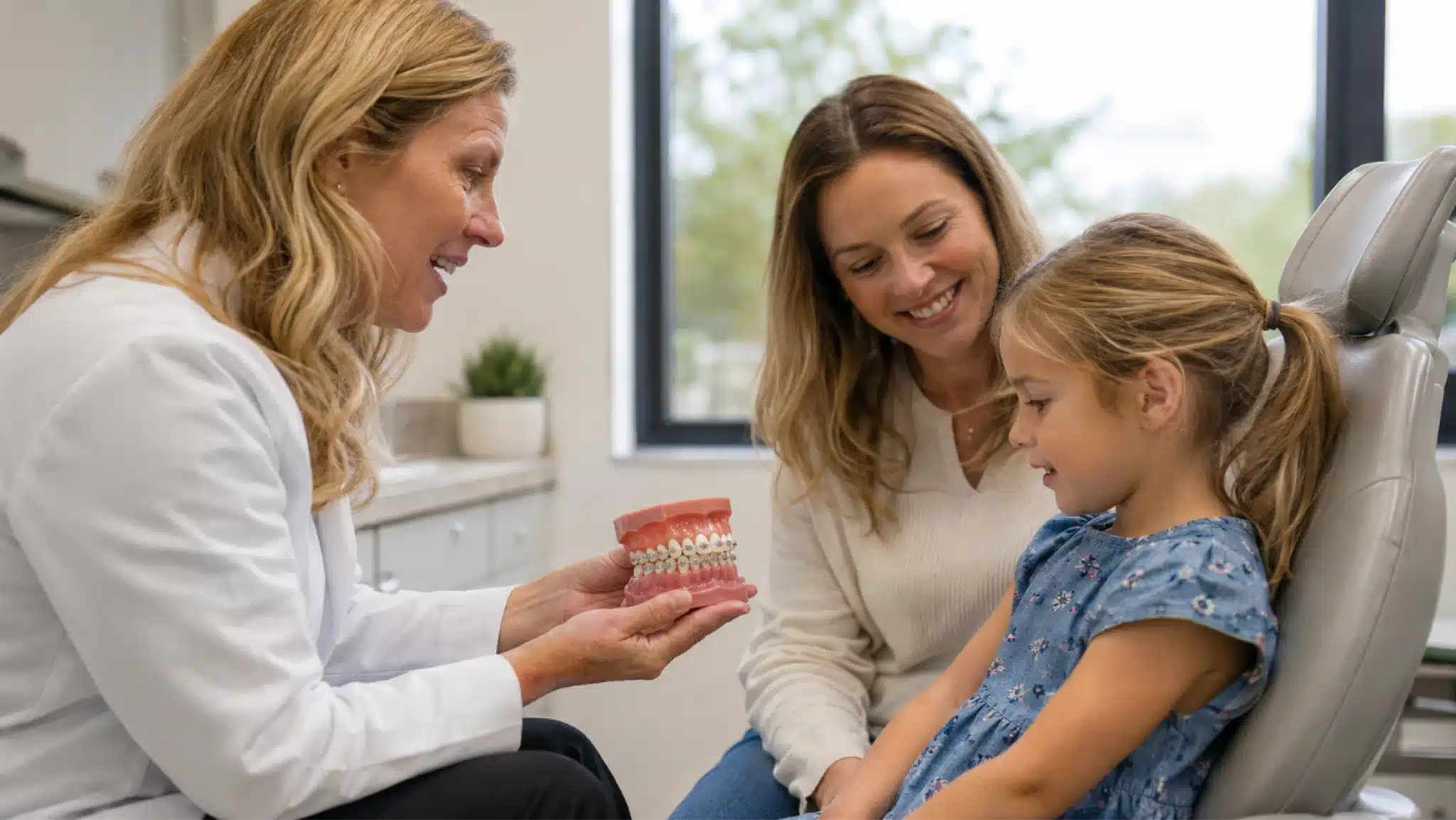
Credentials get a child through the door. The atmosphere decides whether the next few years feel manageable. Pay attention to how the team speaks to your child during the first visit, since a specialist who explains things directly to a nervous eight-year-old, at their level, earns the kind of cooperation that makes every later appointment smoother. Notice the waiting area, the friendliness of the staff, and how they handle a kid who is scared of the chair. Children who feel respected tend to wear their appliances, keep their rubber bands in, and show up without a fight. That daily buy-in has a real effect on how well and how fast treatment works.
Pin Down Cost, Insurance, and Payment
Orthodontic care is a significant expense, and the clearest practices tell you so up front. Before you commit anywhere, get straight answers on the money:
- Is the first consultation free, and what does it include?
- Do you run a monitoring program, and does it cost anything before treatment starts?
- What is the full treatment price, and what does that cover?
- Do you accept our insurance, and how much will it offset?
- Are interest-free payment plans available?
A practice that puts these numbers in writing is showing you how it operates. Dodged questions and pressure to decide today point the other way.
Logistics You Will Actually Live With
Treatment plays out over many visits across many months, so the practical details carry real weight. A location near your home, your child’s school, or your work turns a routine checkup into a quick stop instead of an afternoon lost to traffic. Ask about hours, since after-school and occasional Saturday slots spare you from pulling your child out of class every few weeks. Check how the office handles a broken bracket or a poking wire between appointments, because those little emergencies always seem to happen at the worst moment. Convenience sounds minor until you are managing it every month for two years.
Let the First Consultation Decide
Most orthodontists offer a free first visit, and it is the best tool you have for choosing. Treat it as a test drive. Watch how they interact with your child, whether they explain what they see in plain language, and whether their recommendation matches what your gut expected. A provider who suggests simply watching for another year, when that is the honest call, often deserves more trust than one who finds a reason to start expensive treatment right away. You are choosing a partner for a long stretch of your child’s growth, so give yourself permission to visit two offices and compare before you decide.
The right pediatric orthodontist blends specialist training, a patient growth-guidance philosophy, a child-friendly team, and honest pricing into one practice you can stay with for years. The closest office might check every box, or the one a little farther away might be worth the extra drive. Start the search near home, then judge each option against these standards. The payoff is a smoother experience for your child and a smile guided into place at exactly the right time.
